Sunday, June 26, 2011

Growing Food on Roofs - Rooftop Permaculture Can Help Feed the Urban Core

Green Roof Mat with Swale Pads For Food Growing - Roof Permaculture
Growing food on the roof makes sense.  With hundreds of thousands of acres of otherwise wasted space available for planting in the Urban Core, city dwellers are now more than ever planting their rooftop spaces to help offset high food prices.

The rooftop permaculture systems we work with generally employ some type of three dimensional weave to allow plant roofs the chance for anchoring.  These are the same systems we just successfully tested in the hurricane simulators - where, once installed the plants and soils stay embedded in the mats under 120 mph winds.

Soil embedded three dimensional netting, though not essential, is important in sub tropical climates influenced each summer by cyclones and hurricanes, helping hold both soil and plants in place.  The weave also allows for steeply sloped rooftop areas to be taken advantage of for agricultural purposes.

Green Roof Mat & Soil Added For Food Growing - Roof Permaculture
Low cost and organic alternatives to the polypropylene weave include hemp and burlap fabric, fowl or hail netting, twine weave and any other system allowing inter-connectivity of plant roots to underlying roofing systems.

Importantly, growing food on the roof creates economic opportunity.  Many small cafes and restaurants will purchase locally grown organic produce.  Moreover, rooftop gardens  reduce heat island effect, produce oxygen and sequester carbon, provide habitat and offer many other benefits.

One of the first suggestions a friend offered was to take the multi-dimensional mat and fold it under in certain areas, creating a swale-like structure - a technique successfully used in permaculture practices, one with a focus on water efficiency maximization.

Judy's Spring Mix Ready for Green Roof Planting

The folds were added after the fact because the mat had already been installed.

A lightweight roof soil mix was added to the mat and seedlings Judy had grown - a spring mix - were planted.

Growing food on roofs and walls in the Urban Core opens many economic, ecological and social doors.  Elimination of food transportation costs can even help reduce our dependence on foreign oil.

Green Roof Food Garden - Roof Permaculture

Saturday, June 25, 2011

Green 'Green Roof' with Fertilizer from the Air - Floating Wetland Secrets & Companion Fertilizer Legumes

Science has shown us the most common component of air is Nitrogen, typically making up about 80-82% of the earth's atmosphere.

Green Roof plants, as well as every other living organism on the face of the earth must take this nitrogen and build protein, amino acids, nucleic acids, DNA and other life-giving substances.
Green Roof Legumes companion planted


However most of the atmospheric nitrogen exists in a form that cannot be used unless converted into ammonia.  Ammonia is formed from one nitrogen and four hydrogen atoms.  Ammonia is the substance living organisms use to process nitrogen into life.

On a rooftop or in a garden, available ammonia nitrogen amounts are usually discernible by shades of green across leaves.  Darker green typically represents strong availability of ammonia nitrogen whereas light green or yellow leaves may indicate a serious lack of available ammonia nitrogen.

One school of thought concerning ammonia nitrogen availability focuses on use of industrially processed ammonia compounds in the form of liquid or more commonly, pelletized fertilizers.  However with the world's waterbodies, lakes, rivers and springs quickly eutrophying with runoff carrying excess ammonia and phosphorous, industrial fertilizers are coming under frequent criticism.

Adding industrial fertilizers to green roofs may compound existing pollution problems.

Another perspective for providing green roof with adequate supplies of ammonia fertilizers is an approach incorporating nitrogen fixing plants into green roof plantings.

Nitrogen fixing plants are commonly represented by the well-know legume families such as clover, beans and other 'green manure' plants where the nitrogen in the form of nitrogen gas, N2, is converted to ammonia, NH4, by bacterial processes.  The NH4 is then released to the soil and plants when either the bacteria die or the bacteria live in close association with plants.

Planting nitrogen fixing plants on a green roof can reduce or eliminate all together the necessity of additional industrial fertilizers.

The opportunity to use nitrogen fixing plants to provide ammonia really caught my attention over the last year as we worked with floating wetland technology.

Hoping floating wetland plants would clean stormwater through uptake of nutrients, the research conducted ultimately pointed towards a very interesting conclusion with green roof fertilizer implications.

In waterbodies with low nitrogen concentrations (very clean lakes, streams and rivers) the water under and around the floating wetlands had higher than normal nitrogen concentrations.

At first these findings were a big surprise yet as we looked at the systems from a more global perspective and noticed the presence of certain nitrogen fixing plant and bacteria species the results began to make sense.

Nature knows when ammonia fertilizers are needed and provides the biological process to accomplish such.

In a time of severe water pollution and excess nutrients we should be looking to nitrogen fixing plants for green roof fertilizers.

Especially in Urban Core areas where NOx and SOx smog is bad, plants not only make fertilizers available but clean the air in the process.

Many of the plants in the Fabaceae family fix nitrogen.  Wikipedia offers some interesting perspectives on the topic also.

Studies have shown nitrogen fixing plants can add up to seventy five pounds of nitrogen to the soil per acre in natural ecosystems and up to several hundred pounds per acre in cropping systems.

Nature can teach us (biomimicry) about important agricultural and green roof considerations.  There are many web resources available for more information on nitrogen fixing plant types and their biological processes.

Next time you consider applying industrial fertilizers, try using nitrogen fixing plants .  You'll be helping keep our waterbodies free from algae blooms, cleaning the air, providing your plants with needed nitrogen and much more.

Monday, June 20, 2011

DIY Solar Hot Water Heater we Built & Use for Under $200 with a Green Roof twist

Sits right next to the small Cubanelle pepper Green Roof on a southerly exposure sloped roof and the DIY solar hot water panel works very well.  Photos below but first a photo of the Green Roof Cherry Tomatoes growing adjacent to the Rooftop Solar hot Water Heater :)
Rooftop Permaculture - Cherry Tomatoes
I will be clear up front I have alot to do before It is truly complete.  I know there are many unorthodox approaches here and I am sure a mechanical designer could list many reasons why this is an inefficient design and why a much more expensive system would be capture and retain with higher efficiencies.  Importantly, I didn't want to use CPVC or Copper in the collection coils because of photodegradation.

But the point here is simple.  I have disconnected the circuit breaker to the electric hot water heater and we still have plenty of hot water for a family of four, including two shower loving teenagers.

So I understand that the system is inefficient.

But I am not paying for hot water now.  And I am not using coal or petroleum generated electrical power.  What I am doing is using the sun's energy, reducing my electrical bill and affording us here on the Jax Urban Farm another step towards true independence.  Once we get our electric bill I'll do a follow up post.

DIY Solar Hot Water Directions.

1. Find your most sun exposed roof surface.
2. I used a old tin planter boxes for the frames however 3" edging could be used to create the side walls.  You really dont need a bottom to the box.
3. Once you decide the length and width you want - I used 1 meter x 2 meters, cut a piece of used plastic, preferably a EDPM or PVC material - something like a Coy Pond Liner (you can find these on Craigslist for almost nothing).
4. Make sure the roof is clean and spot adhere the waterproofing liner to the asphalt shingles using a tube of roofing adhesive from your home improvement store.
5. Attach the box or frame (I'd recommend a 1 M x 2 M rectangular frame made from 3" edging without a bottom) to the roof above the liner.  Use 1 1/4 or 1 1/2" metal roofing screws with sealant washers.
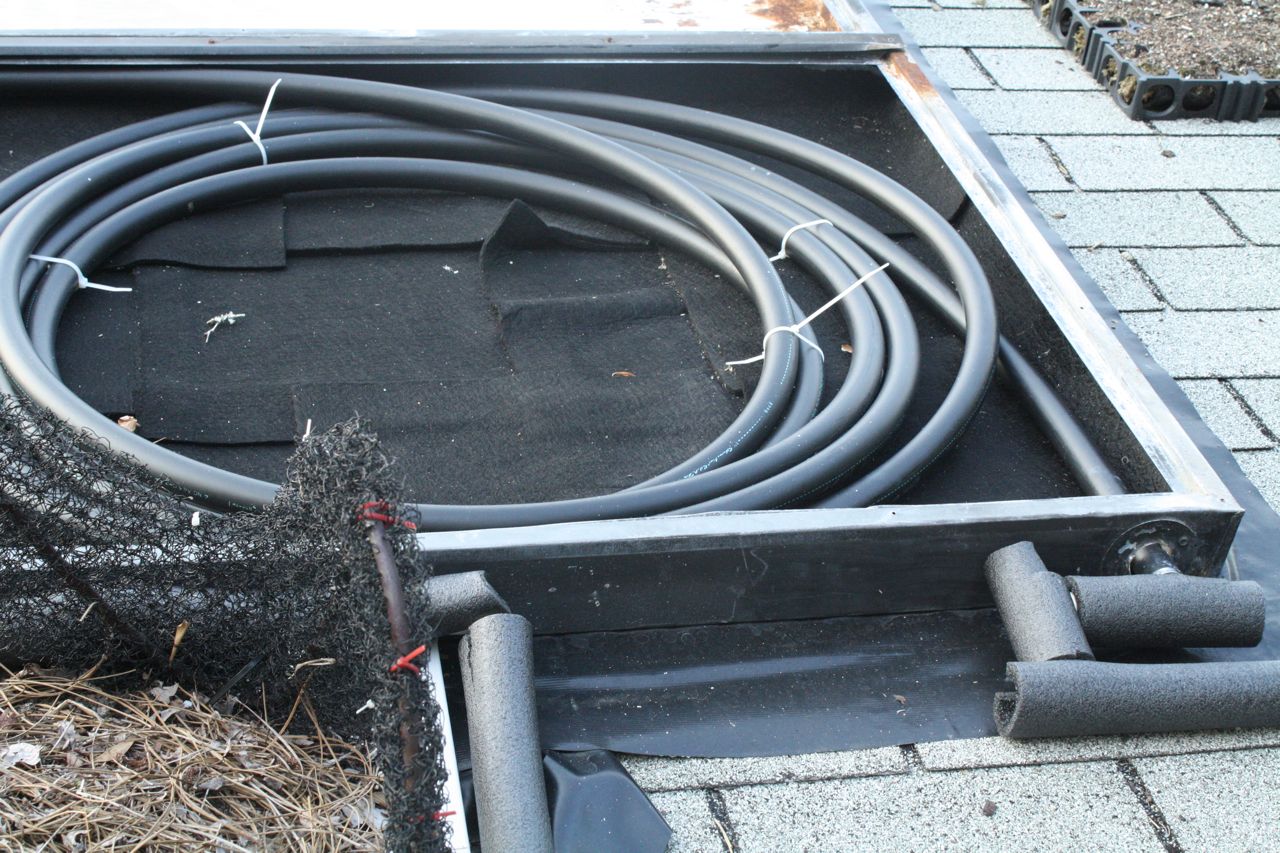
6. Uncoil a roll of 1" PPE 150PSI Black Irrigation Tubing (see photo below) and place inside frame/box)
7. Drill entry/exit holes in frame or box for tubing.
8. Run 3/4 CPVC pipe from existing hot water heater inlet to tubing in solar box and attach with standard adapter and band.
9. Add drain valve to system for draining during very cold weather.
10. Cover all pipe with standard pipe insulation.
11. Let glue dry.
12. Enjoy free hot water.

I am going to add a piece of clear fiberglass or plexiglass over the box as a top at some point but haven't yet.

The system heats the water going into my hot water heater.  Once in the hot water heater the water stays warm because the tank is insulated.

We've noticed of course the water is hotter during the afternoon than it is in the morning yet there is still plenty of hot water to go around.

What I do plan to do is add another coil of 1" insulation tubing to increase capacity, add a clear cover.

We are considering adding a green roof soil media around the coils and plant some small plants as an experiment.  We have found on our many green roofs that our speciality soil media serves as a heat sink, allowing for the storage of heat.  Will update the post as we implement the green roof component.

There have been no leaks.  The systems has experienced 150-170F , 65C to 75C during the day dropping to 70F,  20C at night so there has been plenty of thermal expansion going on.

Yes, many different ways to cost-effectively (the key here is inexpensive) improve this system and I'd love to hear your comments.  We have worked for years in designing living wall and green roof systems for low cost applications in slums and intense Urban Core permaculture situations and what I cannot incorporate are expensive, custom components.

Disclaimers important, I will say your should check with all the appropriate regulatory authorities for code, permit and blah, blah, blah requirements.  Insurance companies also have their own blah, blah, blah requirements.

However, if you want free hot water you can have free hot water and for less than US $200 and a weekend of your time.

Please leave your thoughts on fine tuning and I'll consider incorporating them!

MATERIALS

1. Tube of adhesive $4
2. Pond Liner or plastic $5
3. Roofing Screws $7
4.  6 M ( 20') 3" vinyl or aluminum edging (for sidewall frame) $15
5.  50' roll black 1" 150 PSI irrigation tubing $60
6.  3/4 CPVC to 1" tubing adapters (2) $4
7. Misc 90's ells and couplings 3/4" CPVC & CPVC Glue $15
8. 3/4" CPVC pipe $24
9. 3/4" drain valve $4
10. Standard pipe insulation $10

Total Approximate Cost $ 138
Installed $200 Solar Hot Water Heater

Tubing to CPVC Connection

1" 150 PSI Irrigation Tubing serves as Coils


CPVC supply lines to Hot Water Heater

Tuesday, May 31, 2011

Green Roof for Landscape and Parking Lots - cleaning and storing stormwater


Green roof concepts are not just limited to the top of a structure.  They can be adapted almost anywhere plants, water and a platform can be integrated.  


Referring to the term 'volumetric green' in the Urban Core - green roof technology can be adapted to provide habitat, clean stormwater, sequester carbon, produce oxygen and create beauty across the cityscape.


Ultimately, to be cost-effective, a best management practice must bring cost effectiveness to the table.

Maximizing site development potential by combining stormwater, green space and other site functions allows for green practices to be more readily implemented.

Below is a diagram of what we've done with the lessons learned from building lightweight green roofs however the 'roof' is actually a landscape cover for stormwater storage and recycling.

"Green Roof" over Rainwater storage, cleaning and recycling system

One of the aspects about plants we have come to realize is plants are efficient with uptaking nutrients - nutrients otherwise contributing to algae blooms and dead waterbodies. 

As site development becomes more constrained with respect to available space, stormwater and wastewater treatment can turn to green roof inspired, plant based systems as a method of sequestering nitrogen, phosphorus, zinc, copper and other contaminants. 

Once sequestered, these pollutants may be removed through biomass harvesting and composted on-site for reuse in the landscape. 

Removing nutrients from the water cycle is the most efficient way of cleaning our water supply. 

Green roof technology applied to stormwater storage and recycling has many benefits.  Stored rainwater may be used for irrigation, flushing of toilets and more.
Combining landscape and rainwater recycling through green roof technology

Green Roof Technology applied to Stormwater Capture and Storage

Sunday, May 29, 2011

Green Roof Drainage Issues

Drainage is an essential design component on any green roof.

Not enough drainage and the green roof can quickly fail via leaks, dead plants and even a collapsed ceiling.

Too much drainage and  the green roof plants may suffer from not enough irrigation.

Inspecting the roof before installation of the green roof system is very important.  Be sure to review the plans and find the elevation breaks, low spots and ridges.  Take the plans and try to determine how the rainwater and irrigation water, if irrigation water is used, will flow.

Inspect the roof for drainage breaks before installation of Green Roof System
Once the underlying roofing system is installed, inspect the entire roof.  Watch for issues with the flow of water, look for depressions formed into the surface during construction where water may pool.  Ensure seams appear to be properly attached.  Always insist on a flood test and conduct a metal sweep before commencing any work.

When you feel comfortable with understanding the direction of rainwater flow and other issues and requirements for the green roof and install the base system, be it trays, monolithic built-in-place or other system, the soil media will be one of the first components to be installed.

Soil media is usually premixed and possesses the same water or rainfall permeability no matter the location placed on the roof.  Filling the green roof system with soil media possessing the same drainage and water flow characteristics may be adequate, unless the roof pools water in places it shouldn't, or drains water away from areas where water needs to stay and provide irrigation to the green roof plants to be installed.

If your roof construction requires a change in water flow patterns across the roof surface you can easily accomplish the re-direction of water by substituting materials possessing different permeability and water flow qualities for the soil media in the affected area, or by placing a layer of material with increased or decreased water flow characteristics under the soil media.

This obviously requires solid knowledge of  the materials you are working with, their permeability, saturation rates and other physical and chemical qualities that may affect the roof drainage pattern.

Sand for instance can be employed to either slow down or speed up drainage depending upon the type of surrounding green roof soil media.

Peat and coir are other materials with varying drainage characteristics that may be successfully used to after drainage patterns to your requirements.

Adding peat to affect drainage flow
Adding peat under fast draining green roof soil media allows for additional rainwater adsorption and storage.  Peat moves water through wicking action, and can direct much needed irrigation towards the plants needing the water the most.

Natural and geo-synthetic fabrics can also be used to accomplish the same water direction exercise, or re-direction as is the case.

Though all of the above water distribution efforts should in reality be accomplished through proper design,  we all know that ultimately we must make adjustments after the fact sometimes to accomodate anomalies in the as-built system.

Understanding how to 'tweak' rainfall flow through the green roof soil media is important.

Doing so will allow your green roof to mature into a successful planting.

Mature Green Roof Planting, Florida (MetroVerde)

Friday, May 27, 2011

May Wildflower Green Roof photos from Breaking Ground Contracting, Jacksonville

Here are some photos of the Breaking Ground Contracting food and wildflower green roof in Jacksonville.  Even though we've had a terrible drought, the green roof plants have grown very nicely.  This roof is not irrigated with potable water and uses only HVAC condensate.  Right plant, right place with CAM species on the perimeter and C4 species inside the CAM belt.  Model your design for wind and sunlight!  Enjoy the photos and have a fabulous Memorial Day weekend.  Kevin :). 10-20-30 rule met so far!  We have approximately 150 plants species and counting!

MetroVerde Green Roof for Hurricane Prone Areas, Breaking Ground Contracting

MetroVerde Green Roof for Hurricane Prone Areas, Breaking Ground Contracting

Corn, MetroVerde Green Roof for Hurricane Prone Areas, Breaking Ground Contracting

Day lily, MetroVerde Green Roof for Hurricane Prone Areas, Breaking Ground Contracting

Cathranthus, MetroVerde Green Roof for Hurricane Prone Areas, Breaking Ground Contracting

Gaillardia, Rudbeckia, Native Species, MetroVerde Green Roof

Mint, Herbs, Spices for Green Roof, MetroVerde

More wildflowers, MetroVerde Green Roof

MetroVerde Green Roof Biodiversity

Green Roof Wildflowers, Jacksonville, MetroVerde

Solar Panels and Wildflowers, MetroVerde Green Roofs

Tuesday, May 24, 2011

The Poaceae of Green Roofs

Poaceae is the family of grasses, referred to previously as Graminaceae.  According to Wikipedia, Poaceae contains about 600 genera and around 10,000 species of grasses.

Grasses comprise from 20-25% of all the herbaceous vegetation covering the earth.

Wikipedia, as other sources also suggest the Poaceae is the single most economically important family of plants in the world to humans, containing many food, grain and cereal crops, such as corn, rice, wheat and barley.

Poaceae grasses contain both C3 grasses and C4 grasses, referring to the much discussed in this blog 'photosynthesis process' type.  The above link also contains a list of commonly known C4 plants.

C4 plants have evolved a process to survive drought.  They protect compounds in their leaves, crucial to photosynthesis, from dessiccation and loss through a variety of means, including; timed stomata openings, storage of photosynthesis compounds in vacuoles and separation of photosynthesis reactions into differentiated cells.

This means they can make an excellent green roof plant or rooftop garden species.

As does corn.

Corn growing on Rooftop Garden, Sudan, photo by S. Newman

Sudan is dry.  Corn, Periwinkle and Mango thrive. Photo by S. Newman.

As you can see from the above photos, Sudan is a dry and arid place, hostile to most plants.

However corn, a Poaceae family member thrives on a hot, dry, windy roof.

I also grow corn on roofs, and the plant will grow well in places most others would wilt in a matter of days.

Other grasses too, members of the Poaceae family adapted to drought make excellent green roof plants.  many are perennial and evergreen species, affording year in and year out color and texture, supporting biodiversity with food and communal shelter, providing beauty, cleaning stormwater and reducing heat island effect.

Purple muhly grass, Muhlenbergia capillaris, is another of my favorite green roof Poaceae.

Green Roof Muhly Grass, photo by C. Burkee.
Purple muhly gras, excellent C4 green roof grass.
There are many other grasses available and suitable for green roofs.  Preferring to use native species, I consult with local nurseries in an area to see what they recommend for drought tolerance.

Your local native plant society is also a good resource for grasses recommendations.

The beauty of the Poaceae family is that they have been around a long time on this earth and survive in the most inhospitable of places.

Try Poaceae on your next gren roof!

Monday, May 23, 2011

Yucca filamentosa, Green Roof Plant for Hot, Dry and Arid Climates - Catching Fog and Dew with Hairs

Nature offers the finest examples for us to look to when resolving green roof, or any other for that matter, issues.


Yucca, with hairs across the surface edges of her leaves is a highly efficient fog and dew catching plant.


Likewise, with waxy, tough leaves and CAM (Crassulacean Acid Mechanism) photosynthesis, she can serve as the perfect green roof edge wind-break perimeter plant.


Hairs on Yucca's leaf edges allow for fog and dew collection on the Green Roof


Yucca biomimicry tells us high dew catcher surface area to air mass contact is most efficient for air water vapor to occur.  


Many yuccas and agaves thrive in hot, dry, windy areas and make excellent choices for green roof plants.


Yucca filamentosa, Adam's needle is a favorite green roof plant of mine, reliably hardy in the freezing cold temperatures, evergreen, very drought tolerant, a dew catcher and the perfect CAM perimeter plant.


Florida's native yucca, Yucca filamentosa ready for Green Roof install
Planted in mass, Yucca filamentosa acts as a green roof parapet, allowing interior plants a more welcoming ecosystem for growing.


Yucca filamentosa also has long hairs growing from the leaf edges, allowing for water vaopr in the air to collect as the humid breezes flow across the plant.


Turbulence is another factor necessary to help drop the condensed air water vapor from the catcher to the green roof soil below.


Success of a nature irrigated green roof depends heavily on sourcing a steady supply of water through rainfall, fog, dew and even frost. Understanding biomimicry based green roof planting layout allows for important air water vapor collection.

Additionally, understanding the principles behind Agave's and Yucca's' water capture successes lie also in an understanding of air humidity.  Humidity is the amount of water vapor in the air.  


Humidity is an important source of irrigation for nature irrigated green roofs and is often present when rain is lacking.  Humidity is often described in terms of ‘relative humidity’ and ‘dew point’.

Relative humidity is the phrase commonly used by weather reporters to communicate the percentage as the amount of actual water vapor in the air divided by the amount of water vapor the air could hold.  


A relative humidity of 75% means air contains 75% of the amount of water vapor possibly held.

Dew point refers to lowest air temperature where water vapor remains in vapor form.  Once the ambient air temperature reaches the dew point temperature the water vapor condenses into dew or liquid.

Dew and fog reference and collection resources available on the web include;

Air humidity can be a significant component in the irrigation of any green roof system.  Consider those months with lower than average precipitation and check to see if dew occurs frequently.  Validate the average relatively humidity percentages.   


Think of the times you have walked across a lawn in the morning to find your shoes soaking wet.

Research dew and fog collection websites.  Look to the green roof plants you work with to see what species appear to accumulate dew.  


Mimic nature.  Mimic the Yuccas and Agavaceae.

Saturday, May 21, 2011

Another Choice - Pre-grown Plant Mats

Thursday's post, "Planting Green Roofs, Seeds, Plugs or Plants" brought in several comments about another Green Roof planting option - pre-grown mats ( usually Sedum ).

Sedum has long been associated with Green Roofs throughout the centuries and across the world.

A quick Google image search of the phrase "Sedum Green Living Roofs" turns up beautiful and stunning photos, most grass-like or lawn-like, very neat, quite contained and appearing to be lightweight and thin.

There are also many Green Roof companies across the globe.  Twitter is another good place to keep up with the trends of Green Roofs, plants and technology. 'Sedumdak' is one such Twitter user I follow and Michel Heus' website is located here.

Sempergreen is another Sedum-based green roof mat company found on Twitter and the web,  producing 'Instant Green' and their photos truly are beautiful.

The advantage of Sedum mats, or any other mature plant mat is the 'Instant Green' effect a roof receives upon install.  Typically, the plant mats are brought in on rolls or on pallets, cut and stacked much like sod.

Moreover, Sedum requires little in the way of green roof soil media depth producing a beautiful effect with a very lightweight.  The weight reduction translates into cost savings due to the roof structure design for a lighter load.

Sedum mats are great for stormwater treatment.  They absorb rainfall thereby reducing runoff quantities and help keep our waterways clean (as do all green roofs).

Sedum is extremely drought tolerant.  I like Sedum because the plant has evolved photosynthetic processes allowing for both fast growth (C3 and primarily C4) under higher CO2 levels, and also CAM - Crassulacean Acid Mechanism processes where plant leaf stomata remain closed during bright sunny periods to conserve water, opening at night to take in CO2.  The CO2 is then converted into Carbon malate compounds, stored in vacuoles or around the RuBisCo compounds so photosynthesis can take place internal to the leaf the next day when the sun is shining and stomata are closed.

Sedum, once established needs very little additional water.

Sedum mats are one of the most popular green roof system components around the world and have been for years.

However there are issues with sedum mats, as with any Green Roof system, and while these issues may not be impossible to overcome, they are worth reviewing.

Sedum mats are primarily grown from one Genus of plants, Sedum.  The 10-20-30 rule of biodiversity we recommend for 'Green Roof' plantings suggests a green roof use no more than 10% of the plantings from any one plant species, no more than 20% of the plantings from any one Genus and no more than 30% of the Green Roof plants from any one plant Family.  There are several blog notes about the 10-20-30 rule here.

This is not to say Sedum mats do not support biodiversity, they do in fact and there are some great studies to show how Sedum is important to wildlife.  In fact, some native Sedum are protected by various local and state regulations and a green roof would be a perfect place to assist in a species recovery program.

However in nature you find usually a wide array of plant types in an ecosystem.  Monocultures of exotic plants pepper the Florida landscape, a result of our overuse of just one plant Genus.  The 10-20-30 rule we feel is important for Green Roofs.  Many Sedum mat companies also offer native wildflowers as a supplement to the Sedum mats.  Check with Sedumdak and Sempergreen for more information on the value of Sedum mats for biodiversity support.

Many years ago, when I first became interested in Green Roofs some of the first plants I purchased from Lowes included Sedum acre and other Sedum.  They were succulents, drought tolerant and beautiful.  They did great during the cooler weather but as soon as the afternoon temperatures soared to 140F plus on the roof and the humidity reached the high levels it does during Florida mid-days, the Sedum would develop a fungal infection and turn to mush.

This occurred even in the most well-drained, sandy green roof soils I tried.  In fact Sedum and Green Roofs here in Florida ended up not making good companions.

I am aware of university studies going on across the Southeast and am sure a horticultural variety will be engineered to work on Green Roofs in Florida someday.

So while Sedum mats are fantastic for more northerly climates, here in Florida I have a difficult time with them.  I also hear the same from green roof professionals in other tropical areas.

However, in addition to seeds, plugs and plants, the option exists for 'Instand Green'  in Sedum mats.

As I mentioned before, these mats have been used across the globe for centuries.  They provide a great way to treat stormwater and are typically very lightweight and cost-effective.

Drought tolerance is another significant factor, especially since we as a world are facing a water crisis and green roof irrigation with potable water is rapidly falling out of sustainability favor.

Seeds, plugs, plants and mats.  Right plant, right place.  Know your green roof plant options.

Thursday, May 19, 2011

Planting Green Roofs, Seeds, Plugs or Plants?

The other day I saw a Twitter post asking the question 'What to plant on a green roof; seeds or plugs?"

There were several notable answers and one, from the UK's Green Roof expert, Dusty Gedge, was something to the effect of - 'Both'!

I agree.  A Green Roof should look nice and full on install for many reasons, including:

  • Jump starts biodiversity support 
  • Creates visual beauty
  • Mature plants clean more stormwater
  • Cleans the air
  • Quickly sequesters Carbon 
  • & Much More!
Green Roof supports biodiversity, cleans stormwater
I like to add a third item to the initial planting material - mature plants.

With mature plants, plugs and seeds the green roof will look good quickly and have a second and third wave of growth automatically set to fill in the vacant or bare areas.

Good wildflower seed mixtures are available across the internet and one of my favorite is Prairie Moon Native Plant Seeds.

Plant mature green roof plants across the roof and fill in the gaps with the plugs.  Spread the wildflower seeds across the roof area you wish to grow in as a prairie or wildflower meadow.

Most wildflower seed mixtures contain enough varieties so you can easily meet the 10-20-30 rule for biodiversity, and usually contain tough, hardy plants such as members of the Asteraceae and Poaceae families.

Once established, both the annual and perennial wildflowers will reseed and continue to fill in the rooftop areas.

Utilizing mature plants, plugs and seeds offers a three dimensional quality to the green roof planting plan, one providing beauty over time, habitat support and environmental benefits.

Wednesday, May 18, 2011

Invasive Plant Species Notes and Green Roofs

I am headed to Orlando this morning to offer a presentation at the Florida Exotic Pest Plant Council's annual symposia.  Details are available here.
Exotic plants are alluring sometimes due to their beauty
Green roof projects are intricately tied to the issue of exotic plants, biodiversity and the use of native species.

Exotic and exotic invasive plant species are problems primarily because the lack of competition, predators, control and the fact they are very persistent in the ecosystem once escaped.

Many exotic invasive species have become introduced into an environment by first being planted in a landscape.

The difference in using an exotic plant species in the ground level landscape and the same exotic plant species on a green roof is exponential in nature.

The area of adjacent influence for the exotic green roof plant is much larger than for the same plant on the ground.  Moreover, the warmth of a green roof system may allow for those species subject to cold damage to survive where they would normally die back, further expanding their range.

Additionally, wind influence on exotic species becomes amplified when those species are part of a green roof project.  Wind can carry seeds, leaves or vegetative matter capable of rooting and spreading.  Blown from a roof, the plant's vegetation can spread across a much broader radius than from the ground level.

Stormwater too becomes a vector for exotic green roof plants, potentially carrying stems or leaves that may re-root downstream vast distances.

There are lots of reasons to use native plant species on a green roof.

As a plant designer I don't always stick with natives, using food, other (hopefully well-behaved plants) landscape plants and flowers in addition to many natives.

Importantly, we must all be cognizant of those plant species we are using.  Green roofs have the potential for becoming an important source of exotic plant species if we as an industry are not careful.

Tuesday, May 17, 2011

Identifying Local Plants for Green Roof and Living Wall Use

One of the great benefits of walking through a downtown area is the opportunity to learn the identification of plants I have not seen before.

You would think after working years and years with plants there would not be many species out there I haven't already seen.

Not the case.  Seems like every time I take a stroll through a downtown area there are plants growing from gutters, walls, crevices or cracks int he concrete that I do not recognize the species, sometimes genus and even family.

Legume on stone wall, St. Augustine

Legume on stone wall, St. Augustine
St. Augustine is one of the cities I especially love walking through because there are so many stone walls. There are stone walls around small courtyards, around shops, up and down roads and everywhere you look practically.

Atop these stone walls grow a number of interesting plants, some native, some not.

Especially educational is the attempt to identify these plants thriving without soil or irrigation, making perfect candidates for green roofs and living walls.

One wal to identify these 'mystery' plants is to use Google.  I describe in short terms as best as I can the flower, leaf and choose the closest family and genus I can think of then click on the image bar.  Scrolling down through the Google mages sometimes quickly reveals the right plant.

Other times I have to ask.  There are many plant experts who are glad to lend a helping hand with plant identification.  One who has been especially helpful here in Florida is Lisa Roberts with Florida Wildflower Foundation.

Want to use plants on your green roof project or living wall that you can rely on?  Understanding those plants growing reliably year after year in your Urban Core is a good first step towards knowing what species to use!

Monday, May 16, 2011

Many faces of Green Roof Gaillardia

Gaillardia was blooming in full glory on the Breaking Ground Green Roof this morning.  Check out some of the photos!  What a great Green Roof plant for dry and arid climates!

MetroVerde Green Roof Plant Gaillardia

MetroVerde Green Roof Plant Gaillardia

MetroVerde Green Roof Plant Gaillardia

MetroVerde Green Roof Plant Gaillardia

MetroVerde Green Roof Plant Gaillardia

MetroVerde Green Roof Plant Gaillardia

MetroVerde Green Roof Plant Gaillardia

Sunday, May 15, 2011

A Tale of Two Green Roof Plants - Sedum and Turkey Tangle Frogfruit

My green roof niche is hurricane systems and those plants for hurricanes and hot, dry climates.

Here is Jacksonville we were jumping for joy yesterday as we received approximately 35 - 40mm rainfall.

The rain yesterday was the first in two months. The area here has actually been officially designated as a 'Severe Drought' area by the National Weather Service.

Two green roof plants bear review under these conditions; Sedum acre and Phyla nodiflora.
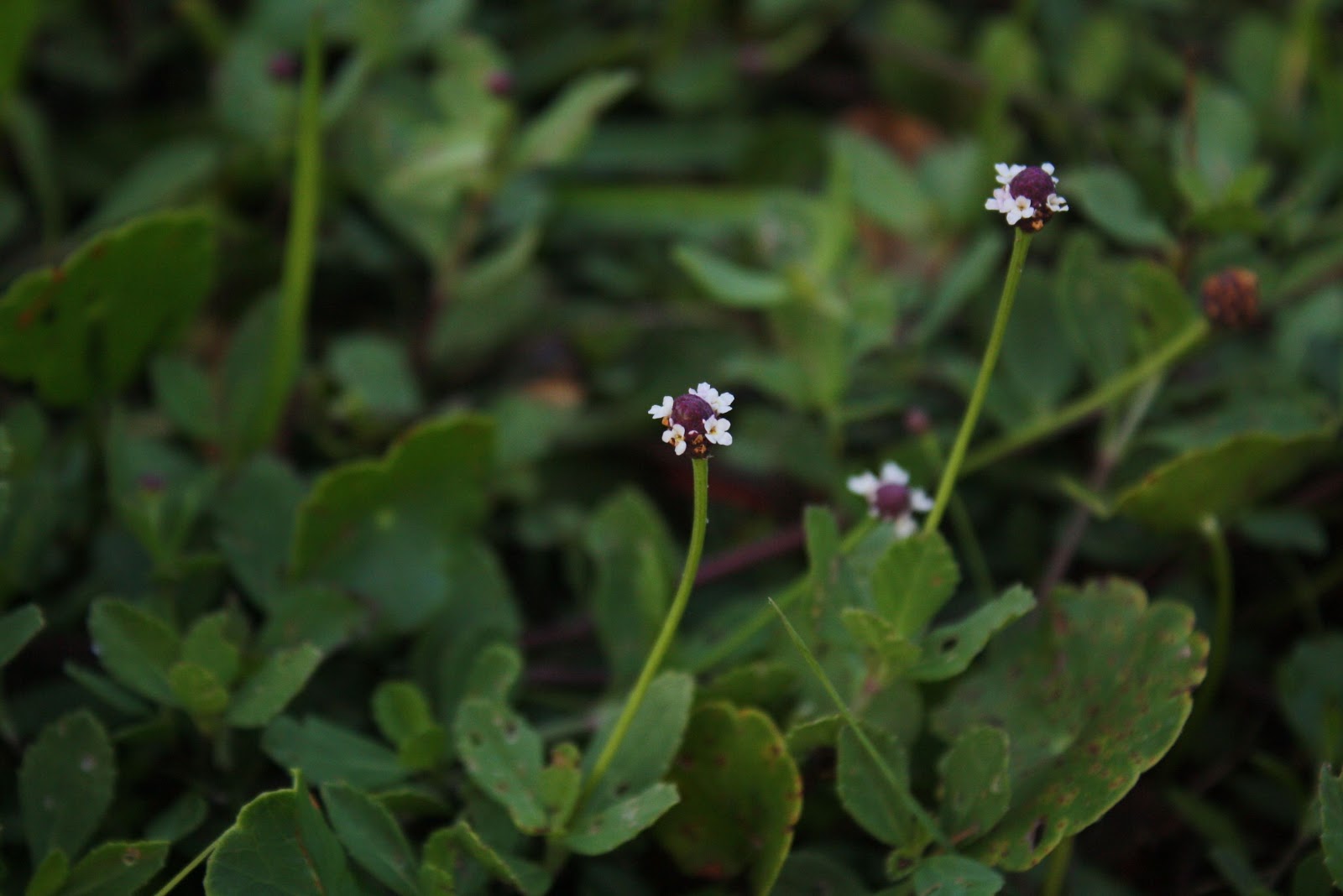
Phyla nodiflora, Turkey Tangle Frog Fruit Green Roof Plant
Sedum Acre, Green Roof Plant

 The above photographs were taken two days ago.  Both plants have been established on a green roof for at least six month.  They are not recent transplants.  Both flourished earlier in the cooler temperatures.

An important note here before we proceed, even though Jacksonville may not receive much rainfall there are many afternoons this time of the year where water vapor is significant (high relative humidity) and temperatures on the green roofs are reaching for 66C (150F).  Hot dry afternoons with high relative humidity toy with us gardeners as we watch the dark, afternoon clouds build only to fizzle out without a drop of rain.

The high air humidity both hurts and helps. Helping because any water in the air is good.  Hurting because the hot wet air encourages Southern Blight Fungus and other fungi to grow and attack some of the green roof plants.

I love the name Turkey Tangle Frog Fruit (Phyla nodiflora) and Frog Fruit is a low growing groundcover plant native to the Americas, from Brazil to the Unites States.  Frog fruit is acclimated to the high humidity and hot temperatures and fungus and drought, growing well under the harsh conditions.

Sedum on the other hand is beautiful during the cooler days when the high humidity and temperatures are not around to incubate Southern Blight and the other fungal culprits.  But when those afternoon temperatures reach up into 'Hot' levels and the air water vapor content is high, Sedum may wilt as Southern Blight proliferates.

One could fill the air spraying fungicides across the roof, the chemicals drifting across the neighborhood to help keep the Sedum alive.

Sedum is not a native though.

I'm sure one day someone will genetically modify Sedum to be more like Phyla.

Phyla grows and keeps on growing despite the heat and humidity and lack of rain.

Sticking with native plants just makes sense.  Especially on green roofs.  I need to heed my own advice.

Wednesday, May 11, 2011

Biodiversity to the Nth Power from Green Roofs & the Dance Language of Bees

I am awestruck by the biodiversity value Green Roofs bring to a site, especially when native wildflowers and plants are used as part of the design.

Back when we were doing the original BioDiversity Survey for the Breaking Ground Project we went around the site and categorized all the plants and wildlife we encountered during the review.  There were not many wildlife, insects, birds or pollinators during the construction phase and as Sterling Roofing installed the green roof system we did not encounter any life on the roof.

Within the first day of a plant being installed on the green roof I noticed a lone bee checking out the new vertical green, plants high up in the sky.

The bee stayed around for a while and came back each day apparently to check on the progress of the green roof and see what nectar plants were being added to her foraging area.

Then the native plants were installed and perked up with fresh flower blooms in the bright sunshine on the roof, just south of an amazing array of solar panels.

The original bee must have gone back and told the colony about the new nectar source.  For an interesting website on how bees comunicate about nectar finds be sure to visit The Dance Language of Bees website here.  The term 'Dance Language of Bees' is adorable and amazing! As the site points out, Aristotle observed of bees and their ability to tell of nectar finds ...""Each bee on her return is followed by three or four companions . . . how they do it has not yet been observed".

I mentioned the bees to Catherine Burkee, the Director of Educational Services for Breaking Ground Contracting the other day and when I arrived at the roof this morning Catherine, with camera in hand was capturing some amazing photos.  She emailed me some photos later, posted below and in her email she stated "There is so much going on up there and I could have attached 100 pictures!!! ".

Amazing!  Restoring Vertical Green to the Urban Core and the response from pollinators.  Maybe Green Roofs will help us further understand the Language of the Dance of Bees.  Surely the Bees will pollinate the wildflowers across the Green Roof - a beautiful symbiotic relationship.  Loving life on the Green Roof!
Bee & Rudbeckia by Catherine Burkee, BGC Green Roof

Borage Flower, BGC Green Roof, by Catherine Burkee

Corn Flower,  BGC Green Roof, by Catherine Burkee

Bee & Helianthus, BGC Green Roof, Catherine Burkee

Mentha, BGC Green Roof, Catherine Burkee

Muhly Grass & Helianthus, BGC Green Roof, Catherine Burkee

Thornless Blackberry, BGC Green Roof, Catherine Burkee