Thursday, April 14, 2016

Florida Nature Art, Beach Burrow

My love of the seashores here in Florida is endless.
Beach Burrow, Gíclee on aluminum plate, signed, limited edition

Gopher tortoise beach burrow with dune vegetation, including railroad vine, dune daisy, gaillardia, coral bean, saw palmetto, prickly pear cactus, sea oats and more.

Do you see the beach mouse?

Gíclee on aluminum plate. Signed limited edition.  Inquiries to kssonger@gmail.com

Monday, April 11, 2016

Updated my Obituary! Have You Written Yours? #Aortic #Dissection

I updated my obituary this week.  Yes,  it seems mostly what is written here lately has been focused around disease, dying or death.  But I am trying to get all things in order so I can turn to the fun stuff on my bucket list.
Kevin Songer's Obituary
Blah!  Who wants to write their obituary?  And the process was actually quite depressing, especially as I was trying to get started.  But the obituary writing process got easier as I wrote and thought and thought and wrote.

In fact, at first I initially felt an overwhelming and revolting sense of 'why even do this?' sweep over me like one of those big, unexpected Flagler Beach waves that crashes over you, sloshing salty water up into your nose, eyes and down into everything else attached to or part of your body.

'Yuck! Ugh!'  My right knee started it's shaking up and down while I sat trying to paint words on the blank screen with the Apple keyboard. 'Where do I start?'

Thank goodness for Google.  Type in 'SAMPLE OBITUARY' and right away a number of free self-help sites come up on the screen.  Cutting and pasting was easy and there it was - my roadmap outline to my own personal obituary.  All I had to do was fill in the blanks.

The other day I posted a note about visioning our lives as a mural we are painting each day with our actions and deeds. I was hoping my life's mural would be filled with love and joy.  As I was writing the obituary I could see that the words being penned were actually a reflection of my life's mural, but created with a pallet of words instead of paints.

My first thought was to fill it up with all the details of my accomplishments, all this this and thats that no longer meant a whole lot.  Turned out all the theses and thats was way to boring.  So I deleted all the accomplishments and focused on family and friends.  The obit was looking better with the 'family and friends' approach, but with a 'his' and 'hers' Brady Bunch clan there were a lot of names and I did not even get to the grandchildren.

As I wrote I began to feel a big sense of relief, like finally coming up out of that salty wave and taking a deep breath of fresh air and feeling the warm sun across my skin.

And I was so proud of myself!  I had to tell everyone about what I'd done, including my mother and father and even asking my teen daughter, Jincy to read over it!

Does that should way too morbid?  Maybe so, but somebody has to write an obituary for us.  In my efforts to try and have everything organized before I go, the obituary was just another item I can check off of my 'to do list' so I can get to my bucket list's fun stuff.

Just like a will and a funeral plan, everyone should go ahead and take care of their own obituary.  It actually may help keep your children, or spouse, or whoever you leave behind from having to tell all those little white lies when they try to think of what to say about us.  Ha!

Minor edits have already crept in and I am sure that over time the text content will evolve and does my life.  And I certainly hope not to use it anytime soon!

But the words have kind of fashioned my time here on this planet with these people into a manageable mouthful of verbal art that hopefully reflects my life's mural, something tangible I can carry around with me like my name.  Something that can help guide the rest of my life maybe and give me cause to stop and consider how people will really remember me, something right out of my Facebook page - lol!

So here is my draft (Yes!  DRAFT - not to be used anytime soon I hope) obit.

Hope it inspires you to write one too. -

----

Kevin Shea Songer, (Age)
Kevin Shea Songer, (Age), died (Month and Year, 20xx), in his home in Fort Myers, Florida.
He was cremated. A service was held Friday at Lovers Key State Park in Lee County, Florida.
Kevin was born March 24, 1957, in Atlanta, GA., to Louis and Paula (Morrow) Songer.  He grew up in Hialeah, Florida, attending Meadowlane Elementary and Palm Springs Junior High in Hialeah.
He graduated from Leon High School, in Tallahassee in 1975 and Judy Marie Songer on April 5, 1995, in Crawfordville, Florida.
He held an undergraduate biology degree after attending Florida State University and David Lipscomb College and also a Juris Doctor of law degree from Florida Coastal School of Law.
Kevin experienced an unexpected aortic dissection in November 2011 and spent the rest of his life medically managing his descending dissection and related Marfan Syndrome challenges and participating in daily adventures outdoors despite his debilitating challenges.
He enjoyed art, illustrating Florida's wilderness, nature photography, Florida’s state parks, hiking and cycling with his wife and spending time with his children and grandchildren.
He actively blogged about green roofs and life with Marfan Syndrome.  His blogs are located at http://kevinsonger.blogspot.com and http://aorta-tear.blogspot.com
He leaves behind his wife, Judy Songer of Fort Myers; brother, Scott; sister Leisa of San Antonio. brother Brian of Indiana; children and step-children include; Jincy Songer and Ruairi Songer, Sesha Castagna, Kyndra Griffin, Melissa Cummings, Leslie Ferguson, Laura Griffin, Adam Griffin and numerous grandchildren, and many friends across the world who share a passion for green roofs and also those challenged with connective tissue disorders like Marfan Syndrome.
Kevin was preceded in death by, his sister Janna, a granddaughter, Heidi Ferguson; (and if any others).
XXXX Funeral Home ofFort Myers, Florida was in charge of arrangements.  Remembrances can be made to The Marfan Foundation, http://marfan.org 

Saturday, April 9, 2016

Florida Nature Art, Native Shrub and Tree Mandala Square

Native shrubs and trees are amazing as are the different ecosystems these plants make their home within.
Nature Art, Native Shrub-Tree Mandala by Kevin Shea, Gíclee on Aluminum Plate, limited signed edition
My Florida Native Shrub-Tree Mandala Square is comprised of three separate and unique mandala triads; one for uplands, one for wetlands and one for the seashore.

Assembled together they represent the nine trees and shrubs I've grown to love and adore here in Florida and together create the Native Shrub-Tree Mandala Square.

The upland mandala triad is illustrated with beautyberry, Callicarpa americana; saw palmetto, Serenoa repens; and winged sumac, Rhus copallina (aka lemonade bush) all framed with a coral honeysuckle, Lonicera sempervirens vine.
Native shrub Upland Mandala by Kevin Shea, Gíclee on Aluminum Plate, limited signed edition
Wetlands are represented by bald cypress, Taxodium distichum; red maple, Acer rubrum; and wax myrtle, Myrica cerifera enclosed in Carolina jessamine vineage.
Native shrub Wetland Mandala by Kevin Shea, Gíclee on Aluminum Plate, limited signed edition
Seashore mandala is created using sea grapes, Coccoloba uvifera; dune daisy, Helianthus debilis; and coral bean, Erythrina herbacea embraced by railroad vine, Ipomia pes-caprae.

Native shrub Seashore Mandala by Kevin Shea, Gíclee on Aluminum Plate, limited signed edition
Native plants are now being recommended and specified by both local and state governments for landscape projects, such as FDOT's wildflower and right-of-way native plant programs as well as used by private developers for commercial projects.  Of course, native plants are very often found in residential landscapes.

As word spreads of the beauty and sustainability characteristics of native shrubs, trees and wildflowers usage within the urban and created landscapes hopefully will continue to proliferate.

Florida's wilderness is filled with amazing texture, color, and importance to all life.

Florida's native plants are truly a wonder worth learning of and preserving.

Gíclee on aluminum plate, high gloss, limited editions, signed by Kevin.

Inquiries to kssonger@gmail.com.


Tuesday, April 5, 2016

Florida Nature Art, Alligator Springs

Florida's swamps and springs are amazing places.
Alligator Springs, A Lazy Florida Afternoon

Providing habitat for many plants and animals alike, Florida springs are tunnels down into a limestone subterranean aquifer from whence cold, clear water rushes to the surface.

If you've ever visited one of the many Florida springs - most of which are protected through state park designation, you will understand my fondness for these unique ecosystems.

Alligator Springs is a limited edition Gíclee on aluminum, signed production by Kevin Shea and features many native species typically found in and around a clear blue Florida spring.

Inquiries to kssonger@gmail.com


Saturday, April 2, 2016

Florida Nature Art, Red Drum, Sciaenops ocellatus in Mangrove Flats

Redfish, or red drums as otherwise known, Sciaenops ocellatus are some of Florida's most exciting fish to encounter on a trip to the flats with rod and reel.
Redfish, Sciaenops ocellatus, gíclee on aluminum plate limited edition by Kevin Shea

Enjoy your favorite game fish each day with this limited edition gíclee on aluminum plate, signed by Kevin.

Inquiries to kssonger@gmail.com

Tuesday, March 29, 2016

Florida Nature Art; Ibis, Green Tree Frogs and the Pickerelweed

Ibis' legs and beaks turn a blazing bright red during spring mating season.
Ibis, Green Tree Frogs and Pickerel Wildflower, Gíclee on aluminum plate

Once referred to as 'Everglades Chickens', Ibis, Eudocimus albus, have survived the hunting onslaught of the early twentieth century and are now a commonly seen waterbird here in southwest Florida's wetlands amongst pickerel weed plants, Pontederia cordata.

Can you find the alligators?

The Green Tree Frog, Hyla cinerea, on the other hand is now under attack by the larger, more aggressive brown Cuban tree frog.

The smaller native tree frog requires taller plants to escape the invasive predator but with urban development, proper habitat for the Florida native amphibian to escape within is rapidly disappearing.

Celebrating Florida wilds in art!  Gíclee on aluminum plate, signed and numbered limited edition.

Inquiries to kssonger@gmail.com.


Monday, March 28, 2016

Florida Nature Art - "Mangrove Creek" with Great Blue Heron, Ibis, Spoonbill, Cormorant and Seagull

Mangrove Creek is one of my favorite places to go along Florida's southwest coast.
Mangrove Creek, Gíclee on Aluminum, Signed, Limited Edition by Kevin Shea

This is a place full of beauty, mystery and healing.

Not only do amazing colors flow together but sounds I never hear in the city surround me, like the Mangrove Snapping Shrimp - hearing this third loudest but tiny sea creature should be on everyone's bucket list.

Sea birds call.

Gentle salt water currents lap the shoreline.

It is good.

Gíclee on aluminum plate or canvas, 10" x 40", signed limited edition.

Inquiries to kssonger@gmail.com.

Saturday, March 26, 2016

Florida Nature Art, Ghost Orchids, Dendrophylax lindenii and the Cottonmouth, Agkistrodon piscivorus

Mandala for Saturday is Ghost Orchids and the Cottonmouth.
Mandala Ghost Orchids and the Cottonmouth by Kevin Shea


Dedicated to the Fakahatchee Strand park in the Everglades.

Gíclee on aluminum plate with hanging racks on back, signed limited edition by Kevin.

The ghost orchid is many times found on pop ash trees, as illustrated in the mandala.  Pop ash, Fraxinus caroliniana is a small tree typically found growing in many parts of South Florida's everglades.

Along with the pop ash, the mandala celebrates a variety of lichens, including Christmas lichen, Cryptothecia rubrocincta.

Celebrating nature and biodiversity through wild art!

Friday, March 25, 2016

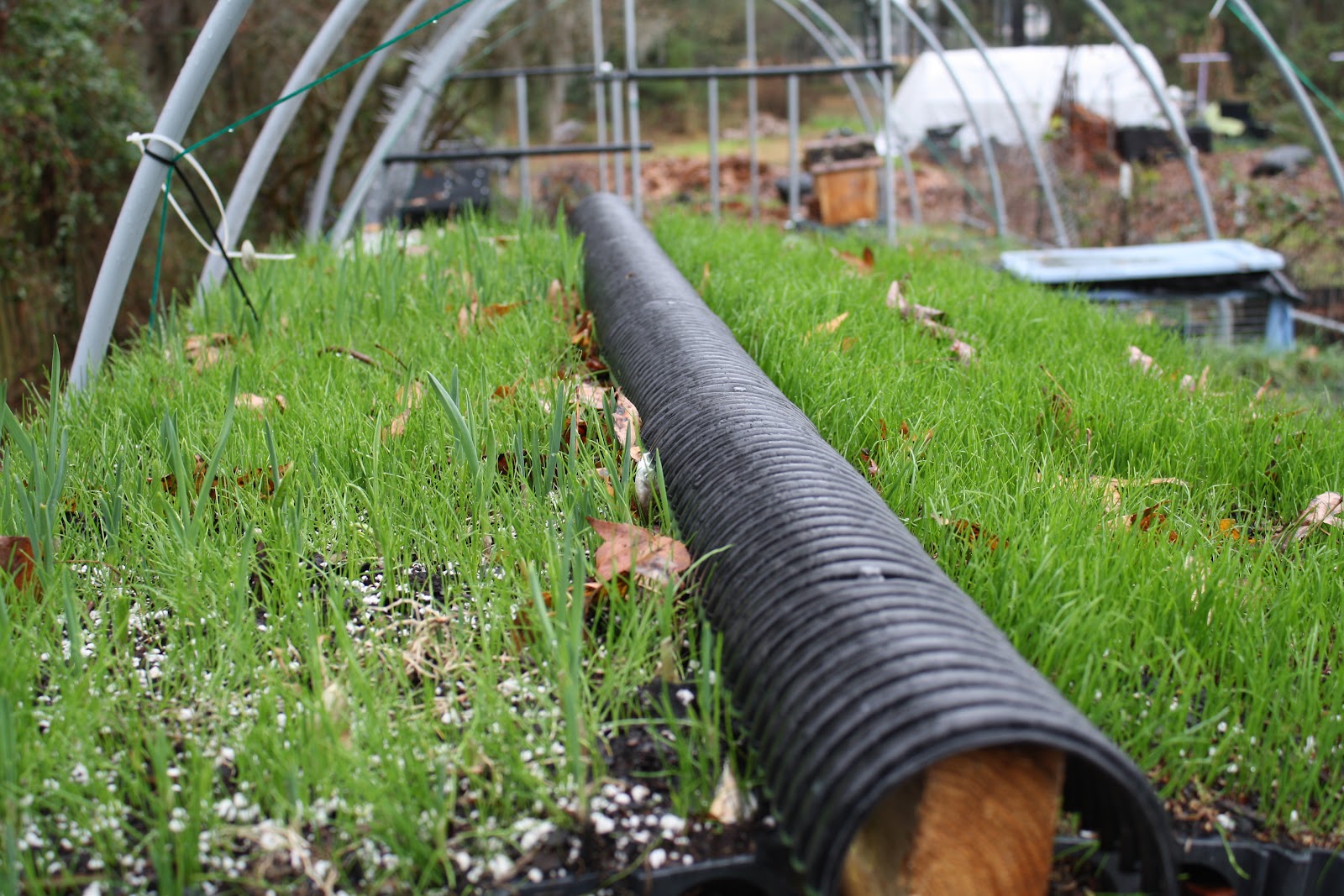
Rabbit on a Stick, Green Roofs, Fresh Fertilizer & Florida Permaculture

My green roof friend in France once suggested a good way to eat rabbit is on a stick with mustard.  It sounds good, 
but I've never tried rabbit on a stick.
Florida Permaculture Garden's Jack Rabbit in his Green Roofed Pen
However in the Florida Permaculture Garden rabbits played an important permaculture role.  The bunnies provided us
with some of the most potent, ready to use fertilizers.
Ruby the Rabbit, Florida Permaculture Garden
In the Permaculture Garden, rabbits are one of the easiest livestock animals to keep.  They are quiet (except when a 
predator is around), their poo is ready to use without the required cooling off period normally associated with chicken 
manure, they are tasty and reproduce at lightening speeds.
Permaculture Green Roof for Rabbit Pen under construction

Our rabbit hutch has a vegetated roof.  Simple permaculture concepts.  Rabbits eat clipped forage off their green roof,
rabbits grow, rabbits poo, we use the rabbit poo to fertilize and grow more plants on the rabbit hutch green roof, 
rabbits produce more rabbits and green roof plants feed the babies.
Rabbit forage on the Pen's Green Roof
Perfect perpetual motion machine.  Almost.

Fortunately, the rabbit hutch green roof was not expensive.  In fact, the hutch was built with only recycled stormwater 
panels, used felt material, wood scraps, old tin sheets and some chicken wire left over from the hen coop.
Remember, for green roofs on the cheap - structure, soil media and proper plants!
The rabbits loved their 'green' coop and the living roof kept them cool during the hot summer months.

We had the very best permaculture fertilizer one could have, a gift from the rabbits in return for their 'green' digs.
Florida Permaculture Garden's Green Roof Rabbit Pen makes for happy & hoppy bunnies
Much the way many living wall designers use felt or a non-woven geosynthetic, I rolled and inserted the felt fabric 
into the stormwater panels for a base growing platform.  The panels were placed atop a standard piece of roofing tin 
over wooden rafters above the rabbit cages.
Simple piece of tin covers the pen rafters under the DIY green roof system
The purpose for using the 50mm stormwater panels was to give the living roof a structural dimension, one that would 
place the weight of the green roof over the stronger outside pen supporting walls rather than on the rafters.
A reused gutter drain served as a green roof crown cap
Once the felt was embedded, rabbit poo, leaves and compost was added to the panels.  Garlic, rye and  other forage 
plant seed was added.  Soon the roof was green with tempting bunny forage.  The felt acted to wick water across the 
roof,  provided oxygen, drainage and a structural grid for roots to attach to.

Green roofs don't have to be expensive.  Think - support, innovative soil platform and proper plants.

As for the rabbits, I'm a vegan so I'll stick with collecting poo pellets for fertilizer!

Thursday, March 24, 2016

Florida Nature Art, Monarch and Milkweed

Monarch and sulfur butterflies (Danaus plexippus and Phoebis sennae) and milkweed (Asclepius tuberosa) mandala.
Monarch and Milkweed Mandala, Florida Nature Art by Kevin Shea

Gíclee high gloss on aluminum plate with hanger, limited edition, signed by Kevin.

Tribute to amazing butterflies and an amazing wildflower.

Contact kssonger@gmail.com for inquiries.

Sunday, March 20, 2016

Florida Nature Art, Sea Turtle and Kelp Mandala by Kevin Shea

Enjoy the endangered sea turtle mandala below.  Available on aluminum plate with hanging rails (produced in Germany) in 15" diameter size or larger upon request.
Sea Turtle and Kelp Mandala by Kevin Shea

Limited edition signed and numbered.

Inquiries may be directed to kssonger@gmail.com

Tuesday, March 15, 2016

Aorta Diet for Aorta Health, No Fat But Oh So Hearty

Tonight's Potato and Vegetable Bowl meal is created to promote aorta health and improve gallbladder issues.
Aorta Health Diet - Potato and Veggie Bowl, No Fat
This meal contains no additional oils or fats.  The only fats are those found naturally in the plant ingredients, such as the important omega 3's occurring in the broccoli and other veggies used.

What I like about this meal is it's heartiness.  I need solid, filling food sometimes and this dish fills the order besides being delicious!

Another bonus is that the meal is quick and easy to make.  Total preparation time runs about twenty minutes.  This is important for me as I can not stand for long periods of time.
Start by chopping and steam cooking your vegetable selection
To start I steam chopped vegetables in a stainless skillet using a little water or rice vinegar to the stir-steam from sticking, adding more water as the veggies steam.

Tonights veggies include: sliced and diced portobello mushrooms, chopped sweet onion, chopped garlic, and broccoli florets.  You could also add chopped carrots, peas or corn too.  The portobello's texture is very much meat-like and will fool some people into thinking they are eating steak.

I add lemongrass-based red curry powder and organic tamari along with a teaspoon of ground ginger and turmeric.

Potatoes are cooked in the microwave for ten minutes then whipped with hot water.  Add salt and pepper to taste.
Cooked potatoes whipped with water, salt and pepper (skins included)

Place the warm mashed potatoes in a bowl and surround with the steamed veggie mixture.

Aaaaaah.  Your aorta and your taste buds-stomach will be very happy.

This is a low calorie, high fiber meal.  Always consult your doctor before changing diets.

Aorta healthy diets can be so much fun!

Monday, March 14, 2016

How Strong Is Your Aorta? Even Dissected the Aorta is Tough and Durable. The Plywood Matrix.

For a couple years after those two open heart surgeries night time would bring with it a Pandora's Box full of demons I created in my mind.
Aortic Dissection.  Check out my existing intima flap!  Both sides are patent but the false lumen is a dead end.

Recently I put a lock on that box.  Once in a while, in an evening's moment of self pity I'll still unlatch the box and peek back inside.  And then regret hits me for days.

Laying in bed at night the fear of dying would consume me.

Each new twinge of pain or hurt was a prelude to, as Fred Sanford used to say on his TV program Sanford & Sons, "Oh, this is the big one".

Unlike Sanford & Sons, my fears weren't funny at all.

Getting all my 'loose ends' tied up and affairs in order helped, but whenever I opened that wicked box again demons flew in my face.

The years of fear that my aorta was going to 'pop' paralyzed me, mostly when I lay down to sleep in the evening.  During the day I kept myself so occupied that time never arose where I could concentrate on my ever imagined mortality as I could after quietly sliding under the sheets.

Looking back on the night when I dissected and drove myself to the ER, I was not afraid then - even when the doctor told me what was going on and of my chances.

Laurence Gonzales in his book, Surviving Survival, suggests that the real challenge to our sanity comes not during the traumatic ordeal but afterwards when our demons gather around.

I grew to dread sunset for that was when my demons would gather to discuss my future.

Then one day I met this interesting doctor.  We moved to Fort Myers from Palm Coast so I could avoid the cooler winters.  My Raynauds issues prevented me from participating in many activities when the temperature dropped below 60F.

My new primary care physician came with multiple recommendations from friends.  I liked him instantly.   He listened to my thoughts and discussed my ideas as valid rather than quacking dismissing them.

Blood pressure maintenance was critically important when managing an aortic dissection long term he reiterated.  And he praised me for maintaining a 'low risk' range of 105/60 with  a pulse of 60 beats per minute.

'Doc' as I'll refer to him, told me a blood pressure of 105/60 carried with it almost no risk for causing cardiovascular damage.  He repeated the 'almost no risk' over and over.  This has stuck in my mind.

"But Doc!" I'd exclaim. "My aorta is peeling apart!"  It could blow at any moment.

"Yes it could with a high blood pressure.  I have patients with systolic over 200 and diastolic approaching 150.  In their cases, yes.  The aorta could rupture."  He shook his head. "But your aorta is still strong.  And your blood pressure is perfect for long term management."

"What do you mean my aorta is still strong?" I asked, puzzled.  "I feel like my aorta is much like a thin, over filled balloon ready to burst!"

"That is what I hear from my other dissection patients," he replied.

"Listen, let me use an example.  Your aorta, Kevin, is built like a sheet of plywood.  Think of layer upon layer of wood glued together.  Now like plywood may do if it gets wet, your aorta has had the inner layer separate.  Plywood does this often but still retains much of its original strength for a very long time".

He continued.  "We know you have a connective tissue challenge so your aorta and body parts may have a tendency to separate.  This is aggravated especially when you have high blood pressure.  However when you remove most of the stress from the layered plywood or layered aorta, the remaining layers can hold up for a very long time.  You may well live a normal life span."

I could relate to his analogy.  There are plywood boats I've seen warped and separating but still floating.  Plywood used to cover windows many times stays in place for years.  It is easy to imagine the difficulty of trying to pull a separated layer of plywood apart from the remaining wood panel.

"Hmmm" I muttered.  "So even though I have a seriously dissected aorta, the remaining layers are still quite strong'" I said.

"Yes, very strong.  Now aneurysms do happen and aortas do rupture, but not 'normally' with proper blood pressure control.  Keep your blood pressure down, avoid straining of any type, eat healthy and exercise."

"Wow, Doc."

"You are going to live a long time I suspect.  Anything else we need to talk about?"  Doc shrugged and opened the examining room door to usher me out.  "See you in six months or sooner if you need to come in."

The battery of annual CT scans and echocardiograms I have seem to prove Doc right so far.  My dissection/ aneurysm is stable, not much change so far after four years.

Now I am not an unrealistic dreamer.  I do recognize the seriousness of my condition, after all my aorta is dissected from the ascending Dacron graft down into my kidneys and iliac arteries.

But for some reason the idea of a tough matrix like plywood, even though it is separated, puts my mind at ease, at least to the point of where I don't feel anymore like I have to invite the demons each night to come and discuss my future.

Perhaps it was Doc's almost caviler attitude about not being too concerned with the chances of an immediate aorta rupture.  Perhaps it was because I could relate to just how long warped plywood could last.

Definitely it was a paradigm shift from the thin over filled balloon to a low pressure tough matrix vision of my heart and main blood vessel that convinced me to snap the lock shut on that box of taunting demons.

I believe there is truth in what Doc says.

And because I am convinced that my aorta is a separated but still quite strong I am not going to burst or pop any given moment, I have been able to go to sleep with less worry.  Maybe I will, maybe I won't burst in all reality.  But if believing in the strength of plywood keeps me from opening that wicked box at night, then I will keep on believing.

Blood pressure control is very important.  And with proper blood pressure control my layered blood vessels may really stay put.

Plywood matrix means strength.  And our aortas are quite strong.

Finally, lying in bed the other night I realized that our friends, family and even dissection and aneurysm forums on social media are like a strong matrix too.  We all help hold each other together.  We are the glue and layers of a very strong community.

I like the idea of strength in matrixes, even if there is a misaligned layer here or there.

How strong is my aorta?  Plywood tough!


Sunday, March 13, 2016

Florida Nature Art, Horseshoe Crab, Limulus polyphemus, Tricolor Heron, Egretta tricolor and the Sanibel Estuary

Mandala Horseshoe Crab Estuary
Red mangroves, seagrapes, the tricolor heron and horseshoe crabs celebrate life each day in the Sanibel estuaries on the lee side of the island.

Salty breezes, snapping shrimp popping in the near distance, wading birds calling and flying overhead as the sun sets - these are nature's wonderful attributes found back up in the mysterious red mangrove bayside inlets of Sanibel Island.

Mandala Horseshoe Crab celebrates life.  Each plant and creature alike glorify our infinite cosmos, the wonder of life.

15" Gíclee on aluminum plate with hanger, signed and numbered limited edition print.  Inquire kssonger@gmail.com.

Friday, March 11, 2016

Florida Nature Art, Mandala Monarch, Danaus plexippus and Milkweed, Asclepias tuberosa

Mandalas are awesome, the circular nature and abstract content layout actually open my mind to new universes of awareness.

Mandala Milkweed and the Monarch by Kevin Shea
Monarch butterfly's beauty invites my mind to travel deep into the universe.  Intricacies finer than cut gemstones reflect and diffuse sunlight into amazing hues of orange and burnt sienna.  Nature is amazing.

Monarch butterfly's larval food of choice is butterflyweed or orange milkweed.  Orange milkweed is a magnificent native plant here in Florida and across many  portions of North America.  Drought tolerant, milkweed takes sand or dirt and a minimal amount of water and produces stunning, bright orange terminal flower clusters.

Mandala monarch and milkweed was a challenge to turn into art.  The brilliant orange colors of both the monarch butterfly and the orange milkweed are unusual in nature and were difficult for me to integrate into an overall color scheme my eyes could accept.

I spent hours outdoors studying habitat and both the native plant's leaves and flowers as well as the monarch larvae and adult butterfly.

Mandala Monarch takes me up and away high into the sky.  I am ready for the migration voyage across the Gulf of Mexico to great oyamel firs found within mountain valleys of Michoacan Mexico.

We live within the midst of amazing, infinite nature.

Travel there with the Monarch and Milkweed mandala.  15" diameter Gíclee on aluminum plate with hanging rack attached to rear, signed and numbered limited edition print.  Inquires may be directed to kssonger@gmail.com


Sunday, March 6, 2016

Florida Nature Art, Mandala Elderberry, Sambucus nigra and Purple Hairstreak Butterfly, Altides halesus

Elderberry is a magnificent native wildflower and fruit bearing plant, cherished by humans and wildlife alike.
Elderberry and Purple Hairstreak Mandala by Kevin Shea

Flower and Berry Detail
Great purple hairstreak butterfly can often be seen foraging across elderberry flowers in parts of Florida and across the nation.

I like to think elderberry makes a great urban landscape planting.  She is drought tolerant, grows quickly, provides good screen coverage with her foliage and attracts birds and pollinators.

Elderberry fruit makes delicious jam, jelly and of course is renown for our ancestor's elderberry wine.

The purples and greens in this mandala take me to those hot summer Florida afternoons where the mockingbirds are calling and sweet, cold ice tea is in my cup.

I love this Florida nature mandala.

15" diameter gíclee on aluminum plate with hangers, numbered and signed limited edition print.  For inquiries contact the artist kssonger@gmail.com

Saturday, March 5, 2016

Seepage Sand Mandala, Florida Native Plant and Wildflower Art

Seepage Sand Mandala. 
Seepage Sand Mandala by Kevin Shea
About a year's worth of illustrating. Seepage sands habitat are special. Our plant nursery was located in such an area and I grew to love and appreciate the native plants and wildflowers. Seepage Sand Mandala incorporates; gallberry, shiny blueberry, smilax, rayless sunflower, xyris, pitcher plants, Sabatias, Grass pinks, Sundew and more ( check out the level of amazing detail ). Limited edition ink on aluminum plate. Inquire kssonger@gmail.com


Level of detail

Sunday, February 28, 2016

Bidens Beggar Tick Mandala, Gíclee on Gloss Aluminum Plate, 16" Diameter

Bidens alba is one of those native wildflowers you see every day, or at least I do. In my opinion,
Bidens Mandala by Kevin Songer - Nature & Wildflower Mandalas

Bidens is one of the most important pollinator plants in Florida and across much of the nation. When most other wildflowers are dormant due to drought, floods, cold or heat, Bidens can usually be found blooming somewhere in the neighborhood.

 During most of the year Bidens can be found bluing at the seashore, along the edges of ponds and marshes, in creeks, across sandy vacant lots and even in the gutters of buildings!

The Bidens mandala contains three of my favorite Bidens species; Bidens alba (white), Bidens laevis (usually found growing in wet ditches), and Bidens mitis (little yellow blooms filling marshes and creeks).

The mandala is created on gloss plate aluminum and each is numbered and signed as a limited production print of 250 total.

Enjoy Florida wildflowers in your own home with one of Kevin's wildflower mandalas!

Wednesday, February 24, 2016

Aorta Dissection - Once Dissected Always Dissected

Yes, I know.  There are a few documented cases of spontaneous dissection healing.

Surviving Post-Dissection Life
But the maxim still holds true.  Once dissected always dissected.

This is hard for me to accept because I am a 'fixer'.  I always have been a fixer.  My family depends on me being a 'fixer'.

Even if I've never fixed something before I have always had the mindset that I could figure out how to fix it.

I can't fix my dissection.  Even if I could fix my dissection there is no going back to life the way I lived before the great rip.

Once dissected always dissected.  We've passed through a new door.  Our life's path has changed permanently and forever.  We have been irreversibly ripped asunder out of life's assumed normalcy. Post-dissection, we now walk in the unknown.

There is no turning back.

We have survived scares and hours of surgery, often unexpected emergency room intervention.

We've re-lived a thousand times over the fear of 'what is happening again" with each new pain or pulse of hurt ringing in our body.

We've laid quiet in the night, our loudly beating mechanical heart parts not beating loud enough to hide noises the grim reaper makes just outside our window.

We've struggled with loss of memory and with loss of happiness all the while our family wonders what has really happened to us.

And for some we've lost our abilities as providers and as 'fixers'.

But though some of us have passed on, many are still here.  As each tomorrow becomes another today we begin to see that the end may not be so near as we once perceived.

Steve Gee recommended the book 'Surviving Survival' by Laurence Gonzales to me the other day over coffee.  Steve too is a dissection survivor.

Gonzales in his book says of survival, " the true transformation in the journey comes when you see the amazing beauty of the place in which you are trapped.  This is the vision of the vision quest.  You embrace the pain, discard your concerns about death, and then the world opens up to you."

I would add, "there is no going back".

Another dissection survivor, Timo Söderlund often says, "today is a good day."

Most every day is a good day now for me.  But it wasn't always this way post-dissection.

Along my healing path there were many times where hopelessness just seemed to heavy a burden to bear.  And it still does even today sometimes.

Yet Timo Söderlund is right.  Today is a good day.

Somewhere along my healing path the immediate trauma of emergency dissection repair began to subside.  An instinct to 'survive survival' arose from deep within.

Laurence Gonzales further states in his book that survivors of deep trauma often will later say something to the effect of, "I'm really lucky.  I don't regret that this happened to me. What surprises me is something so horrific has been such a positive experience in my life."

This is surviving survival.

And I am now to that point along my healing path where I want to turn the trauma into transformation.

Today is a good day.  Even despite the very difficult challenges.

Gonzales offers twelve strategies to move us through survival, including;

1.  Want It, Need It, Have It. (Do something daily you are passionate about);
2.  Be Here Now;
3.  Be Patient;
4.  Be Tough. (Learn to suffer well (This is hard!));
5.  Get the Small Picture;
6. Put Things In Their Place;
7.  Work, Work, Work;
8.  See One, Do One, Teach One.  
9.  Touch Someone;
10. Be Grateful;
11. Walk the Walk;
12. Life is Deep, Shallow Up. (Learn to laugh at ourselves once in a while).

Dissection life has many maturation levels.  They are all hard.  They all are immediate and all consuming.  Each person has their own time table for the different stages of their post-dissection life journey.

I am mostly over the shock.  Now I am seeking out what the adventure has to offer - the opportunities and the possibilities.

Don't get me wrong.  I don't expect to do something 'great' or 'earth-saving' with my life.  I just want to survive.  As Judy says, "there is honor in being like the flowers.  They bloom and they die.  That is life."

Yet there can be adventure and opportunity in survival too.

I see the opportunity.  The 'See One, Do One, Teach One' calls out to me.

If you want to join some of us who have moved past the initial shock of dissection and are exploring what life can offer dissection survivors then search Facebook for the group "Adventures In Life After Aortic Dissection".  This is a closed, private group.

There are many other good dissection support groups, including one of my favorite, "Aortic Dissection Support Group".  Be sure to also follow Aortic Dissection Awareness Day and the John Ritter Foundation of Aortic Health.  Finally, The Marfan Foundation is another great resource to be plugged in to.

Life does offer many adventures and opportunities, even post-dissection.

They are about surviving survival.


Friday, February 12, 2016

Railroad Vine Mandala, Ipomoea pes-caprae Gíclee on Gloss Aluminum Plate

Mandala art form has always touched my heart.  I see the infinite cosmos and minute life forms flowing through the circular designs.
Railroad Vine Mandala Ipomoea pes-caprae, 16" dia Gíclee on Gloss Aluminum by Kevin Shea
Working on a collection of native plant mandala's I began to really become attracted to the luminescent railroad vine, Ipomoea pes-caprae.

Railroad vine grows in the salty sands of frontal dunes and attracts so very many beachfront pollinator insects as well as me, too.

I invite you to journey into railroad vine mandala.  You can actually hear the waves come ashore then flow back into the deep.  With wind in your hair, sand between your toes and salt on your lip, let railroad mandala minister peace to your urban soul!

Really, I just love the colors of this Florida native plant.

If you'd like a 16" diameter Gíclee on gloss aluminum with a hanger attached, then please order below. The 16" diameter railroad vine mandala is a limited edition production, 250 total and each piece is signed and numbered.

Thank you!

Feel free to email me if you have any questions.  My email is kssonger@gmail.com