High soil pH and urban soil composition is the reason the Jacksonville Whole Foods living walls are not flourishing. Soil pH is a measure of acidity or alkalinity in the dirt.
As we mentioned, the health food grocer has a high-quality stainless trellis system installed near the front entrance and on the south side of the store building. Yet the plants have not successfully established themselves and grown well. The store has been open now for several years, allowing plenty of time for the plants to send down roots and add upper biomass.
The present store facility was originally constructed where another building had been demolished. It appears some of the original slab was reused, and significant amounts of concrete, crushed block and other previous building material was integrated into the soil during site preparation.
Most plants prefer a soil pH of between 5.6 up to 7.0. Many native and adapted Florida Friendly plants vines require an even lower pH to thrive.
Soils with a high pH, such as the urban soils in the Whole Foods living wall planters, restrict nutrient availability (specifically iron, zinc and manganese), stunting planted vine growth and causing yellowing of leaves.
Although some soil amendments appear to have been added during final landscaping, the type and quantity were not adequate to encourage strong plant growth.
There are several simple remedies available to the Whole Foods site. The site could easily be supporting massive amounts of flowering, fruiting and beautiful vines by mid summer 2012.
First there needs to be a minor excavation of existing planter soil, both around the front columns and then within the southern wall planter box. This soil does not need to be discarded.
Second, an appropriate amount of ammonium based fertilizer should be mixed into the soil. Ammonium based fertilizers typically contain ammonium sulfate or sulfur coated urea. Ammonium and oxygen react to form nitrite/nitrate, water and hydrogen ions. The hydrogen ions then work to acidify the soil.
One advantage urban soils usually have is the variety of soil particle sizes and if not over-compacted, can provide for adequate oxygenation of the soil. Oxygen and ammonium provide nutrients for the plants and help counteract the higher pH of the urban soils.
A quick field test of the Whole Foods planter soils reveals significantly higher than normal pH.
Amending with organic matter is another possible approach. Composted pine bark, pine needles, oak leaves, properly composted food scraps can also release both needed nutrients and hydrogen ions into the soil. Another benefit of the organic mulch route is that earth worms and other soil life will quickly create extensive micro-communities, contributing additional nutrients and providing for nature based soil aeration.
Once the Whole Foods planter soils are amended with the proper amount of ammonium based fertilizers, the soil can be replaced and plants installed.
Of course, care should be taken not to over-fertilize. Excess amounts of ammonium based fertilizers can burn the roots of installed plants, creating a whole new set of problems.
With amended soils in place, plants can now be chosen to highlight the wonderful health food selections available within the Whole Foods store.
Selecting beautiful, sometimes unusual and otherwise ethnobotanically important plants is the fun part of site living wall design.
Our next post will describe what plants we'd suggest for the Whole Foods living walls.
Showing posts with label whole foods. Show all posts
Showing posts with label whole foods. Show all posts
Thursday, March 1, 2012
Tuesday, February 21, 2012
Dead Living Wall - Why? Case Example, Whole Foods, Jacksonville, Florida
During our last post we looked at a marvelous grid system creating the structure for numerous living walls covering the Whole Foods grocery store in Jacksonville. Although shiny and stainless steel living wall mechanical support system was superb in construction and installation, the plants have decided over the past three years or so that they do not like something about the entire design and are refusing to do much except die or just barely survive. Today we will discuss why these plants are not thriving and tomorrow we will look at recommendations for plant replacement.
Over the years we've come to understand Living Walls to be one of the most significant challenges for the urban core landscape designer, and for many reasons.
Living walls, unlike horizontal ground level landscapes are subject to exponential more desiccating exposure from winds because they exist on a vertical plane without typical ground level wind-breaks. Additionally, the same holds true for sunlight exposure. Both sunlight and wind can rob the living wall plants of much needed water, thereby breaking the Calvin cycle of photosynthesis and denying the plants life sustaining nutrients.
Last year we posted an article on why we consider wind and light to be the two top design factors for green roofs and living walls.
Too much or not enough light dooms a living wall plant through impact on photosynthesis, yet even though there was concern raised about the quantity of available light under the store's front area, the southern facing living wall, with plenty of light exposure, was not growing either. Our model pointed to issues other than available daylighting.
Wind too, though usually a primary design variable, did not seem to be impacting the living wall as we first thought it may. Our hand held anemometer, though granted was used over a limited period of time, did not record any wind speeds of greater than one meter per second and in fact showed the building itself was acting as a sufficient windbreak.
However there are other factors to consider when analyzing the Whole Foods dead living wall. A secondary design variable we often look for is the presence of alleloism and adjacent allelopathic plants, such as cypress.
We did not find much to suggest allelopathic issues on the site, though allelopathism can sometimes be overlooked. Chemicals produced in the leaves of some plants can act just like herbicides, preventing other plants from growing. Sometimes allelopathic acting leaves may accumulate on a roof and act as a herbicidal drench during rain as water fills gutters and downspouts.
There was a more interesting issue presenting itself though. Though living walls have been grown successfully around limerock outcroppings and stone walls, the correct combination of soil amendments, plant selection, light, available water and wind breaks must be present for the growing successes a landscape designer seeks.
The Whole Foods living wall systems were constructed directly over an old, demolished commercial building foundation and though some organic matter has been added by the landscape installer, the urban soil composition on site is obviously full of concrete.
Concrete contributes to a high pH. High pH restricts available nutrients and itself has a negative impact on plant root's ability to absorb water. However some plants are very well adapted to growing in these higher pH conditions. Yet many are not.
The attitude of 'lets pour a couple bags of potting soil into a whole around the plant's roots' just doesn't work though. Many times landscape installers take the shortcut, placing their unreasonable hopes for a lush wall on the struggling plant.
Understanding urban soils, concrete and how to amend these soils for the right plants comes with years of experience.
Though we are all aware of cost control, long term dead living walls installed without consideration to matching plants to all growing variables do not provide the cost benefit originally proposed during the architectural and landscape design.
Whole foods has many options available to produce magnificent living walls for the Jacksonville store.
In sync with cradle to cradle concepts, Whole Foods could, once the right plants were installed in the correctly amended soils for the light levels and wind exposures, use a compost barrel in back of their store - or as an educational part of their landscape - and use produce destined for the landfill to begin building wonderful planter soils. Solutions do not have to be messy or expensive. Living walls create habitat for Florida green tree frogs and Florida anoles. Biodiversity acts as integrated pest management for fly and bug control.
Why are Whole Foods living walls dying?
Wrong plants for the urban soils. Urban soils needing specific micronutrients and other factors.
Next post will discuss specific recommendations to create a lush living wall.
Over the years we've come to understand Living Walls to be one of the most significant challenges for the urban core landscape designer, and for many reasons.
Living walls, unlike horizontal ground level landscapes are subject to exponential more desiccating exposure from winds because they exist on a vertical plane without typical ground level wind-breaks. Additionally, the same holds true for sunlight exposure. Both sunlight and wind can rob the living wall plants of much needed water, thereby breaking the Calvin cycle of photosynthesis and denying the plants life sustaining nutrients.
Last year we posted an article on why we consider wind and light to be the two top design factors for green roofs and living walls.
Too much or not enough light dooms a living wall plant through impact on photosynthesis, yet even though there was concern raised about the quantity of available light under the store's front area, the southern facing living wall, with plenty of light exposure, was not growing either. Our model pointed to issues other than available daylighting.
Wind too, though usually a primary design variable, did not seem to be impacting the living wall as we first thought it may. Our hand held anemometer, though granted was used over a limited period of time, did not record any wind speeds of greater than one meter per second and in fact showed the building itself was acting as a sufficient windbreak.
However there are other factors to consider when analyzing the Whole Foods dead living wall. A secondary design variable we often look for is the presence of alleloism and adjacent allelopathic plants, such as cypress.
We did not find much to suggest allelopathic issues on the site, though allelopathism can sometimes be overlooked. Chemicals produced in the leaves of some plants can act just like herbicides, preventing other plants from growing. Sometimes allelopathic acting leaves may accumulate on a roof and act as a herbicidal drench during rain as water fills gutters and downspouts.
There was a more interesting issue presenting itself though. Though living walls have been grown successfully around limerock outcroppings and stone walls, the correct combination of soil amendments, plant selection, light, available water and wind breaks must be present for the growing successes a landscape designer seeks.
The Whole Foods living wall systems were constructed directly over an old, demolished commercial building foundation and though some organic matter has been added by the landscape installer, the urban soil composition on site is obviously full of concrete.
Concrete contributes to a high pH. High pH restricts available nutrients and itself has a negative impact on plant root's ability to absorb water. However some plants are very well adapted to growing in these higher pH conditions. Yet many are not.
 |
| Living walls can successfully be created even in rock & concrete filled areas |
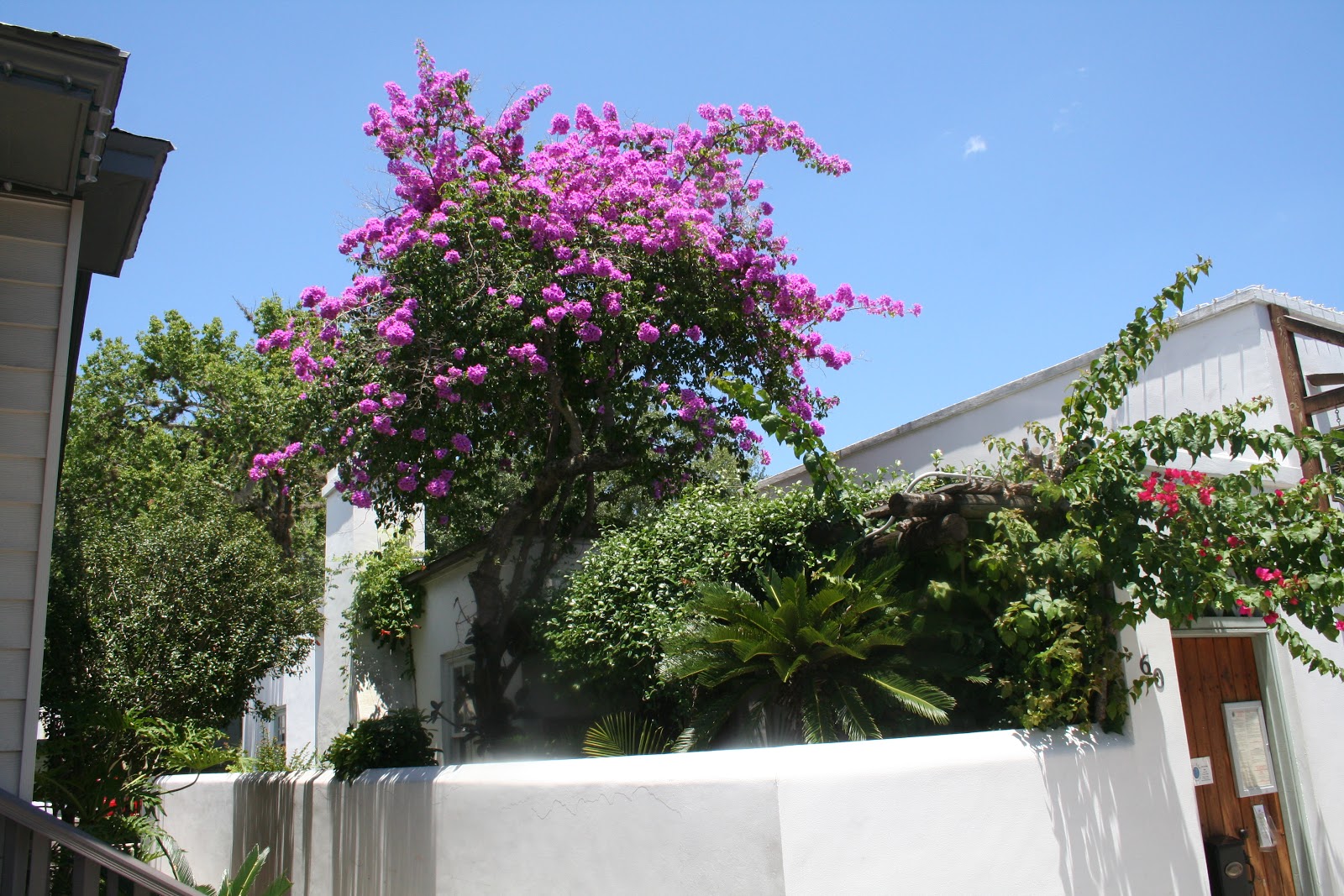 |
| Plants and concrete can exist side by side with the right design |
Understanding urban soils, concrete and how to amend these soils for the right plants comes with years of experience.
Though we are all aware of cost control, long term dead living walls installed without consideration to matching plants to all growing variables do not provide the cost benefit originally proposed during the architectural and landscape design.
Whole foods has many options available to produce magnificent living walls for the Jacksonville store.
In sync with cradle to cradle concepts, Whole Foods could, once the right plants were installed in the correctly amended soils for the light levels and wind exposures, use a compost barrel in back of their store - or as an educational part of their landscape - and use produce destined for the landfill to begin building wonderful planter soils. Solutions do not have to be messy or expensive. Living walls create habitat for Florida green tree frogs and Florida anoles. Biodiversity acts as integrated pest management for fly and bug control.
Why are Whole Foods living walls dying?
Wrong plants for the urban soils. Urban soils needing specific micronutrients and other factors.
Next post will discuss specific recommendations to create a lush living wall.
Friday, February 3, 2012
An Expensive Florida Living Wall's Death. Why?
Florida boasts several wonderful Whole Food stores and I enjoy shopping within, relishing the samples of exotically delicious cheeses, thin sliced blood oranges and store-made salsa.
What went wrong? Who did the install and design?
After yesterday's visit I chose a chair on the marketplace's front patio, affording me an opportunity to sit and think about why their beautiful and very expensive Florida Living Wall trellis system and plantings had miserably failed.
 |
| Whole Foods' dead Florida Living Wall |
The living wall failure was nothing new. Ever since the store's construction and opening in 2008-2009 I had watched in fascination at the shiny stainless cabling and support brackets, hoping to see a lush, tropical wall of living, breathing vegetation established, one providing habitat for Florida's native anoles and tree frogs (themselves wonderful pest-management strategies), cleaning stormwater, fixing CO2, pumping fresh oxygen into the air, providing a much needed Sense of Place in an otherwise increasingly Urban Concrete Jungle and more.
However, despite the expensive trellising, cabling and other stainless attachement hardware, the wall supported little else but brown, dried and dead plants and vines.
 |
| Florida Living Walls must be designed with appropriate criteria to ensure survival |
Such a shame because the trellising highlights the main entrance. Customers must walk past the dead vines and plants to enter the store. Though I am not a high-powered marketing expert I can easily recognize a sense of failure, brown and disappointment that most people would subconsciously acknowledge when walking past the dead vines and plants.
What went wrong? Who did the install and design?
Surely the trellis system was expensive enough and fabricated from a high quality material.
Why, after numerous attempts at plantings by staff and contractors are the living walls still dead?
 |
| Invasive Nandina is hiding the failed Florida Living Wall, Whole Foods, Jacksonville, Florida |
These are all questions a good living wall designer must ask themselves long before final project specifications and ultimate installation.
Certainly the issue is not one of plants and constructed buildings being fundamentally unable to coexist. As we read in yesterday's post 'Green Roof Sleuthing' shows us just how compatible plants and structures actually are and in fact, buildings would soon be overgrown with plants if left unattended.
Some landscape designers I've talked to scratch their heads, wondering why the plants they typically specify and use in horizontal landscapes just dont work in Living Wall or Green Roof applications.
And there are many very important differences.
I've always said Living Walls are magnitudes times more difficult to design and successfully keep looking good in the long term.
So the designer needs to be on his or her game up front. All important design criteria must be analyzed and recognized when specifying all the components of a Florida Living Wall System.
As I rested on the front patio of the Whole Foods Marketplace in Jacksonville and examined the Living Wall design, the issues became obvious. The opportunity for a magnificent Florida Living Wall, one that would greet customers with lush texture, color and scents was there. Some of the components though were missing or ill-installed.
So what is the answer to the Whole Foods' dead Living Wall in Jacksonville?
Tomorrow's post will discuss what I perceive mut be done to produce the Florida Living Wall, one that would greet customers with lush texture, color and scents and truly welcome and invite money-spending clients inside.
Subscribe to:
Posts (Atom)