Showing posts with label urban farm. Show all posts

Monday, November 23, 2020

DIY Worm Bins, Two Bins for Permaculture Efficiency

 Two red wiggler worm bins are much more useful to the urban permaculture operation than just one solitary bin.

Two Red Wiggler Worm Bins Increase Compost Production

Any number of worm bins, including just one, are better than no worm composting bins.  Worms can quickly turn kitchen scraps into black castings rich in nutrients, forming the basis for an inexpensive yet excellent organic fertilizer.

Here on the Pensacola Permaculture Urban Farm we used one worm bin for a year or so with good success.  The downside to one worm bin was the daily addition of fresh kitchen scraps.  Adding food scraps daily prevented the red wigglers from completely digesting the bin food and converting the waste to compost.

We tried segregating fresh food to one side but as we periodically turned the bin contents with the shovel, the fresh food would inevitably mix with the finished compost.

Now, with two worm bins we can allow one bin to fully compost once the worms are well on their way to digesting the scraps while using bin number two for fresh kitchen waste.  Rotating the two bins allows for efficient worm composting functioning.

Our red wiggler bins are approximately three feet by four and a half feet in length by one foot deep.

DIY Worm Bin base materials include screen, ground cloth, block & concrete

DIY Worm Bin sill ready for top construction


DIY Worm Bin top is constructed from reused lumber and roofing


We constructed our bins by clearing a level area of space and laying heavy duty poly screen and groundcloth on top of the ground.  A layer of concrete mortar was placed in the form of a rectangle and concrete blocks were then placed atop the mortar layer.  Additional concrete mortar was mixed with water and placed into and in between the concrete blocks.  The concrete mix was then allowed to harden.


Worm Bin lids are constructed with reclaimed aluminum roofing panels

Once the concrete cured a 2 x 4 sill was constructed and attached to the cured concrete with anchor screws.  Hinges were installed and a top built from scrap wood was topped with recycled aluminum roofing.

Worm castings mixed with perlite ready for potting up plant starts

The DIY worm bins are inexpensive to build and provide an efficient and sustainable way of recycling food scraps all the while producing organic worm casting fertilizer.

Every Urban Farm needs two worm bins!

Sunday, October 4, 2020

Rooting Plants From Cuttings, Willow, Salix caroliniana

Prepping Salix caroliniana cuttings for rooting in a mason jar

Purchasing plants from the home improvement store or from your local nurseries can be expensive with quart size or one gallon specimens starting at six to eight dollars apiece and going up from there.  Ten plants can easily run one hundred dollars including sales tax.

There are other alternatives however.  One such alternative is taking cuttings from mature plants and rooting them in your kitchen window.  Rooting plant cuttings is much easier than most people consider, and doesn't take a whole lot of time.  Over the years, Judy and I have rooted hundreds of thousands of cuttings to use in the permaculture garden, sell or give away to friends and family.  There are so many plants already established in yards and across forests and farms.  Always make sure you have the permission of the property owner when taking a plant cutting.

Salix caroliniana branches ready for cutting and rooting

Roses, rosemary, marjoram, basils, figs and even native hollies (Ilex spp.) can be rooted in a mason jar half filled with water then placed in an area protected from the desiccating wind that provides partial shade and exposure to partial sunlight.  Friends and family always love the gift of a freshly potted garden plant.  Having a nice supply of rooted cuttings out back is also a great way to send unexpected company on their way when the visit is over.

I always carry freezer bags to store cuttings until I get home.  A wet paper towel included keeps the cuttings damp.

The other day we were out and about and came across a Coastal Plains Willow, Salix caroliniana, a native tree found growing through Florida.  Willow is an important plant for every yard for many reasons.  Willow serves as foraging and communal habitat for wildlife and birds, sequesters carbon, mitigates urban heat island effect, creates fresh oxygen for the air, is a traditional medicinal plant and besides being beautiful, the inner bark serves as an excellent rooting compound for those harder to root hardwood cuttings.

Willows enjoy damp soils and will grow in areas of your plot where other plants wont thrive.

Coastal Plain Willow cuttings in the window ready to root

I cut three or four twelve inch stems from the back side of the willow and placed in one of the gallon size zipper freezer bags I normally carry for obtaining opportune cuttings, also splashing a handful of water into the plastic cuttings bag.

Back at our urban farm permaculture place I half filled a mason jar with collected rainwater and placed the cuttings in the jar.  We've built a small shelf in the kitchen window to hold these rooting jars.  I like the plants in the house too.  In fact I could probably live in a living house made from plants.

Within a couple weeks small new roots began appearing from the semi-hardwood cuttings and within a month (be sure to refill the mason jar as the water evaporates) the cuttings each had a mass of roots and were ready to transplant up into 4" pots.

Once transplanted into the pots we give the rooted cuttings a couple of weeks for good root establishment, watering daily, before giving away as gifts or planting in the garden.

Salix caroliniana, Coastal Plain Willow rooted cuttings in their destination pots

There is no secret to rooting plant cuttings.  The incision I make when cutting a branch from the mother plant is angled and I like to find the sweet spot between hardwood and softwood on the branch.  This sweet spot varies between plants but is generally six to 12 inches from the branch tip.  Cuttings will root at just about any length though with the right mojo blessings.

Why buy plants?  Supporting your local nurseries is a good thing.  But if you are a poor botanical artist like me then cuttings are botanical candy!

Saturday, July 11, 2020

Okra Coffee. Café Quimbombo.

Florida Permaculture Okra Seeds, ready to roast and grind for a great brew

I traded for a fat bag of okra seeds last week.  A foot rub for a bag of cleaned grey-brown kernels.

As we've mentioned here before, okra is a member of the hibiscus family.  The flowers, leaves, buds and seeds of hibiscus family plants are used in a variety of worldwide cuisines.  

Okra, like many of the other mallows, has a long-standing relationship with humans.  I've read where okra seeds have often been roasted, ground and used to make a coffee substitute throughout history.  For example, during the civil war coffee was often a scarce commodity.  The tradition of roasted okra seed brew had been passed down through the generations of plantation workers and with okra being a convenient crop, the plant was turned to when coffee beans were unavailable.

The strong brew is really tasty and I believe the aroma of roasting okra seeds is sweet, much like the scent of heated coffee beans.
Florida Permaculture, hot, rich cup of okra coffee

Our seeds had been harvested from longer sun dried pods, much too tough to eat.  Once the seeds were cleaned Judy stored them in a freezer bag and there they set until I traded for them.
Florida Permaculture, roasted okra seeds ready for grinding

Best roasting temperature I've found is about 375 F.  I spread the seeds across a sheet of parchment paper on a cookie tray and place in our convection oven.

The seeds are roasted and ready about five minutes after you begin to smell the aromatic, coffee like scent coming from the stove.

Remove the seeds from the oven and allow them to cool.  I process the seeds in a coffee grinder on an espresso type setting and store in an air tight glass jar in the refrigerator.
Florida Permaculture, roasted and ground, ready to make okra coffee

Use about the same amount of ground okra seeds as you would coffee.  You can use a drip pot, boil in a pan or use a French press.
Florida Permaculture, pot of okra coffee, smooth as Starbucks

Be sure and save any left over brew as it makes excellent cold tea.
Florida Permaculture, leftover okra coffee makes a delicious tea

The flavor to me is slightly bitter, like coffee and possesses many layers of fruit and wood flavors.

Here in Florida okra coffee is certainly much more sustainable than beans imported from far away countries.  Okra is easy to grow too, and the plant gives much more than just the seeds.

Okra coffee does not contain caffeine but a simple hack would be to add a bit of dried yaupon holly leaves to your okra java; that'd get your engine revved.  And tastes delicious too.


Saturday, February 18, 2017

Intense Small Scale Urban Permaculture, Urban Sustainability

Truly amazing how much food can be grown in a tiny space.
Urban Permaculture Genius. Maximize food and flower production in tiny city spaces.
Tried and proven permaculture methods can ensure fertilization, efficiency, pollination, irrigation and wind protection for maximized food production.

Though the above may sound industrial or way too mechanical, with plants the ends result is beauty.

Beauty and food.  Sense of place and habitat for pollinators.  Soil stabilization and enrichment. Urban heat island cooling remedy.  Carbon and nutrient sink.  And much better than turf grass lawns.

Kudos to Judy Songer on one of her urban permaculture garden designs!

Sunday, July 15, 2012

City Farming in Jacksonville, a Permaculture Narrative

Read about Kevin and Judy's experiences with all things Urban farming.  Ducks, geese, turkeys, rabbits, hens and thousands of plants all on a city lot!

Available through Kindle here!

The Real Scoop about Urban Farming!


Permaculture & DIY City Farming - Patio, Backyard, Roof & Walls

Over the past thirty years we've accumulated much hands-on experience with growing food, flowers, fiber and medicinal plants in the Urban Core.

City Farmed Permaculture Eggplant
Many approaches we tried turned out to be les than optimal.  However we considered even the failures to be successes for we knowing what doesn't work is just as important as knowing what does work.

City Farmed Permaculture Bell Peppers
City farming can occur anywhere where sunlight is available.

Of course, rain or condensate helps.  But we've successfully grown plants and seen plants grow in the most harshest of places, without soil and without additional irrigation.
City Farmed Permaculture Oranges
Growing lightweight food gardens on roofs has taught that even without massive roofing supports and even in cyclone prone areas, beans, tomatoes, herbs and greens can be grown.

Living walls can shade windows, provide habitat for wildlife, produce food, gourds and sponges.
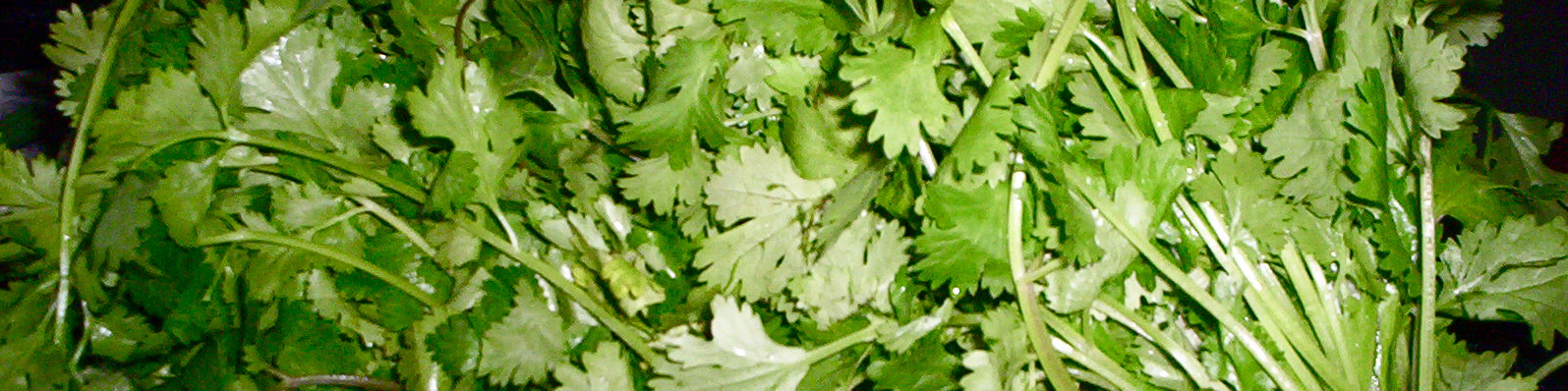
City Farmed Permaculture Cilabtro
Patio space may be utilized to create highly efficient food gardens in self-watering containers.

Hens, geese, ducks, turkeys and rabbits all have a place on the Urban Farm.
City Farmed Permaculture Chives
Learn about rooftop gardening, how to build a low cost, highly effective chicken coop or seed starting greenhouse.

Understand biodiversity principles of plant selection.

Urban Farming - our best dreams and worse nightmares.

Know what you are geting into before the adventure of your life!

You can read the details in our approximately two hundred page City Farming book available on Amazon Kindle!

City Farming, Lovely Urban Insanity is available exclusively through Kindle by clicking the link here!

Sunday, March 18, 2012

Florida Permaculture, Urban Farm Geese & Hallelujah

Video clip of our  Jacksonville Urban Farm Geese, Ducks and Turkey enjoying Jeff Buckley's Hallelujah while foraging for their morning snacks.


Geese especially, love to sing and dance to the music.  Ducks generally follow the lead from the geese.  The turkeys love the geese and ducks but do their own thing,


Wednesday, March 14, 2012

Florida Permaculture, Life on the Urban Farm


Never name an animal that you plan to cook later and don’t be surprised if the critters jump and fly or run after you’ve removed their heads.


Animals are put on the earth here for food for us, plain and simple.  And the whole purpose of starting with twenty six chickens was to have enough to cook one every couple of weeks on top of all the eggs we’d get.

Kevin & Judy's Urban Farm Fowl (Turkeys)

Kevin & Judy's Urban Farm Fowl (Ducks & Geese)

Kevin & Judy's Urban Farm Fowl (Baby Goose)
Even Momma told me about her Mom, my Grandma, who’d clean a chicken each week in Miami and cook the very best fried chicken one ever tasted. 


Never mind the fact that it has taken ten to twenty weeks to raise up the fowl from the cute little fluffy balls of chirps, gobble and quack, fifty pounds of weekly scratch feed, countless thousands of gallons of fresh water and the emergence of a strange but strong love-hate relationship, the animals are meant to be eaten.


My friend Pascale, the green roof expert from France even recommended mustard with cooked rabbit on a stick.


Judy however has decided that raising an animal from babyhood commands too many feelings of love and protection to take the killing and eating of what have essentially become our pets lightly. She woke up breathless one night from a dream in which we were eating rabbit stew.   We were eating Jack, Ruby, Thumper, or Midnight. This was when we understood we'd probably not try to breed more rabbits for food, them being mammals and all. 


The chickens should have been easier, but Judy grew very attached to the hens also. Raising them from fluffy little day old chicks (what could be cuter?) to awkward but endearing pullets and on to beautiful hens with iridescent beauty and sweet natures has made it very hard to want to eat our cluckers. I think we are just not hungry enough perhaps. 


Then there is the question of “embodied energy” and not just the spiritual idea of sacred life force. Embodied energy is the issue of how much water and food it takes to raise a chicken, duck, turkey, goose, or rabbit to a mature eating size. 


Judy has come to the conclusion that it isn’t wrong to eat meat or to raise and kill your own animals for food. Animal food is nutrient dense in a way that our bodies can utilize well. Raising your own meat animals is kinder to the critters in the long run than buying factory raised animals. 


Killing and eating an animal is a momentous act and shouldn’t be taken lightly. Perhaps this is why there were so many laws concerning the killing and eating of animals in the Old Testament, such as a lamb not being cooked in it’s mother’s milk and other rituals concerning the slaughter of animals including offering them to God. Contrast these ancient ways with the modern practice of supermarket meat wrapped in plastic and styrofoam and the practice of basing our diets on meat, such as some of  the ill-advised “low- carb” diets. 


Moreover, I’d suppose many of us would stop eating meat if we had to kill the critters and dress them out, disposing of the innards and carcasses.  Importantly, most cities and municipalities who allow for Urban Farm animals prohibit the slaughter of said animals in residential areas.  However, there are many licensed butcher and slaughter houses across the country, one probably not too far away from your farm.


A sharp machete and well placed swing will quickly dispatch most of the Urban Farm animals.    Butcher block and butcher knife will also work.  The knife’s motion must be swift though, to minimize pain.  Don’t be alarmed if the hen, goose or turkey continues to cackle, hoot or gobble, even without their heads.  A large, twenty pound headless turkey can especially put on a show, flying across the Urban Farm backyard, slinging blood everywhere.   If you are going to clean your own meat, be prepared to handle the gore.


Our uncomfortable adversity to killing and dressing backyard farm critters is only a couple generations displaced.  Grandparents thought nothing of slaughtering, cleaning and cooking a backyard bird or rabbit.  Really, it was the early Baby Boomer generation first forsaking the raising and killing of hens for Sunday dinner.  My mother has spoken of watching her momma cutting the hen into fryable sections soon to become delicious fried chicken.


Keep your knives sharp.  A sharp knife makes the job so much easier.  Once you’ve mastered the art of beheading and cleaning a farm critter, it should take no more than ten minutes from picking up the critter slated for the kitchen to the final wash of the meat.


I recommend a heavy butcher knife, a large, long serrated knife and a small paring type knife.  The head should be removed first, with a swift blow from the heavy butcher or a swing from a machete.  Be sure you don’t cut off your fingers and be ready for the blood.  A handy hose helps with the mess.


Separation of the legs and wings using the serrated knife follows the head.  Place the head, legs and wings in a garbage bag and using the small paring knife, slit the outer layer of skin from the neck down the chest about four inches.  Set the knife on the butcher table and using both hands pull the skin and feathers away from the underlying meat.  The skin should easily come off, similar to a pair of pajamas pulled off in the morning.


The feathers and skin goes into the same garbage bag as the legs, wings and head.  Once the bird is de-skinned it is time to remove the entrails.  Open the birds chest with the small sharp knife and reach in, grasping all the internal organs and intestines, pulling them out and placing all the guts in the garbage bag.  Try not to puncture to intestines.  Be sure to remove all internal parts and wash the cleaned bird down with the pressurized water nozzle.  Wash the carcass even more thoroughly if the intestines are punctures during the cleaning process.


Cleaned critters can be cooked immediately or wrapped in plastic grocery bags and placed in the freezer.


Urban Farm critters that are allowed to free range grow tough and stringy very quickly.  If you choose to eat your animals, consider cleaning the young and tender.  Sinewy meat may smell good in the oven baking or on the range frying but once stuck tightly in between teeth, opinions quickly change.


Killing and dressing your Urban Farm fowl and rabbits is the most honorable way to eat meat if you choose to do so.  Taking full responsibility for the death of and cleaning the of a creature before enjoying his or her meat is an educational opportunity.  Understanding the full impact of meat’s life cycle creates sustainability, it creates an intimate awareness of our actions.  Though we may choose for a season to ignore how  grocery store meat arrived on the shelves or in the freezer, the ignorance will eventually catch us individually and as a nation.  Participatory meat preparation celebrates the gift of meat made by your critter and sheds light on the true value of life.


Even better, consider becoming a vegetarian.  This may be easier than you think, for once you experience killing and dressing out a bird or rabbit, your personal attitude concerning carnivorous habits may change.   


Judy may agree to eat some of the ducks, geese and turkey that are already put in the freezer, but meanwhile it is still summer and it is easier to have a vegetarian diet supplemented with our fresh eggs and organic yogurt right now.   Me; due to the spiritual complexity and cost effectiveness of killing and dressing out, I am pretty much done with the meat (though it is amazing just how quickly we soon sometimes forget).

Monday, March 12, 2012

Florida Urban Agriculture and Rabbits


Judy’s Maxim to Remember:  Best thing about the rabbits is their poo, because you can use the rich manure right on your garden without waiting. 
Kevin’s Maxim to Remember:  Our rabbits were intent on eating and mating, not necessarily in that order and irrespective of whether the other rabbit was a male or a female.
Rabbits can be a wonderful addition to the Urban Farm.  The hoppers are truly one of the easiest critters to provide care for.  Rabbit poo can be likened to steroids for plants, giving them the required nutrients for a rich and deeply vibrant color, encouraging the plants to grow fruits and vegetables  of monumental size.  Rabbit pellets and composted chicken poop combined are the only fertilizers your Urban Agriculture venture will ever really need.

And rabbits don’t take up much space.  Compared to the farm birds, rabbits can survive in a much smaller cage.  Therein lies a serious dilemma we came to struggle with.  Though many raise rabbits to feed their pythons (or sell to pet stores for python food) we raised rabbits first for their poo and second as a source of high quality meat.

Interestingly, we were very successful  with the use of poo, yet we quickly came to realize we could never kill our bunnies for a meal.


We fed our rabbits pelletized feed made for bunnies, packaged in fifty pound bags and bought from Standard Feed.  Of course the vitamin filled feed was supplemented with the better stuff, fresh greens from the garden and the occasional carrot from the kitchen.


Rabbits must have their water checked several times a day.  With heavy fur coats, they desperately need hydration during Florida’s long hot summers.  Be sure to give the water dispenser a good daily spray down, keeping it clean and free of algae or gunky growth.

As mammals, rabbits are different than the Urban Farm birds.  Looking you in the eye, sniffing and then cuddling up against your neck, a rabbit is more like a pet dog or cat than a hen or turkey.  


Culturally, most of us are used to eating chicken or turkey on a daily deli basis.  Though my green roof friend in France loves rabbit on a stick with mustard, we here in the U.S. have not developed that tradition to any extent.  And so for us the killing and dressing of a half year old rabbit for a five minute meal did not present itself as appetizing. 


Additionally, here in Florida where heat and humidity abound, our rabbits appeared to dread the summertime extremes even though we built their cages high above the ground with green roof shade and all the amenities we could think to include in a rabbit cage.
Not wanting to subject our rabbits to tiny, confined spaces, we tripled and quadrupled our bunny pen sizes.  Cruelty though still has a way of occupying even the largest of rabbit cages.  Rabbits were meant to be born into the wild.  Even the most spacious of outdoor cages creates a prison for the critters.  Our rabbits would stare at the veggie filled raised beds through their coop’s chicken wire sides and wonder what freedom would taste like.


Living cramped up in a four foot by four foot cage must be hard.  However many rabbit pens I’ve seen at the feed stores are much tinier.  I recommend at a minimum, rabbits be provided with twenty square feet be critter to allow for exercise room.


Bunnies enjoy running and hopping.  I suppose it is hard to do so in tiny cages and reminds me of being stuck in a way to tiny car for a very long trip.


Yes, rabbits can be very easy to take care of because they are not as vocal as the other farm critters.  The easiness is more of an out of sight, out of mind paradigm.


Before we gave Jack, our final rabbit away,  I let him out of the cage to run for a couple of days in the backyard.  Jack was our oldest rabbit too, solid black with a touch of oncoming gray. Of course he ran straight for the collards and arugula.  Jack had been staring at our practically unlimited array of leafy greens for the better part of a year.  He feasted like there was no tomorrow.


Jack was fine with running through our Urban Farm for the first day or two.  He’d leap, bounding across the rear three quarters of an acre as though he was a young bunny again.  Though he’d not allow us to come near him, he’d sleep up next to our house.  I suppose he felt some sense of security being near us at night.


But when my neighbor began to tell me he’d seen Jack in his garden I knew something had to be done.  Armed with a fishing net, the next morning I crept out and hid behind my neighbor’s tall tomato bushes and waited.  Before I knew it Jack had hopped through a hole in our fence and was headed straight for the neighbor’s turnip greens.


Though he had more organically grown greens than he could ever eat in our permaculture kingdom, Jack wanted what he could not have.


The fishing net swooshed through the air as Jack neared and before he knew it Jack was back in his cage, having experienced a brief but very happy few days of real life.


A note of caution here.  Always hold both rear legs of a rabbit very tightly when carrying as they pack a powerfully sharp punch, especially when the bunny knows they are headed back to the cage.


Though rabbits are some of the easiest of the Urban Farm critters to care for, I wouldn’t recommend starting off with bunnies.  Yes their poo is the perfect fertilizer.  Yes they are quiet and relative docile (Monty Python unfortunately gave them a bad name).  Yet subjecting the little mammals to a life in a cage seems more like cruel and unusual punishment.  Even if life behind the wire protected them from our neighborhood red tailed hawk.

Tuesday, February 1, 2011

Intense Urban Permaculture & City Farming - Plunging In!

We are serious about turning our Jacksonville lot into a productive, food-producing, permaculture based, organic Urban Farm!

And we are going to do it on the cheap!

So far the 1985 GMC pickup truck cost less than $900 bucks and we are recycling all things useable.

Though plastic is petro based and not a favorite material, it will be used if it a stable polymer type that does not oxidize as easily such as polypropylene AND if it is post-consumer recycled material.

Raised Beds made from modular wetland boxes, planted with cabbage


Use it rather than send it to the landfill.

Though I'm sure the photos of garbage bags full of leaves are becoming old, I posted another this am.

Green Roof Garlic for the rabbit hutch


Yesterday we collected 6 truckloads of huge heavy duty garbage bags full of leaves.  Judy and I laughed at the labor we received for no cost - all those hours of raking and bagging organic material for us to pick up for free!  Surprisingly, the entire lot of leaves came within a couple block radius of our Urban Farm.

Some of the bagged leaves are full of sand also, perfect for filling in those uneven holes in the back.

Rooftop Veggie Garden


We also picked up two truckloads of very clean pine straw for the pathways and the barn all for free, saving the organic matter from ending up in the landfill and providing free heavy duty garbage bags and mulch!  We stay away from those lawns that hire fertilizer companies to come and spray.

Additionally, the number of raised beds have increased from two to seven now.  Five old modular wetland boxes were adapted with drainage holes and filled with leaf compost and seasoned horse manure from a friend.

Chicken Coop being constructed from Greenhouse
Cabbage plants are planted directly in the seasoned manure over leaves in much the same way the French would plant their famous intense vegetable gardens in horse manure hundreds of years ago.
Chicken boxes from milk-crate type boxes


The garlic is sprouting now on the rabbit hutch green roof and spring is just around the corner.  Potato beds are readied and every day brings a new challenge.

Judy is reading up on chickens and I am converting our greenhouse into a chicken coop - see the photo, using scrap wire and fencing.

Free Compost, truckloads


We are using recycled milk-crate type chicken boxes for the fowl's nests!

Rooftop vegetable gardens are growing strong!

Urban Permaculture and city farming at its best!

More later!  Happy permaculture & Urban Farming from Jacksonville!

Kevin

Sunday, January 30, 2011

Urban Permaculture - Composting the Hood's Leaves

Free Compost, Cations and pH tools
We gather many truckloads of leaves every week destined for the landfill and recycle the bags and the leaves.

Not too glamorous yet very practical ( remember Louis Sullivan and functionalist architecture) collecting your neighbor's bagged up yard leaves can benefit your permaculture garden, your green roof and benefit your wallet.

Cation exchange capacity and pH are two important variables of a gardens and green roof.  Additionally, leaf compost can add valuable trace minerals needed by both the ground level and rooftop plants.

Leaf compost typically contains twice the amount of trace minerals by weight as does horse manure.

And heavy duty garbage bags are expensive.  We used to pay about ten US dollars per box at our local home improvement store.  Now we have all the free heavy duty garbage bags we need.

Interestingly, leaves from different species of trees offer varying characteristics.  While ash leaves are relative neutral in pH, some maple species leaves are documented to possess a pH of around 4.5.

Research shows use of properly composted leaves greatly increases the cation exchange capacity of soils.  One of the important functions needed in both garden and green roof soil media is cation exchange capacity.

Save $10 per month on garbage bags
 Though varying opinions of organic compost value to green roofs exist throughout the industry, many believe organic material in the soil media is highly beneficial to green roof plants.

Remember, both gardens and green roofs are individual ecosystems, intricate webs of life with complex interactions.

Collecting heavy duty garbage bags filled with fresh raked leaves (we avoid those lawns heavily treated with fertilizers and herbicides/pesticides - those lawns are easy to spot here in the US due to the small advertising signs the lawn companies stick in the lawn after a fertilizer application - and speaking of lawns and fertilizers - a short must-see video of the history of the American Lawn will have you rolling in your chair and scratching your head at the same time can be viewed here) is a positive step for the environment.

Other benefits include;
  • Free highly effective cation exchange capacity supplements from the leaf compost
  • Free organic matter from the leaf compost
  • Free trace minerals from the leaf compost
  • Free pH adjustment material from the leaf compost (this is especially important when using higher pH soil media or media high in calcium)
  • Free garbage bags
  • And a lesson to your children riding with you to scavenge that recycling is more important than pride. :)
Free Organic Mulch and Free Garbage Bags, Urban Permaculture
Enjoy the photos of the free leaf compost we gathered last week and also the free heavy duty garbage bags and as always - its great to have an Urban Farm!

Kevin