Tuesday, April 8, 2014

Amazing Power of Marfan Teenagers and Their 'Sibs'

I need to give the two marfan teens and their nephew and niece more credit.  At 14, 16, 16 and almost 18 years old I sometimes think they are still little kids and treat them that way.
Raising four teenagers is a challenge, but they can almost raise themselves now.


Unfortunately my desire to remain 'in control' prevents me from enjoying a clean kitchen, spotless house and a chore-less life.  Yeah, I know I still have to be the boss but the past couple days I've made an important discovery - teenagers can actually be an amazing group of humans!

Judy is off to Ocala to help Melissa with the birth of Jack, our 6th grandchild I think. Yikes!  My memory is so iffy.

When I met Judy she was in proprietorship of Sesha, Kyndra, Melissa, Leslie, Laura and Adam.  We then had Jincy and Ruairi together.

Kyndra's two children, Dylan and Dharma are 16 and 14.  Their mum is now challenged with the after effects of a serious cerebral bleeding episode and while she is doing physical therapy her two are living with Judy and I.

They think they'd rather play video games but enjoy the beach if I make them go...
Time out - I have to go holler through the bathroom door to tell one of them to not allow the water in the sink to continually run full blast while they brush their teeth.  Ok, they are "somewhat" pretty amazing.

The kitchen has been another issue, keeping the sink free of piles of dishes has in the past been difficult when 'Nana' off and about.  In the past when Judy was gone I would try and keep order via demands, orders and ultimatums.  'Don't do this' and 'don't do that' were my kitchen mantras.  But the sink would still pile up with dishes.  It was so frustrating!  Last thing I need with a dissected aorta is stress, right?

After repeated failures at being a successful kitchen dictator I thought I'd try something new this time.  Maybe I'd treat them like almost adults instead of little kids.

So I said as Judy left something like, "OK now you are the grownups in the house.   You are in charge of the kitchen and bathroom.  You figure out what to cook, when and clean up afterwards.  I don't care anymore."  The last sentence was a spiteful unnecessary bard said out of needless anxiety.

Three days now and I am wondering why I didn't ever think of this before.  The kitchen has stayed spotless, they have had fun cooking what they want and laughed and sang to stupid teenager songs while cleaning up after themselves.

All they needed was a little freedom and a chance to act better than many grown ups I know.

Jincy and Ruairi are challenged with many trials.  They both fight slightly enlarged aortas with lifestyle modification.  They both push themselves in school (Jincy is graduating with her AA degree because she dual enrolled in college while a junior and senior in high school) and they have to deal with me.  Jincy is my true secret weapon though.  Turn her loose as commander in chief of chores, laundry, trash and food decisions and the other three say "yes, mam!'  No one, especially younger teens, messes with a tall, imposing and almost 18 year old female.

Dyland and Dharma are worried about their mum and miss being at home.  They both, too, are doing very well in school.  I suspect as a child I would have crashed mentally without my parents.   And Jincy is moving away next month so their support system found in an older 'sib' will be gone.  Yes, they are amazing.  But they really need their mom.  Even though grandparents can be nurturing, life without a parent is so different.  Incredibly though, they are not only a pleasure to have living here, they also contribute so much quality themselves to the unique texture of our patch-work family.

So all the worry about scrubbing piles of dishes was a self-fulfilling prophecy in the before.  When I worried about it and paced the kitchen floor asking to see identification if anyone entered, the whole kitchen thing was an ordeal.

Now, well I told Judy over the phone that the kitchen is actually cleaner than I could keep it in my floppy heart condition.  And the kids are storing leftovers and budgeting food, sharing equally between them.  And they are laughing instead of sulking past my kitchen patrol duty.

Wow.  Just when I think I know it all.  Dylan and Ruairi are headed out the door now to catch the school bus.  I'll never know just how they make it down to the end of the street in two minutes but they always do.  I'd take me an hour to hobble that far.

Dylan just turned and said, "bye, Papa K.  I love you."

At 57, I still get a tear in the corner of my eye sometimes.


Saturday, April 5, 2014

Antique Louis Philippe Rose on the Green Roof

Check out the antique Louis Philippe rose blooming atop the Breaking Ground Contracting green roof in Jacksonville! @greengcjax


Florida Green Roof antique roses


Top Ten Florida Green Roof Plants, Salvia lyrata, Lyreleaf Sage

You can not find a better green roof plant than Lyreleaf Sage, Salvia lyrata.  I love to see this very special native wildflower growing across rooftops.

Top Ten Green Roof Plants, Lyreleaf Sage, Salvia lyrata, evergreen beauty
Her evergreen foliage offers an exquisite blend of deep greens, purples and burgundy with leaves laying flat against the ground and flower stems extending vertically to about 18 inches (45 cm).  Note the lyre shaped leaf form.
Foilage - Top Ten Green Roof Plants, Lyreleaf Sage, Salvia lyrata, evergreen beauty
Flowers generally are a deep ocean blue but I have seen the occasional white colored flower populations.
Top Ten Green Roof Plants, Lyreleaf Sage, Salvia lyrata, evergreen beauty
Lyreleaf sage's ability to thoroughly cover open soil media keeps weeds at bay throughout the year.  A mature population of Salvia lyrata can provide a dense, luxurious appearance.
Florida Green Roof Plants, Lyreleaf Sage, Salvia lyrata, thick plantings
Lyreleaf sage transplants easily.  If you can not find the plant in a nursery then it is usually readily found in backyards and alongside the roadside in front of most vacant lots here in the southeast.  Just make sure that when transplanting you are not transferring root-knot nematodes from the ground up to your roof project (though the pests usually can not survive the temperatures on a roof).
Top Ten Green Roof Florida  Plants, Lyreleaf Sage, Salvia lyrata, burgundy and green
This special plant will provide you with many surprises.  She will be green most of the winter when other plants have that sleepy brown appearance and provides masses of bee and other pollinator attracting blooms when most other flowers are still just thinking about blossoming.
Top Ten Green Roof Plants, Lyreleaf Sage, Salvia lyrata, evergreen ground cover
Check out our previous posts about this special plant.  Read the Seeds for Green Roof Post about her also!  Planting this extremely hardy and drought tolerant species will pay off in big green roof successes.

Thursday, April 3, 2014

Green Roofs, Rooftop Permaculture and Marketing

Check out this cool website using #GreenRoofs and Rooftop Permaculture as a backdrop to marketing their clothing line.  I like it!

http://www.gudrunsjoeden.de/Ein-Garten-auf-dem-Dach--40251d.html


http://www.gudrunsjoeden.de/Ein-Garten-auf-dem-Dach--40251d.html


Green Roof Plants, Rain-Root Zone and Root Architecture

One of our favorite Florida #Greenroof plant Genus is the Allium genus.  We've also been working with Resurrection fern also - and I love this plant.  Resurrection fern,  Polypodium polypodioides, was the first fern in space - going up on a 1997 Space Shuttle Mission to see if the roots would absorb water in a space capsule.

Green Roof Plant Root Architecture - Florida Extensive Green Roofs - MetroVerde
Both of these plants, the Allium and R. fern can have unique root characteristics, depending on how they are raised by the grower.

We call plant root structure by the name - 'Root Architecture'.

Green roof design has unique root structure and root architecture requirements.

Unless you have an unlimited potable water or well water source and are going to pump all that water up on a roof to keep plants up there watered, then your green roof plants need to be somewhat drought tolerant.

Certain root architecture patterns support plant acclimation to drought conditions better than others.

Remember, Florida's rainfalls usually are short, afternoon events of 1/2" or less and because rain generally occurs between the hotter months of the year - June - September, there is a tendency for it to evaporate quickly.

Except for hurricanes and tropical storms, rain events in Florida are usually over relatively quickly.

Meaning green roof plants have to scramble to grab the rain water.

Also recall, most green roof plants do not like wet roots (wet feet) so the soil must be well drained.

Proper green roof plant root architecture is crucial for providing a Florida extensive green roof plant with the advantages needed to survive a Florida vegetated roof.

Examine the diagram below showing the root architecture of a green roof plant raised in a one gallon standard nursery container and then a green roof plant raised in a built-in-place green root extensive planting bed.

The plant raised on the built-in-place green root extensive planting bed possesses 8 times the amount of Root-Rain surface contact area as the same size plant grown in a nursery container.

So when the afternoon 1/2" rainfall (13mm) event occurs and every drop is important - the green roof plant with the appropriate root architecture will sequester the most water.

More stormwater is captured, runoff is reduced, plants acquire necessary water volumes, plants have less of a tendency to uproot in high winds, and more.

Green Roof Plant Root Architecture is important to the success of a green roof.

For Marfan Challenged a Clean Razor Can Save Your Life!

Marfan health tip of the day - use clean razors!
For Marfan Syndrome challenged, an infection can be deadly - always use clean razors!

As someone who knows first hand use how bad a case of endocarditis can be, I am always looking for ways to prevent any instance of infection.  If you've not read my posts about how horrible a heart coated in green fungal slime can be, read here.

An infection, anywhere on the body, can enter the blood stream and impact the heart, causing dangerous inflammation.  Inflammation can cause vascular damage in anyone, but especially in those of us with connective tissue disorders like Marfan Syndrome.

Skin infections can quickly reach the heart through a cut or scrape.  Once the cardiovascular system becomes infected and inflamed, this condition can produce deadly results.

Infective endocarditis is especially dangerous for those with prosthetic heart devices such as the mechanical aortic valve in my heart and the Dacron graft across my ascending aorta.

There are many web resources pointing out the importance of using clean razors.  Like dental work, shaving impacts parts of the body close to the heart such as the face, head, arm pits or chest.  MRSA, methicillin resistant Staphylococcus aureus and other infectious diseases can be spread through the use of dirty razors.  The CDC Center for Disease Control and Prevention recommends across their web site resource pages that razors be not shared but be clean and stored dry before and between uses.

SImple little good health and hygiene practices can spare one from a very painful, even deadly episode of heart infection.

Evergreen Florida Living Wall Vine, Trachelospermum jasminoides

Here is an nice example of how vines can be used in tropical climates to create expansive living walls.

Florida living wall vine, confederate jasmine, Trachelospermum jasminoides

Growing in sunny Orlando, Florida, the confederate jasmine vine, Trachelospermum jasminoides looks to be about 50 feet tall (15 meters).  The vine has grown very woody and thick over the years at the base but still is relatively full and green from just above the vase up to the top most portion.

Florida living wall vine, confederate jasmine, Trachelospermum jasminoides
Confederate jasmine is a reliable landscape vine though it is not a native plant to the Florida area, however the University of Florida classifies the plant as a Florida Friendly landscape plant.  Importantly, unless the plant is installed in properly amended growing media, it may struggle.  Many times I have seen confederate jasmine installed in non-amended urban soils with concrete debris and high pH soils and in these instances it has struggled to establish itself, sometimes looking ragged in leaf appearance.

But once the plant begins to grow, it provides significant, evergreen foliage cover and fills the air with perfume-like scents when the flowers bloom during springtime.  This specimen was growing up and across a very heavy-duty appearing metal pipe and channel trellis.  A smaller, less sturdy system may have a hard time holding the weight of this mature vine.

I did take note of the building owner removing a grouping of old established confederate jasmine vines from another section of the building.  It is possible that because of the educational efforts of local, state and regional native plant groups that the vines may be replaced with native evergreen flowering varieties such as coral honey suckle, Carolina jessamine of others.  I personally prefer using native vine species for Florida living walls, both decisions and evergreen depending upon the application and whether solar gain issues come into play.

Living walls seem to do much better here in Florida if they are vine based, rather than vertically planted ornamentals.  The 5 H's of hurricanes, heat, humidity, hard frosts and high winds act brutally upon vertically planted ornamentals here.  Vines, on the other hand seem to adapt nicely to creating Urban Core Vertical Green if, as mentioned, the soil is amended appropriately.

For an interesting look at a very expensive living wall trellis system with struggling plants, read our series of posts here, pointing to the importance of properly amending urban soils before planting living wall vines.

Tuesday, April 1, 2014

Biodiversity, Habitat and Florida Urban Green

Vertical green in the urban core is so important for biodiversity and habitat.  Unappreciated weeds have significant ecological value.  Here is a short clip about 'weeds' growing in concrete and wildlife.

Imagine if the sides of bridges were intentionally landscaped as part of construction!

Saturday, March 29, 2014

Florida Green Roofs and Hurricanes, Storm Season is Fast Approaching

The Eastern Pacific Hurricane season begins soon and the Atlantic Hurricane season follows shortly thereafter.
Routine green roof maintenance and hurricane inspections are important for Florida Green Roofs
Hurricane design is an important consideration for green roofs.  If a green roof is to be built in areas subject to hurricane or cyclone impacts then a few simple guidelines will help make the design more resilient against wind and storm damage.

At a minimum, we recommend;
  1. No large trees on a roof.
    1. Small shrubs and small trees may be used successfully depending upon the final design.  This may seem like a common-sense guideline but people try to put all types of tall, large trees on patio or garden roofs.  During a 130 mph cyclone, the tree may be blown over and may cause damage from the fall against the structure or to the street below.  It may also become airborne if the winds are strong enough.  Growing up in Hialeah I saw plenty of hurricanes come through our area and witnessed first hand the power of these storm events.
  2. Anything and everything on a roof should be permanently attached.  
    1. Walkways should be constructed from a permanently attached TPO, EDPM or other mat and permanently affixed to the roof.
    2. No loose chairs, tables or other items should be present.  If you wish to have a chair and table stay on a roof during a cyclone, they must be permanently attached.
    3. All green roof components must be permanently attached to the structure.
    4. Any trays, plastics, pots, containers or other green roof components must be permanently attached to the building structure.  Florida Building Code does not allow for loose items to be installed on a roof - they must be attached.
    5. Green Roof Irrigation components must be permanently attached to the roof.
  3. Make sure all tools and gardening utensils are picked up and put away.
    1. It is very easy to forget the pair of shears, scissors or pliers on a roof.  Remember what you were using and where you liad them.
  4. Plant selection should be focused on those species that have historically survived cyclone and hurricane incidents.  There are several good books available at most bookstores here in Florida on proper cyclone resistent landscaping and many resources on the web, such as the Brevard County Landscaping Guide for Hurricane Areas.
  5. Check on the NOAA National Hurricane Center website daily.  The NHC webpage is a wonderful resource, full of links to climatic data.
Always use a green roof design or green roof system already proven in actual field trials with hurricane simulation testing.  Watching a green roof blow off during a storm is an avoidable event.  Due diligence upfront and preparedness is important for green roofs in hurricane prone and cyclone impacted areas.

Wednesday, March 26, 2014

Marfan Eye Haiku

Walking through Princess Place Preserve the other day I kept rubbing my eyes, seeing the usual bright purple flashes but with a much higher frequency.  Stopping for a moment I quickly noticed the flashes were really violets, new spring violets.  And so here is another haiku.


bright purple flashes
no retina detaching but
marfan violet's show
---
viola palmata, early blue violets
princess place preserve

Sunday, March 23, 2014

Florida Green Roofs and Biomimicry, Agavaceae and Dew

Nature offers the finest examples for us to look to when resolving green roof, or any other for that matter, issues.  Today I want to mention plants that catch air moisture, such as dew, and help 'irrigate' a green roof.  Let's look at some of my favorite green roof plants, Yucca and Agaves.
Floria extensive, sloped green roof
Green Roof Plants, Yucca and Agaves - note the hairs and clover, a nitrogen fixer
Yuccas and Agaves, with hairs across the surface edges of her leaves is a highly efficient fog and dew catching plant.

Likewise, with waxy, tough leaves and CAM (Crassulacean Acid Mechanism) photosynthesis, they can serve as the perfect green roof edge wind-break perimeter plant.

Yucca and Agave biomimicry tells us high dew catcher surface area to air mass contact is most efficient for air water vapor to occur. 

Many yuccas and agaves thrive in hot, dry, windy areas and make excellent choices for green roof plants.

Yucca filamentosa, Adam's needle is a favorite green roof plant of mine, reliably hardy in the freezing cold temperatures, evergreen, very drought tolerant, a dew catcher and the perfect CAM perimeter plant.

Yucca filamentosa makes an excellent green roof plant for Florida
Planted in mass, Yucca filamentosa acts as a green roof parapet, allowing interior plants a more welcoming ecosystem for growing.  This green roof plant has not only survived, but thrived on some of our older green roofs!

Yucca filamentosa also has long hairs growing from the leaf edges, allowing for water vaopr in the air to collect as the humid breezes flow across the plant.

Turbulence is another factor necessary to help drop the condensed air water vapor from the catcher to the green roof soil below.

Florida Green Roof  Plants Yucca and Agaves, Note the hairs along the plant edges that facilitate dew sequestration

Success of a nature irrigated green roof depends heavily on sourcing a steady supply of water through rainfall, fog, dew and even frost. Understanding biomimicry based green roof planting layout allows for important air water vapor collection.

Additionally, understanding the principles behind Agave's and Yucca's' water capture successes lie also in an understanding of air humidity.  Humidity is the amount of water vapor in the air. 

Humidity is an important source of irrigation for nature irrigated green roofs and is often present when rain is lacking.  Humidity is often described in terms of ‘relative humidity’ and ‘dew point’.

Relative humidity is the phrase commonly used by weather reporters to communicate the percentage as the amount of actual water vapor in the air divided by the amount of water vapor the air could hold. 

A relative humidity of 75% means air contains 75% of the amount of water vapor possibly held.
Yucca acts as a dew catcher to provide moisture to other Florida green roof plants

Dew point refers to lowest air temperature where water vapor remains in vapor form.  Once the ambient air temperature reaches the dew point temperature the water vapor condenses into dew or liquid.

Dew and fog reference and collection resources available on the web include;
  • Fogquest.org is a great informational resource on capturing dew and fog 

Air humidity can be a significant component in the irrigation of any green roof system.  Consider those months with lower than average precipitation and check to see if dew occurs frequently.  Validate the average relatively humidity percentages.  

Think of the times you have walked across a lawn in the morning to find your shoes soaking wet.

Research dew and fog collection websites.  Look to the green roof plants you work with to see what species appear to accumulate dew. 

Mimic nature.  Mimic the Yuccas and Agavaceae.

Saturday, March 22, 2014

Green Roof Benefits for Florida; Cleaning Air Pollution, Battling Cancer and Other Respiratory Diseases

Green roofs and living walls can help clean the air and allow us to breath easier.  They can also keep us from becoming sick or ill, even contracting cancer.
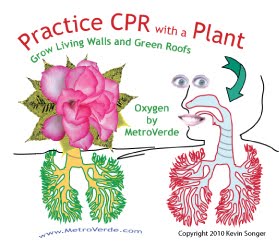
Florida Green Roof Plants are the Ultimate Fresh Air Source & CPR System
Today, many geographic locations across the globe have air contaminated with Volatile Organice Compounds also known as VOCs.

Florida Green Roof Plants Clean Air & Remove Pollutants
Volatile Organic Compounds (VOCs) are chemicals created by industrial pollution and automobile engines among other processes.  VOCs are the primary cause of Urban Smog. 
 
They are also responsible for the formation of cancers, respiratory problems and other serious health issues.  Just think of the times you have seen city smog envelope an urban area, filling the area with obnoxious and dangerous particulate matter.

According to the US EPA, the Health Effects of VOCs include:

Eye, nose, and throat irritation; headaches, loss of coordination, nausea; damage to liver, kidney, and central nervous system. Some organics can cause cancer in animals; some are suspected or known to cause cancer in humans. Key signs or symptoms associated with exposure to VOCs include conjunctival irritation, nose and throat discomfort, headache, allergic skin reaction, dyspnea, declines in serum cholinesterase levels, nausea, emesis, epistaxis, fatigue, dizziness.

Even our children understand the importance that plants play in cleaning air, see: http://www.clean-air-kids.org.uk/airquality.html .

The ability of organic chemicals to cause health effects varies greatly from those that are highly toxic, to those with no known health effect. As with other pollutants, the extent and nature of the health effect will depend on many factors including level of exposure and length of time exposed. Eye and respiratory tract irritation, headaches, dizziness, visual disorders, and memory impairment are among the immediate symptoms that some people have experienced soon after exposure to some organics. At present, not much is known about what health effects occur from the levels of organics usually found in homes. Many organic compounds are known to cause cancer in animals; some are suspected of causing, or are known to cause, cancer in humans.
Green Roofs in Florida not only provide clean air to humans but to wildlife also
For more health information on VOCs from the EPA click here. 

According to a new study - one confirming what we already know - plants -  - clean these harmful VOCs out of the air.   Read about the study in a National Science Foundation Article here.

This study makes it clear that it is especially important to have as many plants inside your building or home as the levels of VOCs inside a structure can be up to ten times the ambient levels outside.

Green roof plants can save our respiratory systems!

Plants act as filters for air and rainfall, actually removing and utilizing harmful nitrogen.  They also remove carbon from the atmosphere by using CO2 to produce much needed energy compounds and then plants pump oxygen back into the atmosphere.

Some have said that for every twenty thousand leaves in a city (a small tree - for an interesting note on how many leaves are in a tree see: http://www.wired.com/wiredscience/2012/12/how-many-leaves-are-on-this-tree/ )enough oxygen is produced each day for one person to breathe clean air.

As we are bombarded with pollutants each day, in our water and in the air - installing interior living walls, exterior vertical green - green roofs and living walls, Urban Permaculture - City Gardens, wildflowers and trees - can pay off with significant benefits.

Ultimately, we may live longer.  Ultimately, we may beat the odds with cancer or respiratory diseases.
Green Roofs in Florida clean air and can grow food
Restoring Volumetric Green to the Urban Core is critical.  Today, go out and plant a seed or a grown plant.  Bring another inside.  Hang plants from your patio walls and your kitchen window.  Keep plants in your home.  Install a green roof.

Green roofs and living walls - cleaning stormwater, creating habitat, providing a sense of place and beauty and - importantly - fighting disease by removing pollutants!

Surround yourself with plants today.  You may breath better and live longer. 

Remember, the benefits of adding volumetric green to the Urban Core include;

  • Cleaning Rainfall runoff and stormwater
  • Providing wildlife habitat
  • Supporting biodiversity
  • Creating habitat for endangered plants
  • Integrated pest management - supporting pest consuming invertebrates and amphibians
  • Noise insulation
  • Reducing Heat Island effect
  • Creating a Sense of Place and Landscape Beauty
  • and more

Friday, March 21, 2014

Florida Green Roofs, Six Must Have Living Roof Plants

Enjoy the photos of six of my favorite drought, salt, heat, cold and hurricane tolerant green roof plant species!  See more photos of additional plants on the Green Roof Wildflower website.  Wildflowers on #greenroofs are totally awesome.

Florida Green Roof plant, Coral Bean, Erythrina herbacea
Drought, salt and heat tolerant.  Hummingbird plant.
Florida Green Roof plant, Prickly Pear Cactus, Opuntia humifusa
Very drought tolerant, great coastal green roof plant for habitat and pollinators
Florida Green Roof plant, Fleabane, Erigeron app.
Tolerates wet and dry soils, wind and heat tolerant, excellent pollinator plant
Florida Green Roof plant, Blanketflower, Gaillardia puchella
Amazing hardy green roof plant, tolerating salt, wind, heat and other environmental challenges
Florida Green Roof plant, Purple Coneflower, Echinacea purpurea
Hardy, drought tolerant green roof plant that pollinators LOVE!
Florida Green Roof plant, Black Eye Susan, Rudbeckia hirta
Stunning rooftop bloomer that will flower all summer and call pollinators for miles around

Monday, March 17, 2014

Coastal Green Roof Plant, Railroad Vine, Ipomoea pes-caprae Creating a Living Roof

Here is another photo of a living, green roof created by Mother Nature's amazing coastal, salt-tolerant beach plant, Railroad Vine, Ipomoea pes-caprae.
Florida Green Roof Plants - Ipomoea pes-caprae, Railroad Vine
This plant is potentially a great addition to any coastal green roof design.  With its ability to grow into the salt water, withstand extreme heat, drought tolerant and inorganic soil media loving characteristics, Railroad Vine is a potentially great choice for many tropical, coastal green roof projects.

Here, in the above photo, the vine has colonized a parking cone, growing up into the top and outwards, creating a 'mini-green, living roof', providing habitat, attracting pollinators and shading the cone.

Nature can teach us so much about living walls and green roof design.

Coastal green roof plant, Railroad Vine, Ipomoea pes-caprae

Living with a Dissected Aorta and Marfan Syndrome, March 2014 Update

Wow, time flies.  It is March 2014 already.  Here are a few updates on my dissection challenge:

One question for my PCP will be - why does my right foot continue to grow while my left foot is shrinking?
  • I have all my Medicare paperwork now and the coverage will kick in on May 1, 2014 - just a little over 7 weeks away.  First time I will have had any insurance since my dissection hospitalization!!!  The two year Medicare waiting period is almost over!  I survived (so far)!
  • With Medicare in hand I will be scheduling a visit to the cardiologist for my annual CT scan and echocardiograms to see if my aorta is either continuing to aneuryze or is staying the same diameter.  Of course, I am very anxious about these updates and will post the news as soon as I find out.
  • I have been having my INR checked once every month, paying for it out of pocket at our local lab.  I am taking 5mg warfarin daily and last time I checked the INR was 2.2.  Fresh garden greens make up a large part of my diet so I can lower or increase INR with the amount of Vitamin K rich greens I consume.  This is easier than adjusting tablet dosage - break one in half, skip a day, yada yada.  My PCP comes up with such complicated formulas.  I've yet to tell her that I am just doing 5mg daily.  This is enough of a challenge for me as it is with my additional memory struggles.
  • I do have a list of questions/comments for my PCP, who wants me to come in soon for my annual checkup, and they are:
    • My right ankle/foot feels like it is perpetually about to collapse.  It is hard to walk without my forearm crutch.  It hurts.  I am sure there is not a lot to be done about this and I think it is just part of living with a Connective Tissue Disorder (CTD), but I will tell her about it.
    • My right wrist is the same way.
    • My sternum is still unstable, even after two years since the surgery. I clicks open and closed when I move, much like cabinet doors opening and closing.  Quite painful.
    • My right foot continues to grow and my left foot shrinks. I would think this has something to do with a blood flow imbalance.  My right illiac artery is dissected (thoracic aorta is dissected down into my right leg), so it seems to me that the blood flow to the right leg would be impeded and the right foot would shrink, but ???.  
    • I will ask her what to do about the chronic pain.  I hurt daily, usually a 7 to 8 pain level while sometimes reaching a 10 for long stretches.  Do Tens units work?  How do I deal with daily chronic pain?
    • My left eye has ongoing bouts with a dark, sideways closing curtain.  Is my retina detaching?
    • AFIB and VTACH come and go.  Sometimes my pulse will jump, out of the blue - but especially when weather fronts come through - from 50 to 150.  That throws me to the floor, literally and scares me to death.
    • I will mention the LOUD clicking my aortic valve makes but I am totally cool with living with a valve that makes noise, so long as it keeps me alive.
    • I have chronic fatigue and find myself blacking out or falling asleep right in the middle of the day sometimes.  My diet is wholesome - I do not eat processed foods usually -just fresh meat, fish, garden veggies, some fruits, no grains, no sugar, low salt (sometimes - I love salt).  I exercise - ride bike and walk and do yoga for an hour each morning.  But I think with a 50ish pulse and a heart output capacity of 20-25% that fatigue is to be expected.
    • And other questions as they pop into my mind.
  • Our teens have genetic testing and their annual echocardiograms in April.  I constantly worry about the teens, especially when their chests hurt or they feel dizzy.
  • My Florida drivers license is medically revoked so I have had to learn to get around on my bike or through rides from family and friends.  I try to keep asking for a ride to a minimum because I do not want to be a burden.  Loosing my license after driving for years was a mental challenge.
  • Depression is still a looming specter and I deal with it through prayer and spending lots of time outdoors, especially at the ocean and on my bicycle.
  • I self-adjusted my Losartan dosage - doubling it from 50mg to 100mg daily because I could not keep my blood pressure down on 50mg.  After a month or two at 150+systolic I upped the daily dose to one 50mg tab in the am and another just before bed.  This has brought my systolic back down to 115.  I could not afford to go to the cardiologist to discuss, and will discuss with him in May - though we have discussed before.  Please do not do this yourself.  
And that's about it for my life with Marfan and other CTD issues.

Stay tuned for more as it happens!


Friday, March 14, 2014

Living Wall by the Consummate Artist, Mother Nature - How I Learn About Green Roofs and Living Walls

The best school to attend to learn about Florida green roofs and Florida living walls is 'Mother Nature's' School of Urban Green.  This holds true of any coastal area, or any other area for that matter.
Florida living wall  - green roof by Mother Nature, Resurrection fern, Pleopeltis polypodioides growing out of a concrete bridge platform
As a novice designer of vertical green compared to Mother Nature, I am always looking to her to learn about growing plants on a rooftop or up a wall.
Florida green roof - living wall by Mother Nature, Resurrection fern, Pleopeltis polypodioides growing out of a concrete bridge platform
Yesterday I was on my bike, doing my daily physical therapy to hopefully maintain my dissected aorta in some sense of health, when a lush, vibrant and very tropical looking group of plants caught my eye.
Florida living wall example by Mother Nature, Resurrection fern, Pleopeltis polypodioides growing out of a concrete bridge platform
Resurrection fern, Pleopeltis polypodioides, had covered the vertical side of a concrete slab bridge platform above a creek.

Florida living wall  - green roof by Mother Nature, Resurrection fern, Pleopeltis polypodioides growing out of a concrete bridge platform
Nature had created a beautiful living wall, vertical green with resurrection fern, Pleopeltis polypodioides, and without any soil, fertilizer or artificial irrigation sources.

How does she do it?  The best way is to examine the surrounding ecology as an integrated unit.

The concrete slab provides a growing platform similar to rock and gathers solar heat during daylight hours, providing a warm area for the plant to attach roots.

The creek below contributes humidity to the air.  A bioswale could mimic this water source below a concrete wall in the urban core.

Adjacent trees provide shade and tell the green roof or living wall designer that resurrection fern may probably grow well in the shade.

And so much more information right in front of my face.  Ten minutes studying the natural living wall creation told me more than hours worth of reading would have.

Mother nature is such an amazing artist and teacher!


Sunday, March 9, 2014

Florida Green Roof Images, Herbs and Roses on the Roof

Herbs on the Florida Green Roof.  Parsley, sage rosemary and thyme.  Yesterday Breaking Ground Contracting #GreenRoof photos.
Green Roofs in Florida, rosemary and garlic chives, herbs on the roof

Green Roofs in Florida, Louis Philippe antique rose and Florida native yucca filamentosa

Green Roofs in Florida, aloe and yarrow growing on the living roof

Green Roofs in Florida, aloe is such a great rooftop medicinal plant, drought tolerant & hardy

Green Roofs in Florida, aloe in bloom on the rooftop


Green Roofs in Florida, Louis Philippe rose buds, such a lovely rooftop plant