Another geesey video clip. Our geese, ducks and turkeys are growing! They are so cute at this stage. But be not fooled with the sweetness.
Animals are all about life. Though they appear fluffy and clucky be not deceived! Even as juveniles, these critters are driven to feed and will snatch crumbs from other's beaks.
Cute, yes. Now.
You see a goose can live well over twenty years old. A duck and turkey easily into their 'teens'.
Urban Farming requires long term commitment.
Tuesday, March 20, 2012
Lightweight Green Roofs and Rooftop Permaculture, Extreme Food
Here is a very short clip of an extremely (don't you love all the adverbs!) lightweight permaculture roof for growing wild cherry tomatoes.
The roof's structural elements are made from recycled plastic electrical conduit and used hog wire fencing, fastened together with twine.
A twice used, worn out tarp is then over laid onto the hog wire.
The green roof's soil media is really just composted leaves and about 2 cm of black gold soil from out kitchen compost barrel.
I estimated the entire structure probably weights about three pounds per square foot.
The beauty of the venture is that one realizes rooftop permaculture and green roofs do not have to be expensive or complicated.
The saw palmetto, Serenoa repens, fronds provides amazing waterproof siding for just the labor required to scavenge and tie together with jute.
Creative rooftop permaculture and green roofs have their place in many places of the world. Though they probably would not be allowed in many of the snooty Home Owners Association neighborhoods (I just feel sorry for all those who bought into the HOA thing and now are so far underwater on their mortgages), lightweight green roofs and food growing systems do have a place where hunger is a daily issue, here in America and across the world.
So for all those who live in cramped quarters or downtown in an Urban Core apartment, find a roof area, balcony, fire escape or porch. We grew several hundred pounds of delicious cherry tomatoes on this roof last year and fed them to ourselves, the turkey, geese and hens.
Be creative. Green Roofs do not have to be expensive, or require massive concrete and steel beams to support.
The roof's structural elements are made from recycled plastic electrical conduit and used hog wire fencing, fastened together with twine.
A twice used, worn out tarp is then over laid onto the hog wire.
 |
| MetroVerde: Green Roof for Rooftop Permaculture, Very Lightweight |
The green roof's soil media is really just composted leaves and about 2 cm of black gold soil from out kitchen compost barrel.
 |
| MetroVerde: Green Roof Permaculture Frame |
I estimated the entire structure probably weights about three pounds per square foot.
The beauty of the venture is that one realizes rooftop permaculture and green roofs do not have to be expensive or complicated.
The saw palmetto, Serenoa repens, fronds provides amazing waterproof siding for just the labor required to scavenge and tie together with jute.
Creative rooftop permaculture and green roofs have their place in many places of the world. Though they probably would not be allowed in many of the snooty Home Owners Association neighborhoods (I just feel sorry for all those who bought into the HOA thing and now are so far underwater on their mortgages), lightweight green roofs and food growing systems do have a place where hunger is a daily issue, here in America and across the world.
So for all those who live in cramped quarters or downtown in an Urban Core apartment, find a roof area, balcony, fire escape or porch. We grew several hundred pounds of delicious cherry tomatoes on this roof last year and fed them to ourselves, the turkey, geese and hens.
Be creative. Green Roofs do not have to be expensive, or require massive concrete and steel beams to support.
Sunday, March 18, 2012
Florida Green Roofs, Wind and Fog Fences (Designing For Integrated Wind Issues)
Below are three very short video clips showing wind flow impacts on a small green roof. Understanding how wind interacts with a green roof is crucial for the designer. Unimpeded desiccating winds can kill green roof plants ever so quickly, especially on rooftop food plants.
Knowing what type of technologies to employ as wind breaks, or in this case installing a dual function fog net and wind break can help ensure the successes of a living roof project.
The first clip shows a flow of uninterrupted wind two meters above the roof top with speeds of four to five miles per hour or 2.235 meters per second.
The second clip shows wind flow across the roof surface with speeds of two miles per hour, or 0.894 meters per second.
Finally, the third clip shows wind speeds of 0.9 miles per hour or 0.4 meters per second across a living roof surrounded with a fog fence.
All of these readings were taken above the same roof and within two meters of each other.
We have seen a constant wind of one to two meters per second sufficiently desiccate green roof plants so as to kill the vegetation. Parapets can greatly help but not every building has a parapet, especially residential structures.
Fog fences produce much the same results as a parapet and are cost-effective to install compared to installing a add-on parapet.
Know your roof's wind patterns. Understanding wind flows across a green roof will increase the chances for long term survival of your green roof plants.
Knowing what type of technologies to employ as wind breaks, or in this case installing a dual function fog net and wind break can help ensure the successes of a living roof project.
The first clip shows a flow of uninterrupted wind two meters above the roof top with speeds of four to five miles per hour or 2.235 meters per second.
The second clip shows wind flow across the roof surface with speeds of two miles per hour, or 0.894 meters per second.
Finally, the third clip shows wind speeds of 0.9 miles per hour or 0.4 meters per second across a living roof surrounded with a fog fence.
All of these readings were taken above the same roof and within two meters of each other.
We have seen a constant wind of one to two meters per second sufficiently desiccate green roof plants so as to kill the vegetation. Parapets can greatly help but not every building has a parapet, especially residential structures.
Fog fences produce much the same results as a parapet and are cost-effective to install compared to installing a add-on parapet.
Know your roof's wind patterns. Understanding wind flows across a green roof will increase the chances for long term survival of your green roof plants.
Florida Permaculture, Urban Farm Geese & Hallelujah
Video clip of our Jacksonville Urban Farm Geese, Ducks and Turkey enjoying Jeff Buckley's Hallelujah while foraging for their morning snacks.
Geese especially, love to sing and dance to the music. Ducks generally follow the lead from the geese. The turkeys love the geese and ducks but do their own thing,
Geese especially, love to sing and dance to the music. Ducks generally follow the lead from the geese. The turkeys love the geese and ducks but do their own thing,
Saturday, March 17, 2012
Urban Permaculture Plants, Rosemary Propagation by Cuttings
One can never have enough plants on the Urban Farm.
Especially rosemary.
We start many of our plants from seeds. Yet some, like garlic chives and rosemary, though they can be sprouted are much easier to propagate via cuttings.
Cuttings are an easy and quick way to multiply your herb and plant inventory. Having too many herb and garden plants can be a good thing! Potted up herbs make great gifts for birthdays, special occasions or just for when you want to give company a special gift.
The following photos illustrate how I propagate rosemary via cuttings. There are many ways to asexually increase your rosemary plant inventory via cuttings. Most gardeners have their own preferred method.
I like to propagate rosemary, either the upright or prostrate variety in 72 count square plug trays. For some strange reason, the square corners of the tray seem to make my cutting's roots grow faster and fuller.
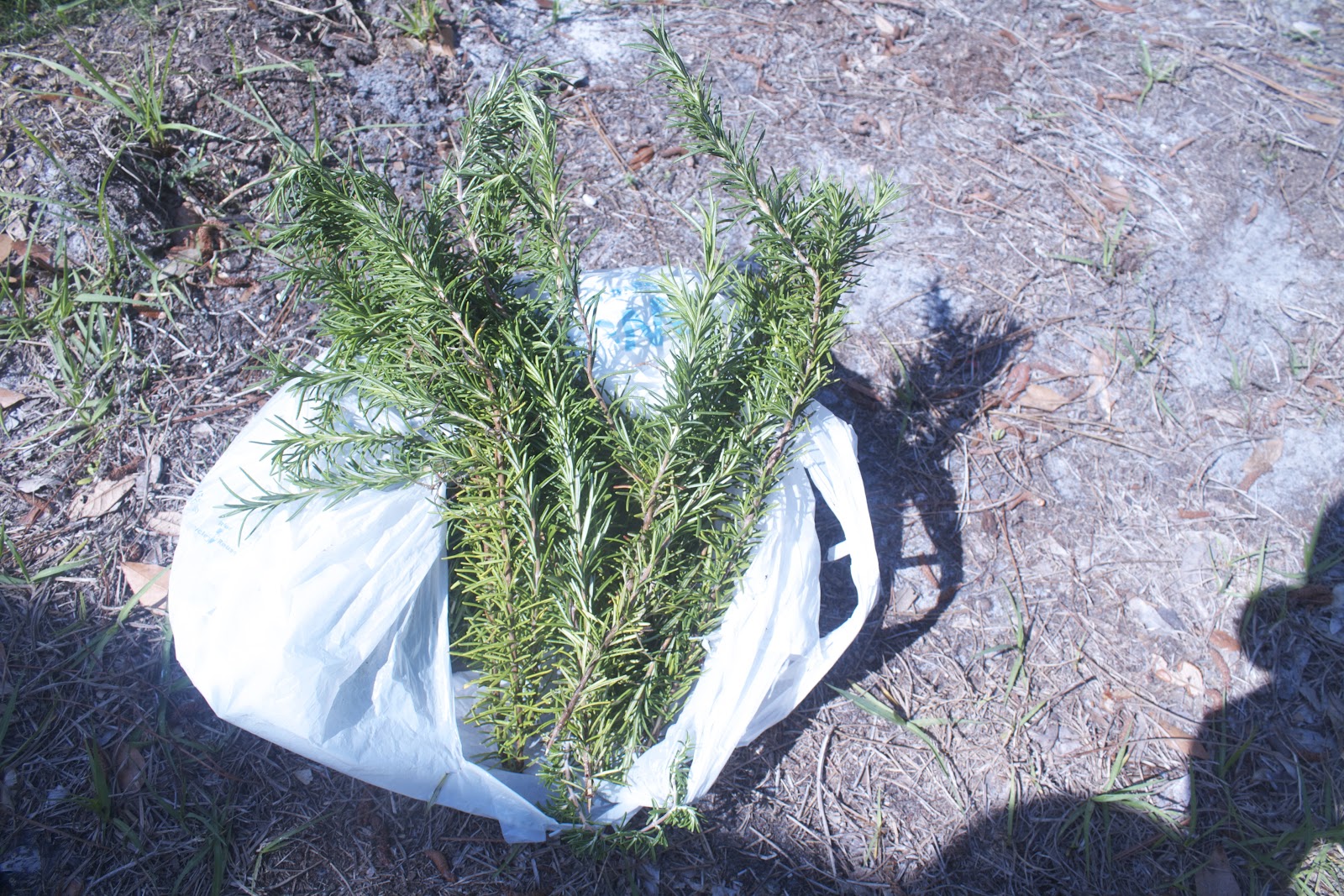
Start by obtaining approximately one hundred rosemary cuttings about twelve inches long.
Strip the lower four or five inches of leaves from the stem with your fingers.
Fill the cutting tray with sharp sand (I just use sand out of the back yard). Pack the sand into the tray tightly by firmly pressing the sand down with your fingers. Be sure to level off the top once the sand is impacted.
Press the stem cuttings with the end stripped down into the compacted sharp sand, two cuttings per cell. The standing cuttings will help support each other once all the rosemary is placed into the tray.
I use an cheap electronic hose timer and sprinkler to mist the cuttings for ten seconds every fifteen minutes.
With the warmer spring weather I'll have one hundred or so rooted rosemary plants within a couple weeks.
We never use rooting hormone. In my opinion rooting hormone is a capitalistic trick to make money. Yes, I know there are studies that show potentially toxic rooting hormones can help develop roots. Some of these studies are also funded by those who sell the powders.
My studies show ground willow bark can out perform root industrial powders.
Yet I never use any rooting hormones.
And our cuttings, roses, natives, figs, herbs, and anything I've ever tried to root, have rooted ever so quickly. And I don't have to worry about the industrial powders and cancer, nor spend extra money.
The key is keeping your cutting leaves moist and the sharp sand just barely wet using a fine mist. Don't let cuttings dry out.
Asexual propagation is an easy way to cost effectively increase your permaculture stock.
Especially rosemary.
We start many of our plants from seeds. Yet some, like garlic chives and rosemary, though they can be sprouted are much easier to propagate via cuttings.
 |
| Florida Permaculture: A full tray of rosemary cuttings ready to root |
Cuttings are an easy and quick way to multiply your herb and plant inventory. Having too many herb and garden plants can be a good thing! Potted up herbs make great gifts for birthdays, special occasions or just for when you want to give company a special gift.
The following photos illustrate how I propagate rosemary via cuttings. There are many ways to asexually increase your rosemary plant inventory via cuttings. Most gardeners have their own preferred method.
I like to propagate rosemary, either the upright or prostrate variety in 72 count square plug trays. For some strange reason, the square corners of the tray seem to make my cutting's roots grow faster and fuller.
Start by obtaining approximately one hundred rosemary cuttings about twelve inches long.
 |
| Florida Permaculture: Twelve inch Urban Farm cuttings ready to strip and stick |
Strip the lower four or five inches of leaves from the stem with your fingers.
 |
| Florida Permaculture: Cuttings and stripped cuttings ready for the rooting tray |
Fill the cutting tray with sharp sand (I just use sand out of the back yard). Pack the sand into the tray tightly by firmly pressing the sand down with your fingers. Be sure to level off the top once the sand is impacted.
 |
| Florida Permaculture: Sharp sand and a 72 count cutting tray |
Press the stem cuttings with the end stripped down into the compacted sharp sand, two cuttings per cell. The standing cuttings will help support each other once all the rosemary is placed into the tray.
I use an cheap electronic hose timer and sprinkler to mist the cuttings for ten seconds every fifteen minutes.
With the warmer spring weather I'll have one hundred or so rooted rosemary plants within a couple weeks.
We never use rooting hormone. In my opinion rooting hormone is a capitalistic trick to make money. Yes, I know there are studies that show potentially toxic rooting hormones can help develop roots. Some of these studies are also funded by those who sell the powders.
My studies show ground willow bark can out perform root industrial powders.
Yet I never use any rooting hormones.
And our cuttings, roses, natives, figs, herbs, and anything I've ever tried to root, have rooted ever so quickly. And I don't have to worry about the industrial powders and cancer, nor spend extra money.
The key is keeping your cutting leaves moist and the sharp sand just barely wet using a fine mist. Don't let cuttings dry out.
Asexual propagation is an easy way to cost effectively increase your permaculture stock.
Friday, March 16, 2012
Green Roof Plant Root Architecture
A while back we looked at green roof plant root architecture and the benefits of green roof plants possessing a broad, shallow root structure rather than a narrow, deep root structure. Click here to review the blog post information.
The diagram is posted for review here.
Real life Green Roof Plant photos of the two types of root architecture are posted below:
The photo above typifies the normal nursery container plant root structure - narrow and deep. This is not a good root formation or architecture to begin a green roof with. Note the following photos of a plant grown on a mat. I've cut the mat out of a green roof that had a 2" engineered soil layer. The plant had grown on the roof for approximately 3 years or longer. The green roof system was non-irrigated.
When I removed the mat section I cut out about twice the diameter of the plant crown or habit (form diameter) thinking I'd capture all the root mass. Upon further examination the plant had extended its roots over triple the area I'd cut.
Note how the roots have grown and woven themselves into the mat - providing an anchor against high winds and allowing for use vertically.
The root architecture of plants grown in mats exemplifies the benefits of growing green roof plants in mats. Roots do not like to be bound up with limiting walls. It you do not use mats, then use large tray systems.
With time, green roof plants with access to a large, monolithic and non-sectioned growing space will eventually 'move' to the best spot for their particular needs - on the roof.
The same basic principle applies to living walls. A monolithic fabric with no limiting sectional structure will allow the plant to choose the best spot for successful, long tern growth.
The diagram is posted for review here.
 |
| Green Roof Plant Root Architecture Comparison - MetroVerde |

 | |
| Root Architecture - Poor Green Roof Formation |

 |
| Green Roof Plant - Root Architecture 1 - MetroVerde |

 |
| Green Roof Plant - Root Architecture 2 - MetroVerde |

 |
| Green Roof Plant - Root Architecture 3 - MetroVerde |

 |
| Green Roof Plant - Root Architecture 4 - MetroVerde |

When I removed the mat section I cut out about twice the diameter of the plant crown or habit (form diameter) thinking I'd capture all the root mass. Upon further examination the plant had extended its roots over triple the area I'd cut.
Note how the roots have grown and woven themselves into the mat - providing an anchor against high winds and allowing for use vertically.
The root architecture of plants grown in mats exemplifies the benefits of growing green roof plants in mats. Roots do not like to be bound up with limiting walls. It you do not use mats, then use large tray systems.
With time, green roof plants with access to a large, monolithic and non-sectioned growing space will eventually 'move' to the best spot for their particular needs - on the roof.
The same basic principle applies to living walls. A monolithic fabric with no limiting sectional structure will allow the plant to choose the best spot for successful, long tern growth.
Thursday, March 15, 2012
Green Roofs and Hurricanes in Florida and Across the Tropics
The Eastern Pacific Hurricane season begins soon and the Atlantic Hurricane season follows shortly thereafter.
Hurricane design is an important consideration for green roofs. If a green roof is to be built in areas subject to hurricane or cyclone impacts then a few simple guidelines will help make the design more resilient against wind and storm damage.
At a minimum, we recommend;
Hurricane design is an important consideration for green roofs. If a green roof is to be built in areas subject to hurricane or cyclone impacts then a few simple guidelines will help make the design more resilient against wind and storm damage.
At a minimum, we recommend;
- No large trees on a roof.
- Small shrubs and small trees may be used successfully depending upon the final design. This may seem like a common-sense guideline but people try to put all types of tall, large trees on patio or garden roofs. During a 130 mph cyclone, the tree will probably be blown over and may cause damage from the fall against the structure or to the street below. It may also become airborne if the winds are strong enough.
- Anything and everything on a roof should be permanently attached.
- Walkways should be constructed from a permanently attached TPO, EDPM or other mat and permanently affixed to the roof.
- No loose chairs, tables or other items should be present. If you wish to have a chair and table stay on a roof during a cyclone, they must be permanently attached.
- All green roof components must be permanently attached to the structure.
- Any trays, plastics, pots, containers or other green roof components must be permanently attached to the building structure. Florida Building Code does not allow for loose items to be installed on a roof - they must be attached.
- Green Roof Irrigation components must be permanently attached to the roof.
- Make sure all tools and gardening utensils are picked up and put away.
- It is very easy to forget the pair of shears, scissors or pliers on a roof. Remember what you were using and where you liad them.
- Plant selection should be focused on those species that have historically survived cyclone and hurricane incidents. There are several good books available at most bookstores here in Florida on proper cyclone resistent landscaping and many resources on the web, such as the Brevard County Landscaping Guide for Hurricane Areas.
- Check on the NOAA National Hurricane Center website daily. The NHC webpage is a wonderful resource, full of links to climatic data.
Always use a green roof design or green roof system already proven in actual field trials with hurricane simulation testing. Watching a green roof blow off during a storm is an avoidable event. Due diligence upfront and preparedness is important for green roofs in hurricane prone and cyclone impacted areas.
Wednesday, March 14, 2012
Florida Permaculture, Life on the Urban Farm
Never name an animal that you plan to cook later and don’t be surprised if the critters jump and fly or run after you’ve removed their heads.
Animals are put on the earth here for food for us, plain and simple. And the whole purpose of starting with twenty six chickens was to have enough to cook one every couple of weeks on top of all the eggs we’d get.
 |
| Kevin & Judy's Urban Farm Fowl (Turkeys) |
 | |
|
 | |
|
Even Momma told me about her Mom, my Grandma, who’d clean a chicken each week in Miami and cook the very best fried chicken one ever tasted.
Never mind the fact that it has taken ten to twenty weeks to raise up the fowl from the cute little fluffy balls of chirps, gobble and quack, fifty pounds of weekly scratch feed, countless thousands of gallons of fresh water and the emergence of a strange but strong love-hate relationship, the animals are meant to be eaten.
My friend Pascale, the green roof expert from France even recommended mustard with cooked rabbit on a stick.
Judy however has decided that raising an animal from babyhood commands too many feelings of love and protection to take the killing and eating of what have essentially become our pets lightly. She woke up breathless one night from a dream in which we were eating rabbit stew. We were eating Jack, Ruby, Thumper, or Midnight. This was when we understood we'd probably not try to breed more rabbits for food, them being mammals and all.
The chickens should have been easier, but Judy grew very attached to the hens also. Raising them from fluffy little day old chicks (what could be cuter?) to awkward but endearing pullets and on to beautiful hens with iridescent beauty and sweet natures has made it very hard to want to eat our cluckers. I think we are just not hungry enough perhaps.
Then there is the question of “embodied energy” and not just the spiritual idea of sacred life force. Embodied energy is the issue of how much water and food it takes to raise a chicken, duck, turkey, goose, or rabbit to a mature eating size.
Judy has come to the conclusion that it isn’t wrong to eat meat or to raise and kill your own animals for food. Animal food is nutrient dense in a way that our bodies can utilize well. Raising your own meat animals is kinder to the critters in the long run than buying factory raised animals.
Killing and eating an animal is a momentous act and shouldn’t be taken lightly. Perhaps this is why there were so many laws concerning the killing and eating of animals in the Old Testament, such as a lamb not being cooked in it’s mother’s milk and other rituals concerning the slaughter of animals including offering them to God. Contrast these ancient ways with the modern practice of supermarket meat wrapped in plastic and styrofoam and the practice of basing our diets on meat, such as some of the ill-advised “low- carb” diets.
Moreover, I’d suppose many of us would stop eating meat if we had to kill the critters and dress them out, disposing of the innards and carcasses. Importantly, most cities and municipalities who allow for Urban Farm animals prohibit the slaughter of said animals in residential areas. However, there are many licensed butcher and slaughter houses across the country, one probably not too far away from your farm.
A sharp machete and well placed swing will quickly dispatch most of the Urban Farm animals. Butcher block and butcher knife will also work. The knife’s motion must be swift though, to minimize pain. Don’t be alarmed if the hen, goose or turkey continues to cackle, hoot or gobble, even without their heads. A large, twenty pound headless turkey can especially put on a show, flying across the Urban Farm backyard, slinging blood everywhere. If you are going to clean your own meat, be prepared to handle the gore.
Our uncomfortable adversity to killing and dressing backyard farm critters is only a couple generations displaced. Grandparents thought nothing of slaughtering, cleaning and cooking a backyard bird or rabbit. Really, it was the early Baby Boomer generation first forsaking the raising and killing of hens for Sunday dinner. My mother has spoken of watching her momma cutting the hen into fryable sections soon to become delicious fried chicken.
Keep your knives sharp. A sharp knife makes the job so much easier. Once you’ve mastered the art of beheading and cleaning a farm critter, it should take no more than ten minutes from picking up the critter slated for the kitchen to the final wash of the meat.
I recommend a heavy butcher knife, a large, long serrated knife and a small paring type knife. The head should be removed first, with a swift blow from the heavy butcher or a swing from a machete. Be sure you don’t cut off your fingers and be ready for the blood. A handy hose helps with the mess.
Separation of the legs and wings using the serrated knife follows the head. Place the head, legs and wings in a garbage bag and using the small paring knife, slit the outer layer of skin from the neck down the chest about four inches. Set the knife on the butcher table and using both hands pull the skin and feathers away from the underlying meat. The skin should easily come off, similar to a pair of pajamas pulled off in the morning.
The feathers and skin goes into the same garbage bag as the legs, wings and head. Once the bird is de-skinned it is time to remove the entrails. Open the birds chest with the small sharp knife and reach in, grasping all the internal organs and intestines, pulling them out and placing all the guts in the garbage bag. Try not to puncture to intestines. Be sure to remove all internal parts and wash the cleaned bird down with the pressurized water nozzle. Wash the carcass even more thoroughly if the intestines are punctures during the cleaning process.
Cleaned critters can be cooked immediately or wrapped in plastic grocery bags and placed in the freezer.
Urban Farm critters that are allowed to free range grow tough and stringy very quickly. If you choose to eat your animals, consider cleaning the young and tender. Sinewy meat may smell good in the oven baking or on the range frying but once stuck tightly in between teeth, opinions quickly change.
Killing and dressing your Urban Farm fowl and rabbits is the most honorable way to eat meat if you choose to do so. Taking full responsibility for the death of and cleaning the of a creature before enjoying his or her meat is an educational opportunity. Understanding the full impact of meat’s life cycle creates sustainability, it creates an intimate awareness of our actions. Though we may choose for a season to ignore how grocery store meat arrived on the shelves or in the freezer, the ignorance will eventually catch us individually and as a nation. Participatory meat preparation celebrates the gift of meat made by your critter and sheds light on the true value of life.
Even better, consider becoming a vegetarian. This may be easier than you think, for once you experience killing and dressing out a bird or rabbit, your personal attitude concerning carnivorous habits may change.
Judy may agree to eat some of the ducks, geese and turkey that are already put in the freezer, but meanwhile it is still summer and it is easier to have a vegetarian diet supplemented with our fresh eggs and organic yogurt right now. Me; due to the spiritual complexity and cost effectiveness of killing and dressing out, I am pretty much done with the meat (though it is amazing just how quickly we soon sometimes forget).
Monday, March 12, 2012
Florida Urban Agriculture and Rabbits
Judy’s Maxim to Remember: Best thing about the rabbits is their poo, because you can use the rich manure right on your garden without waiting.
Kevin’s Maxim to Remember: Our rabbits were intent on eating and mating, not necessarily in that order and irrespective of whether the other rabbit was a male or a female.

Rabbits can be a wonderful addition to the Urban Farm. The hoppers are truly one of the easiest critters to provide care for. Rabbit poo can be likened to steroids for plants, giving them the required nutrients for a rich and deeply vibrant color, encouraging the plants to grow fruits and vegetables of monumental size. Rabbit pellets and composted chicken poop combined are the only fertilizers your Urban Agriculture venture will ever really need.
And rabbits don’t take up much space. Compared to the farm birds, rabbits can survive in a much smaller cage. Therein lies a serious dilemma we came to struggle with. Though many raise rabbits to feed their pythons (or sell to pet stores for python food) we raised rabbits first for their poo and second as a source of high quality meat.
Interestingly, we were very successful with the use of poo, yet we quickly came to realize we could never kill our bunnies for a meal.
We fed our rabbits pelletized feed made for bunnies, packaged in fifty pound bags and bought from Standard Feed. Of course the vitamin filled feed was supplemented with the better stuff, fresh greens from the garden and the occasional carrot from the kitchen.
Rabbits must have their water checked several times a day. With heavy fur coats, they desperately need hydration during Florida’s long hot summers. Be sure to give the water dispenser a good daily spray down, keeping it clean and free of algae or gunky growth.
As mammals, rabbits are different than the Urban Farm birds. Looking you in the eye, sniffing and then cuddling up against your neck, a rabbit is more like a pet dog or cat than a hen or turkey.
Culturally, most of us are used to eating chicken or turkey on a daily deli basis. Though my green roof friend in France loves rabbit on a stick with mustard, we here in the U.S. have not developed that tradition to any extent. And so for us the killing and dressing of a half year old rabbit for a five minute meal did not present itself as appetizing.
Additionally, here in Florida where heat and humidity abound, our rabbits appeared to dread the summertime extremes even though we built their cages high above the ground with green roof shade and all the amenities we could think to include in a rabbit cage.
Not wanting to subject our rabbits to tiny, confined spaces, we tripled and quadrupled our bunny pen sizes. Cruelty though still has a way of occupying even the largest of rabbit cages. Rabbits were meant to be born into the wild. Even the most spacious of outdoor cages creates a prison for the critters. Our rabbits would stare at the veggie filled raised beds through their coop’s chicken wire sides and wonder what freedom would taste like.
Living cramped up in a four foot by four foot cage must be hard. However many rabbit pens I’ve seen at the feed stores are much tinier. I recommend at a minimum, rabbits be provided with twenty square feet be critter to allow for exercise room.
Bunnies enjoy running and hopping. I suppose it is hard to do so in tiny cages and reminds me of being stuck in a way to tiny car for a very long trip.
Yes, rabbits can be very easy to take care of because they are not as vocal as the other farm critters. The easiness is more of an out of sight, out of mind paradigm.
Before we gave Jack, our final rabbit away, I let him out of the cage to run for a couple of days in the backyard. Jack was our oldest rabbit too, solid black with a touch of oncoming gray. Of course he ran straight for the collards and arugula. Jack had been staring at our practically unlimited array of leafy greens for the better part of a year. He feasted like there was no tomorrow.
Jack was fine with running through our Urban Farm for the first day or two. He’d leap, bounding across the rear three quarters of an acre as though he was a young bunny again. Though he’d not allow us to come near him, he’d sleep up next to our house. I suppose he felt some sense of security being near us at night.
But when my neighbor began to tell me he’d seen Jack in his garden I knew something had to be done. Armed with a fishing net, the next morning I crept out and hid behind my neighbor’s tall tomato bushes and waited. Before I knew it Jack had hopped through a hole in our fence and was headed straight for the neighbor’s turnip greens.
Though he had more organically grown greens than he could ever eat in our permaculture kingdom, Jack wanted what he could not have.
The fishing net swooshed through the air as Jack neared and before he knew it Jack was back in his cage, having experienced a brief but very happy few days of real life.
A note of caution here. Always hold both rear legs of a rabbit very tightly when carrying as they pack a powerfully sharp punch, especially when the bunny knows they are headed back to the cage.
Though rabbits are some of the easiest of the Urban Farm critters to care for, I wouldn’t recommend starting off with bunnies. Yes their poo is the perfect fertilizer. Yes they are quiet and relative docile (Monty Python unfortunately gave them a bad name). Yet subjecting the little mammals to a life in a cage seems more like cruel and unusual punishment. Even if life behind the wire protected them from our neighborhood red tailed hawk.
Saturday, March 10, 2012
Green Roofs & Cyclones - A Continuous Vegetated Assemble Design for Hurricane Impacted Areas
The 2012 Hurricane season will be upon us in a couple months, if not sooner. Cyclones, hurricanes and tornadoes are all important factors to consider when designing a green roof.
Of course no amount of design and construction can preclude extremely high wind damage as we have recently witnessed across the midwestern United States.
However, common sense tells us that any object on a roof should be permanently fastened in some manner if the building is subject to high velocity winds. Even then, these extra-velocity winds can rip up heavy items and toss them to the roadway below.
However, though it may be impossible to prevent all wind damage, use of three dimensional geogrid and tri-dimensional non-woven and woven fabrics can provide a platform for green roof plants to anchor themselves in a permanent fashion to the roof.
Choosing the correct bi or tri-axial geogrid for your green roof design can be confusing. Attaching the geogrid to your roofing system can be even more perplexing.
After years of field trials with a number of popular fabrics, I have seen some work well while others disintegrated under the stress of sunlight or wind or both.
Most are a PPE or other petro-synthetic compound. Some, more sustainable than the plastics, such as jute and hemp work well under certain conditions yet fail quickly under other environmental factors.
Importantly though, a properly chosen geogrid can not only form the basis for a cyclone resilient roof, but can allow the green roof designer to build continuous vegetated assemblies on slopes. In fact, I have seen some innovative living walls based on these geogrid fabrics.
The sketch provided here is a depiction of a flat roof continuous vegetated assembly system for hurricane influenced geographic areas. The three dimensional geogrid can be permanently attached to the roof through a variety of either mechanical of chemical bonding mechanisms.
Keeping plants on a roof is important. Parapets help. Good prudence also calls for permanent fastening systems too.
Of course no amount of design and construction can preclude extremely high wind damage as we have recently witnessed across the midwestern United States.
 |
| Continuous Vegetated Assembly Drawing for Green Roofs in High Wind Velocity Areas |
However, common sense tells us that any object on a roof should be permanently fastened in some manner if the building is subject to high velocity winds. Even then, these extra-velocity winds can rip up heavy items and toss them to the roadway below.
However, though it may be impossible to prevent all wind damage, use of three dimensional geogrid and tri-dimensional non-woven and woven fabrics can provide a platform for green roof plants to anchor themselves in a permanent fashion to the roof.
Choosing the correct bi or tri-axial geogrid for your green roof design can be confusing. Attaching the geogrid to your roofing system can be even more perplexing.
After years of field trials with a number of popular fabrics, I have seen some work well while others disintegrated under the stress of sunlight or wind or both.
Most are a PPE or other petro-synthetic compound. Some, more sustainable than the plastics, such as jute and hemp work well under certain conditions yet fail quickly under other environmental factors.
Importantly though, a properly chosen geogrid can not only form the basis for a cyclone resilient roof, but can allow the green roof designer to build continuous vegetated assemblies on slopes. In fact, I have seen some innovative living walls based on these geogrid fabrics.
The sketch provided here is a depiction of a flat roof continuous vegetated assembly system for hurricane influenced geographic areas. The three dimensional geogrid can be permanently attached to the roof through a variety of either mechanical of chemical bonding mechanisms.
Keeping plants on a roof is important. Parapets help. Good prudence also calls for permanent fastening systems too.
Thursday, March 8, 2012
Florida Permaculture, Time for Ocimum and Solanaceae Seeds to be Covered with Soil
Spring is here to stay in Northeast Florida. Sure we will have a few more cold snaps but with daily temperatures warm enough to begin heating our pool water, the basils and peppers are ready to sprout!
Sprouting seeds is so much more of a cost effective way to grow your own vegetables and fruits. Judy and I were in the Wal-Mart yesterday. Amazingly, the seeds were hidden way back in the rear portion of the garden center, far away from the main aisle view.
Surprisingly, there was a fifty cent (USD) seed rack alongside the more expensive two dollar packages. I purchased several envelopes of tiny black seed (Genovese and Spicy Globe) and cilantro.
You can never have enough cilantro and basil during the spring, summer and fall (and winter for that matter).
We start seeds in seventy two count plug trays, mostly mixing the seed starter mixes ourselves.
Usually the plants sprout only in a matter of days costing us only pennies apiece for mature plants once grown.
We've found that wooden popsicle sticks and a Sharpie Marker, readily available through craft stores make perfect biodegradable plant labels.
Ultimately, plants are the very best inventory a n individual or business could ever have as they only increase in value over time. Save and reuse our trays. Recycle soil and be sure to compost!
Sprouting seeds is so much more of a cost effective way to grow your own vegetables and fruits. Judy and I were in the Wal-Mart yesterday. Amazingly, the seeds were hidden way back in the rear portion of the garden center, far away from the main aisle view.
 |
| 72 Count Seed Trays, Potting Soil & Seeds for Permaculture |
You can never have enough cilantro and basil during the spring, summer and fall (and winter for that matter).
 |
| Solanaceae - the Peppers are Sprouting!!! |
Usually the plants sprout only in a matter of days costing us only pennies apiece for mature plants once grown.
We've found that wooden popsicle sticks and a Sharpie Marker, readily available through craft stores make perfect biodegradable plant labels.
 |
| Wooden Popsicle Sticks make perfect labels for plants |
 |
| Be sure to recycle our trays and permaculture materials |
Florida Green Roofs (Dead) and Value Engineering?
Living roofs are usually one of the first components of a construction project to become 'value engineered' here in the southeastern U.S. With an average cost of $20 per square foot for a variety of different green roof vendor projects, the dollar impact on a project can be significant.
Even with the costs, the benefits of green roofs can be many including financial.
Importantly, cutting corners on a green roof system can result in serious performance issues. The photos here are of a Florida living roof (dead now as of last week) where the client chose a landscaper who had never worked on a Florida green roof before to install plants.
Unfortunately, the lowest initial cost does not mean guaranteed performance.
Moreover, lowest costs can sometimes result in highest costs over time. Especially when the original installer does not remedy the dead plants.
The roof shown here has multiple problems. In the present condition the dried, dead plants are a fire hazard. One little spark from a cigar below, carried up on a wind current could result in serious roof or building damage.
With all the weed seed accumulated on the roof, any dormant desirable rootstock will be overwhelmed and shaded out by the noxious plant growth.
The visual failure and negative impact is prominent. Clients and staff alike may complain about the way the dead plants appear.
The cost to remove the unsatisfactory material will be much higher than the installation cost of the wrong plant types.
Finally, the client is lucky the landscaper did not have a staff member fall from the roof. Most ground level landscape contractors are not ensured for working on roofs. Always check not only for adequate insurance but for applicable state licenses. In Florida, roof work should include a licensed roofer.
Value engineering sometimes has a way of biting back. Of course, this roof is in litigation now. Ultimately though, it will end up costing the client much more than the highest original bid.
For green roofs, doing it right the first time is important for long term success, regardless of costs.
Even with the costs, the benefits of green roofs can be many including financial.
 |
| Florida dead living roof, value engineering results |
Importantly, cutting corners on a green roof system can result in serious performance issues. The photos here are of a Florida living roof (dead now as of last week) where the client chose a landscaper who had never worked on a Florida green roof before to install plants.
 |
| Dead roofs can prevent fire hazards and tort liability issues |
Unfortunately, the lowest initial cost does not mean guaranteed performance.
Moreover, lowest costs can sometimes result in highest costs over time. Especially when the original installer does not remedy the dead plants.
The roof shown here has multiple problems. In the present condition the dried, dead plants are a fire hazard. One little spark from a cigar below, carried up on a wind current could result in serious roof or building damage.
 |
| Using a landscape company who does not have roofing insurance can result in liability if a worker falls |
With all the weed seed accumulated on the roof, any dormant desirable rootstock will be overwhelmed and shaded out by the noxious plant growth.
 |
| THe wild weed seed source has coasted the roof and will choke out any remaining good rootstock |
The cost to remove the unsatisfactory material will be much higher than the installation cost of the wrong plant types.
Finally, the client is lucky the landscaper did not have a staff member fall from the roof. Most ground level landscape contractors are not ensured for working on roofs. Always check not only for adequate insurance but for applicable state licenses. In Florida, roof work should include a licensed roofer.
Value engineering sometimes has a way of biting back. Of course, this roof is in litigation now. Ultimately though, it will end up costing the client much more than the highest original bid.
For green roofs, doing it right the first time is important for long term success, regardless of costs.
Wednesday, March 7, 2012
"A Beautiful Harshness, Is Meat Sustainable?" Snippet from our Urban Farm book to be released soon...
Life and death are a part of nature and we see the interactions up close and personal on the Urban Farm. However this is not the way of most Americans and others in Urban Core areas. Though we have violence and shooting deaths here in Jacksonville everyday, the death associated with food is conveniently removed from most our every day lives.
Winn-Dixie, Publix and other popular grocery markets allow us to order a pound of Boar’s Head Cajun Turkey, sliced sandwich thin, and we keep the meat in our refrigerator, tightly sealed, waiting for us to be hungry enough to make a lunch meat sub sandwich, all without witnessing the bloody end to a farm animal’s life.
I believe there is an honor about having to kill and dress out your own meat you eat while ignoring the death contributes towards a lack of awareness.
Geese, ducks, turkeys and chickens all require time and lots of feed to grow big enough to be ‘eatin’ size’ yet they, as in a sandwich can be completely devoured in a couple of minutes. Four or five months to raise and only a day to devour. Pounds and pounds of feed and forage, gallons and gallons of water for drinking and swimming all invested in a ten pound or so bird eaten at one family meal.
The same amount of grain and forage used to grow the bird to fryer size would have sustained a human for weeks.
Sure we can continue to eat meat every day for every meal until we die for there is nothing stopping us, here in America. I’m sure many people will continue to do so and I choose not to crusade against their habits and beliefs. Yet for me though it is all a different story now.
I choose the step away from the practice of eating meat purchased from the store because I want to eat in a manner where I have a meaningful connection to my food.
Moreover, in my weak attempt to pursue sustainability I’ve elected to reduce my ecological and carbon footprint. For now, effective sustainability activism is not participation in a mighty, public crusade but a personal choice for Kevin Songer. I choose to eat food we quickly grow in the garden; beans, grains, vegetables and fruits.
Consuming a bird in less than thirty minutes when five months of intensive carbon footprint maintenance was required to raise the bird to edible size is not sustainable.
As is usually the case when learning, the Urban Farm efforts have raised more questions about life and death than provided answers. Certainly I’ve learned and seen those ways I’d never before seen, touched or tasted. There is little noticeable affection between our farm fowl, even among those of the same genera.
The turkeys, chickens, ducks and geese are all each focused on self preservation. They want to eat and they will grab food from other beaks quickly and without remorse. Weaklings are shunned, rammed and pecked. Strangers brought into the flock are jumped upon and attacked with amazing ferocity.
But it is a beautiful harshness and there are those moments where the spirits of an Urban Farm critter make a profound connection to ones' soul, usually with amazing eye contact and a fleeting but powerful understanding and acknowledgement between homo sapiens and the animal creature, an understanding that transcends time and place.
The momentary mystical insight into the true understanding of the ways of life is quickly severed though as the bird snaps itself out of the meaningless trance and shakes his or her head, covering my starry-eyed questioning face with slobber and half-chewed forage.
The goose walks away and I go wash my face off with chlorinated water supplied through a reinforced nylon hose and cast metal spray nozzle made in China. The goose has a life with no deceit. Human life is levels more complicated.
Thursday, March 1, 2012
Answers to Living Wall Dilema, Whole Foods, Jacksonville
High soil pH and urban soil composition is the reason the Jacksonville Whole Foods living walls are not flourishing. Soil pH is a measure of acidity or alkalinity in the dirt.
As we mentioned, the health food grocer has a high-quality stainless trellis system installed near the front entrance and on the south side of the store building. Yet the plants have not successfully established themselves and grown well. The store has been open now for several years, allowing plenty of time for the plants to send down roots and add upper biomass.
The present store facility was originally constructed where another building had been demolished. It appears some of the original slab was reused, and significant amounts of concrete, crushed block and other previous building material was integrated into the soil during site preparation.
Most plants prefer a soil pH of between 5.6 up to 7.0. Many native and adapted Florida Friendly plants vines require an even lower pH to thrive.
Soils with a high pH, such as the urban soils in the Whole Foods living wall planters, restrict nutrient availability (specifically iron, zinc and manganese), stunting planted vine growth and causing yellowing of leaves.
Although some soil amendments appear to have been added during final landscaping, the type and quantity were not adequate to encourage strong plant growth.
There are several simple remedies available to the Whole Foods site. The site could easily be supporting massive amounts of flowering, fruiting and beautiful vines by mid summer 2012.
First there needs to be a minor excavation of existing planter soil, both around the front columns and then within the southern wall planter box. This soil does not need to be discarded.
Second, an appropriate amount of ammonium based fertilizer should be mixed into the soil. Ammonium based fertilizers typically contain ammonium sulfate or sulfur coated urea. Ammonium and oxygen react to form nitrite/nitrate, water and hydrogen ions. The hydrogen ions then work to acidify the soil.
One advantage urban soils usually have is the variety of soil particle sizes and if not over-compacted, can provide for adequate oxygenation of the soil. Oxygen and ammonium provide nutrients for the plants and help counteract the higher pH of the urban soils.
A quick field test of the Whole Foods planter soils reveals significantly higher than normal pH.
Amending with organic matter is another possible approach. Composted pine bark, pine needles, oak leaves, properly composted food scraps can also release both needed nutrients and hydrogen ions into the soil. Another benefit of the organic mulch route is that earth worms and other soil life will quickly create extensive micro-communities, contributing additional nutrients and providing for nature based soil aeration.
Once the Whole Foods planter soils are amended with the proper amount of ammonium based fertilizers, the soil can be replaced and plants installed.
Of course, care should be taken not to over-fertilize. Excess amounts of ammonium based fertilizers can burn the roots of installed plants, creating a whole new set of problems.
With amended soils in place, plants can now be chosen to highlight the wonderful health food selections available within the Whole Foods store.
Selecting beautiful, sometimes unusual and otherwise ethnobotanically important plants is the fun part of site living wall design.
Our next post will describe what plants we'd suggest for the Whole Foods living walls.
As we mentioned, the health food grocer has a high-quality stainless trellis system installed near the front entrance and on the south side of the store building. Yet the plants have not successfully established themselves and grown well. The store has been open now for several years, allowing plenty of time for the plants to send down roots and add upper biomass.
The present store facility was originally constructed where another building had been demolished. It appears some of the original slab was reused, and significant amounts of concrete, crushed block and other previous building material was integrated into the soil during site preparation.
Most plants prefer a soil pH of between 5.6 up to 7.0. Many native and adapted Florida Friendly plants vines require an even lower pH to thrive.
Soils with a high pH, such as the urban soils in the Whole Foods living wall planters, restrict nutrient availability (specifically iron, zinc and manganese), stunting planted vine growth and causing yellowing of leaves.
Although some soil amendments appear to have been added during final landscaping, the type and quantity were not adequate to encourage strong plant growth.
There are several simple remedies available to the Whole Foods site. The site could easily be supporting massive amounts of flowering, fruiting and beautiful vines by mid summer 2012.
First there needs to be a minor excavation of existing planter soil, both around the front columns and then within the southern wall planter box. This soil does not need to be discarded.
Second, an appropriate amount of ammonium based fertilizer should be mixed into the soil. Ammonium based fertilizers typically contain ammonium sulfate or sulfur coated urea. Ammonium and oxygen react to form nitrite/nitrate, water and hydrogen ions. The hydrogen ions then work to acidify the soil.
One advantage urban soils usually have is the variety of soil particle sizes and if not over-compacted, can provide for adequate oxygenation of the soil. Oxygen and ammonium provide nutrients for the plants and help counteract the higher pH of the urban soils.
A quick field test of the Whole Foods planter soils reveals significantly higher than normal pH.
Amending with organic matter is another possible approach. Composted pine bark, pine needles, oak leaves, properly composted food scraps can also release both needed nutrients and hydrogen ions into the soil. Another benefit of the organic mulch route is that earth worms and other soil life will quickly create extensive micro-communities, contributing additional nutrients and providing for nature based soil aeration.
Once the Whole Foods planter soils are amended with the proper amount of ammonium based fertilizers, the soil can be replaced and plants installed.
Of course, care should be taken not to over-fertilize. Excess amounts of ammonium based fertilizers can burn the roots of installed plants, creating a whole new set of problems.
With amended soils in place, plants can now be chosen to highlight the wonderful health food selections available within the Whole Foods store.
Selecting beautiful, sometimes unusual and otherwise ethnobotanically important plants is the fun part of site living wall design.
Our next post will describe what plants we'd suggest for the Whole Foods living walls.
Tuesday, February 21, 2012
Dead Living Wall - Why? Case Example, Whole Foods, Jacksonville, Florida
During our last post we looked at a marvelous grid system creating the structure for numerous living walls covering the Whole Foods grocery store in Jacksonville. Although shiny and stainless steel living wall mechanical support system was superb in construction and installation, the plants have decided over the past three years or so that they do not like something about the entire design and are refusing to do much except die or just barely survive. Today we will discuss why these plants are not thriving and tomorrow we will look at recommendations for plant replacement.
Over the years we've come to understand Living Walls to be one of the most significant challenges for the urban core landscape designer, and for many reasons.
Living walls, unlike horizontal ground level landscapes are subject to exponential more desiccating exposure from winds because they exist on a vertical plane without typical ground level wind-breaks. Additionally, the same holds true for sunlight exposure. Both sunlight and wind can rob the living wall plants of much needed water, thereby breaking the Calvin cycle of photosynthesis and denying the plants life sustaining nutrients.
Last year we posted an article on why we consider wind and light to be the two top design factors for green roofs and living walls.
Too much or not enough light dooms a living wall plant through impact on photosynthesis, yet even though there was concern raised about the quantity of available light under the store's front area, the southern facing living wall, with plenty of light exposure, was not growing either. Our model pointed to issues other than available daylighting.
Wind too, though usually a primary design variable, did not seem to be impacting the living wall as we first thought it may. Our hand held anemometer, though granted was used over a limited period of time, did not record any wind speeds of greater than one meter per second and in fact showed the building itself was acting as a sufficient windbreak.
However there are other factors to consider when analyzing the Whole Foods dead living wall. A secondary design variable we often look for is the presence of alleloism and adjacent allelopathic plants, such as cypress.
We did not find much to suggest allelopathic issues on the site, though allelopathism can sometimes be overlooked. Chemicals produced in the leaves of some plants can act just like herbicides, preventing other plants from growing. Sometimes allelopathic acting leaves may accumulate on a roof and act as a herbicidal drench during rain as water fills gutters and downspouts.
There was a more interesting issue presenting itself though. Though living walls have been grown successfully around limerock outcroppings and stone walls, the correct combination of soil amendments, plant selection, light, available water and wind breaks must be present for the growing successes a landscape designer seeks.
The Whole Foods living wall systems were constructed directly over an old, demolished commercial building foundation and though some organic matter has been added by the landscape installer, the urban soil composition on site is obviously full of concrete.
Concrete contributes to a high pH. High pH restricts available nutrients and itself has a negative impact on plant root's ability to absorb water. However some plants are very well adapted to growing in these higher pH conditions. Yet many are not.
The attitude of 'lets pour a couple bags of potting soil into a whole around the plant's roots' just doesn't work though. Many times landscape installers take the shortcut, placing their unreasonable hopes for a lush wall on the struggling plant.
Understanding urban soils, concrete and how to amend these soils for the right plants comes with years of experience.
Though we are all aware of cost control, long term dead living walls installed without consideration to matching plants to all growing variables do not provide the cost benefit originally proposed during the architectural and landscape design.
Whole foods has many options available to produce magnificent living walls for the Jacksonville store.
In sync with cradle to cradle concepts, Whole Foods could, once the right plants were installed in the correctly amended soils for the light levels and wind exposures, use a compost barrel in back of their store - or as an educational part of their landscape - and use produce destined for the landfill to begin building wonderful planter soils. Solutions do not have to be messy or expensive. Living walls create habitat for Florida green tree frogs and Florida anoles. Biodiversity acts as integrated pest management for fly and bug control.
Why are Whole Foods living walls dying?
Wrong plants for the urban soils. Urban soils needing specific micronutrients and other factors.
Next post will discuss specific recommendations to create a lush living wall.
Over the years we've come to understand Living Walls to be one of the most significant challenges for the urban core landscape designer, and for many reasons.
Living walls, unlike horizontal ground level landscapes are subject to exponential more desiccating exposure from winds because they exist on a vertical plane without typical ground level wind-breaks. Additionally, the same holds true for sunlight exposure. Both sunlight and wind can rob the living wall plants of much needed water, thereby breaking the Calvin cycle of photosynthesis and denying the plants life sustaining nutrients.
Last year we posted an article on why we consider wind and light to be the two top design factors for green roofs and living walls.
Too much or not enough light dooms a living wall plant through impact on photosynthesis, yet even though there was concern raised about the quantity of available light under the store's front area, the southern facing living wall, with plenty of light exposure, was not growing either. Our model pointed to issues other than available daylighting.
Wind too, though usually a primary design variable, did not seem to be impacting the living wall as we first thought it may. Our hand held anemometer, though granted was used over a limited period of time, did not record any wind speeds of greater than one meter per second and in fact showed the building itself was acting as a sufficient windbreak.
However there are other factors to consider when analyzing the Whole Foods dead living wall. A secondary design variable we often look for is the presence of alleloism and adjacent allelopathic plants, such as cypress.
We did not find much to suggest allelopathic issues on the site, though allelopathism can sometimes be overlooked. Chemicals produced in the leaves of some plants can act just like herbicides, preventing other plants from growing. Sometimes allelopathic acting leaves may accumulate on a roof and act as a herbicidal drench during rain as water fills gutters and downspouts.
There was a more interesting issue presenting itself though. Though living walls have been grown successfully around limerock outcroppings and stone walls, the correct combination of soil amendments, plant selection, light, available water and wind breaks must be present for the growing successes a landscape designer seeks.
The Whole Foods living wall systems were constructed directly over an old, demolished commercial building foundation and though some organic matter has been added by the landscape installer, the urban soil composition on site is obviously full of concrete.
Concrete contributes to a high pH. High pH restricts available nutrients and itself has a negative impact on plant root's ability to absorb water. However some plants are very well adapted to growing in these higher pH conditions. Yet many are not.
 |
| Living walls can successfully be created even in rock & concrete filled areas |
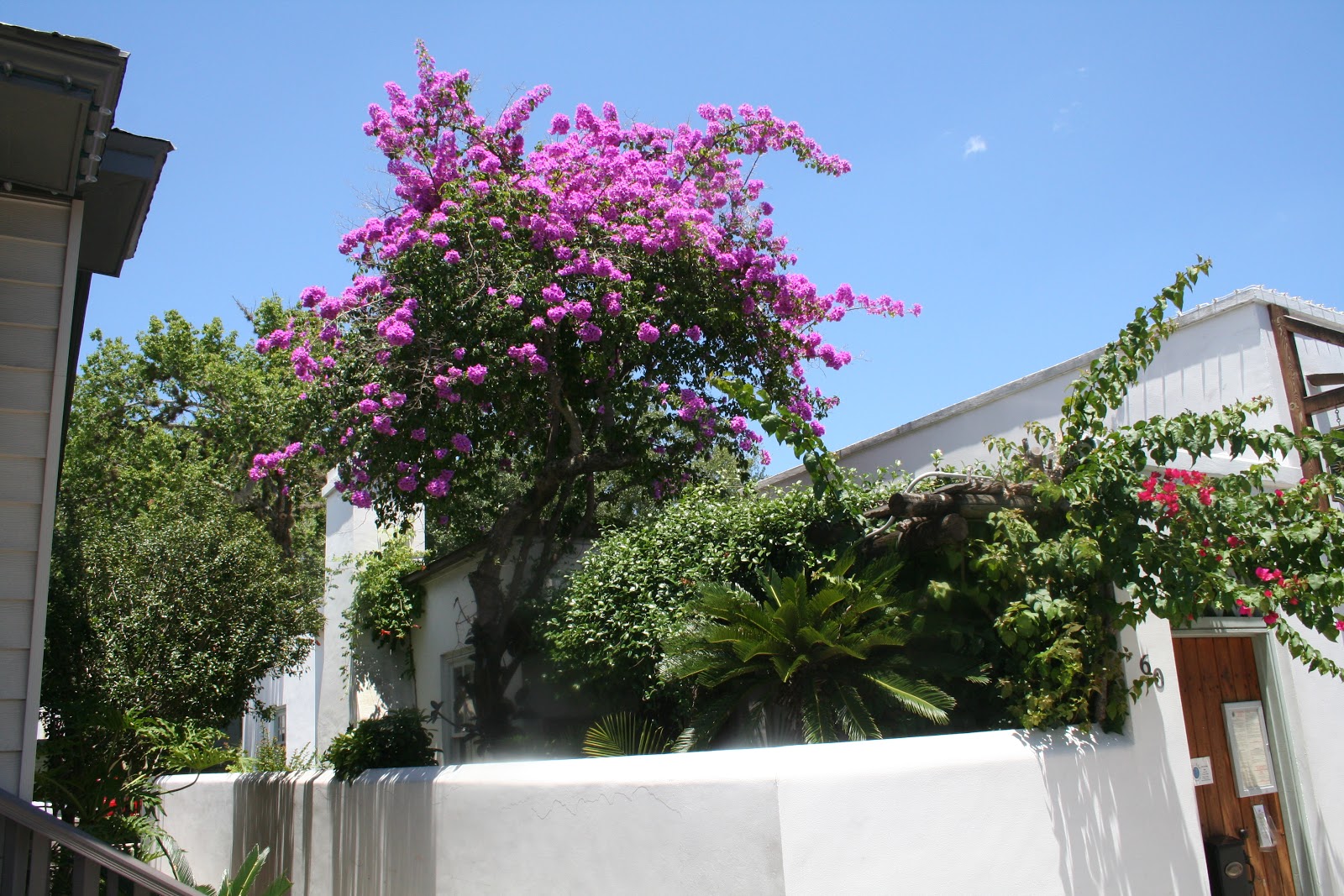 |
| Plants and concrete can exist side by side with the right design |
Understanding urban soils, concrete and how to amend these soils for the right plants comes with years of experience.
Though we are all aware of cost control, long term dead living walls installed without consideration to matching plants to all growing variables do not provide the cost benefit originally proposed during the architectural and landscape design.
Whole foods has many options available to produce magnificent living walls for the Jacksonville store.
In sync with cradle to cradle concepts, Whole Foods could, once the right plants were installed in the correctly amended soils for the light levels and wind exposures, use a compost barrel in back of their store - or as an educational part of their landscape - and use produce destined for the landfill to begin building wonderful planter soils. Solutions do not have to be messy or expensive. Living walls create habitat for Florida green tree frogs and Florida anoles. Biodiversity acts as integrated pest management for fly and bug control.
Why are Whole Foods living walls dying?
Wrong plants for the urban soils. Urban soils needing specific micronutrients and other factors.
Next post will discuss specific recommendations to create a lush living wall.
Subscribe to:
Posts (Atom)